
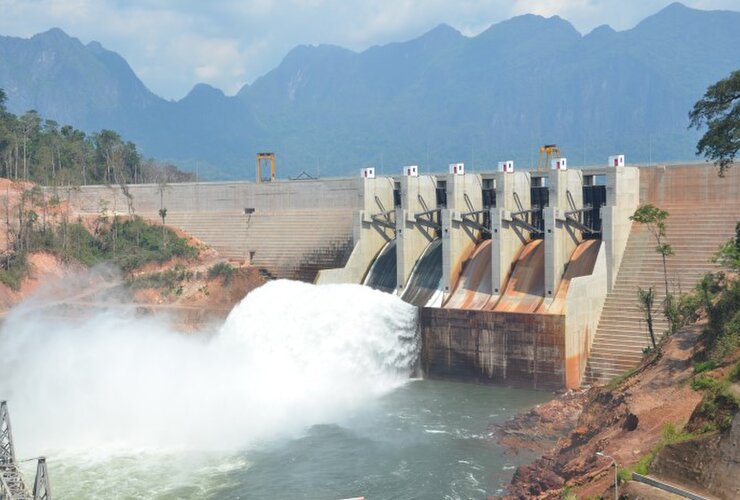
Since 2010, Laos has erected more than 70 dams on the Mekong River and its tributaries, rapidly turning the land‑locked nation into a regional power exporter. The country now supplies roughly 70 % of its generated electricity to Thailand, Vietnam, Cambodia and Myanmar, and aims to lift its capacity from about 10 GW today to 30 GW by 2030. Most of the new installations are run‑of‑river schemes that channel water through turbines without forming large reservoirs, yet the accompanying infrastructure—access roads, transmission lines and worker camps—has opened up extensive forested areas.
Environmental monitoring groups and researchers warn that the pace of dam building is outstripping the nation’s ability to assess cumulative impacts. Dr. Somsak Chanthavong, a hydrologist at the National University of Laos, notes that “the sheer number of dams in such a short period is unprecedented for a country of this size.” Satellite analysis by Global Forest Watch shows a 40 % rise in forest loss within dam‑construction zones between 2015 and 2023 compared with the previous decade.
The Mekong’s inland fisheries, among the world’s most productive, are also under pressure. According to Dr. Khamphone Vongxay of the Mekong River Commission, catches in the lower Mekong have fallen by an estimated 30 % over the past 15 years, with dams identified as a primary driver alongside overfishing and climate change. Dams obstruct migratory routes, modify flow regimes and trap sediment that would otherwise replenish downstream floodplains.
A 2024 study published in *Nature Sustainability* estimates that Lao dams now retain up to 60 % of the sediment destined for the Mekong Delta, accelerating erosion and salt‑water intrusion in Vietnam. The Nam Theun 2 project, one of the largest in the country, flooded 450 km² of forest and has been linked by downstream residents to reduced fish stocks and altered water quality.
Social repercussions accompany the environmental ones. International Rivers reports that approximately 100 000 people have been displaced by hydropower projects since 2000. Resettled households often receive compensation that falls short of restoring pre‑project income levels.
Village chief Bounthong Sisouphanh of Khammouane province, whose community was moved for the Nam Theun 2 dam, says the promised new houses, schools and jobs have not materialised, and the allotted land is poor for agriculture and fishing. Laos’ regulatory framework offers limited safeguards.
The Ministry of Energy and Mines, which approves most dams, also oversees environmental compliance, creating a conflict of interest highlighted by Dr. Anoulak Kittikhoun of the Stimson Center. Independent oversight is scarce, and a 2023 World Bank audit of the Nam Theun 2 project found many households still earning less than before relocation. International financiers such as the Asian Development Bank and the World Bank attach environmental conditions to the projects they fund, yet numerous dams are built by Chinese and Thai firms with fewer stipulations.
The Xayaburi dam, the first on the Mekong mainstream, was commissioned by a Thai company in 2019 despite objections from downstream nations. Proponents argue that Laos’ hydropower exports generate vital revenue for infrastructure and poverty‑reduction programmes, and that the clean electricity helps displace coal‑fired generation abroad.
A spokesperson for the Lao Ministry of Energy and Mines, speaking on condition of anonymity, described hydropower as “a renewable resource that provides stable electricity and foreign exchange” and affirmed a commitment to improve environmental management with international partners. Critics contend that the economic benefits are overstated. A 2024 IUCN report highlighted that methane emissions from tropical reservoirs can make some dams climate‑worse than fossil fuels, and noted that most Lao electricity powers industrial users in Thailand rather than rural Laotians who still lack reliable power.
Looking ahead, experts call for stronger enforcement of existing laws, independent monitoring and a shift toward smaller, less invasive projects. Without such measures, the ecological and social costs of Laos’ hydropower expansion risk outweighing the gains, threatening the very river systems that underpin the nation’s energy ambitions.




