
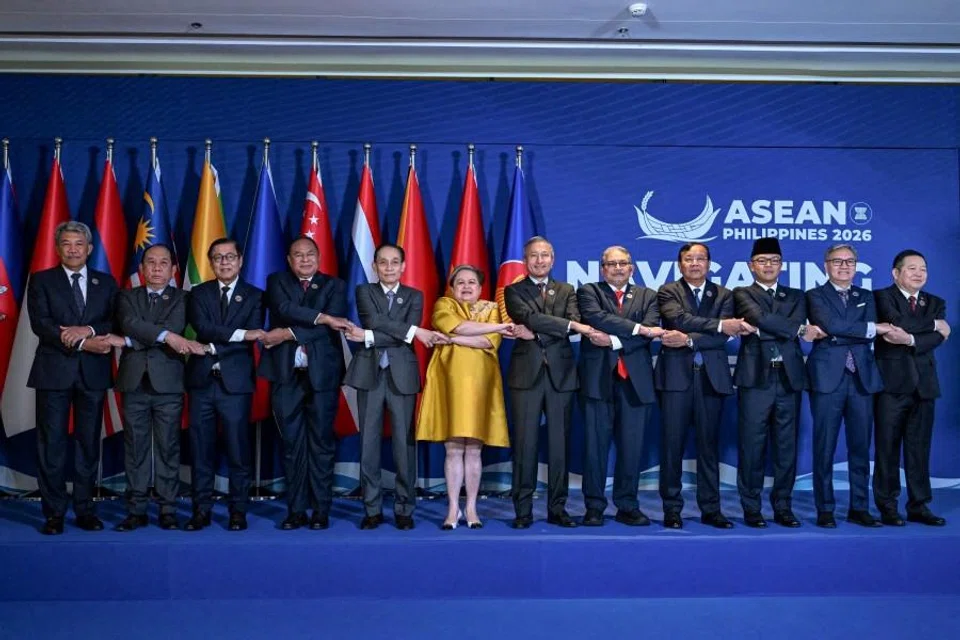
MANILA, July 20 — The foreign ministers of the Association of Southeast Asian Nations are expected to issue a joint statement endorsing freedom of navigation in line with the United Nations Convention on the Law of the Sea, which all ten member states have ratified. The declaration, expected at the close of talks here, underscores the bloc’s collective position on maritime rights at a moment when energy security pressures are mounting across the region.
The association was founded on August 8, 1967, in Bangkok with the signing of the ASEAN Declaration by Indonesia, Malaysia, the Philippines, Singapore, and Thailand. The original five were joined by Brunei Darussalam on January 7, 1984; Vietnam on July 28, 1995; Laos and Myanmar on July 23, 1997; and Cambodia on April 30, 1999.
The combined gross domestic product of the ten economies exceeded $3.6 trillion in 2022, placing ASEAN as the fifth-largest economy in the world. The bloc’s total population is approximately 670 million. Despite that economic weight, the grouping relies heavily on imported energy.
Sources familiar with the region’s energy profile note that ASEAN member states collectively import more than 4.5 million barrels of crude oil per day, with the majority of that volume sourced from the Middle East. Singapore, a major oil refining and trading hub, has no domestic oil production and imports nearly all of its crude.
The Philippines, Indonesia, Malaysia, Thailand, and Vietnam are also large net importers.
Strategic vulnerability in the Strait of Hormuz
The record shows that ASEAN’s dependence on the Strait of Hormuz is heightened by limited alternative supply routes and by what experts describe as insufficient strategic petroleum reserves. The bloc maintains an average of 30 days of net imports in reserve — a figure well below the 90-day target often recommended by the International Energy Agency for its member countries.
The ASEAN Plan of Action for Energy Cooperation for 2021–2025 provides a policy framework, but the grouping has not established a unified energy security mechanism to coordinate emergency stockpile sharing or supply diversification among its members. The timeline of ASEAN’s energy policy development reveals a series of incremental steps rather than a comprehensive, binding arrangement.
The APAEC 2021–2025 sets targets for renewable energy and energy efficiency, but it does not include a collective obligation to maintain minimum reserve levels or a mechanism to pool resources in a crisis. That patchwork approach leaves each country to manage its own strategic storage, often below the level needed to weather a prolonged supply disruption.
Manila talks and the UNCLOS consensus
At the Manila talks, the joint statement on freedom of navigation is expected to reaffirm the member states’ commitment to the rules-based order — a move that carries both political and practical weight given the bloc’s maritime trade routes. All ten ASEAN countries have ratified UNCLOS, and the upcoming declaration would represent a consensus position amid ongoing disputes in the South China Sea.
The statement does not directly address energy security, but observers note that secure sea lines of communication are essential for the fuel imports upon which the entire region depends. The meeting in Manila takes place against a backdrop of heightened attention to supply-chain vulnerabilities.
The bloc’s average strategic petroleum reserve of 30 days of net imports leaves little margin for error if a conflict or natural disaster were to close the Strait of Hormuz or disrupt tanker traffic in the Malacca Strait. That vulnerability is not evenly distributed: Singapore, as a nearly totally import-dependent refining hub, would face immediate disruption, while larger producers in the region such as Malaysia and Indonesia have some domestic output but still rely on imported crude for their refineries.
What to watch next
The ASEAN foreign ministers are expected to release the joint statement before the end of the conference. The key questions going forward are whether the bloc can build on its energy cooperation framework to create a binding strategic reserve mechanism, and whether the UNCLOS endorsement will translate into coordinated action on maritime security. For now, the record shows a region that is economically integrated but strategically exposed, with its fuel supply tethered to a single chokepoint and its reserves thin.
The Manila talks may produce a unified diplomatic voice on freedom of navigation — but the energy gap remains wide open.




