
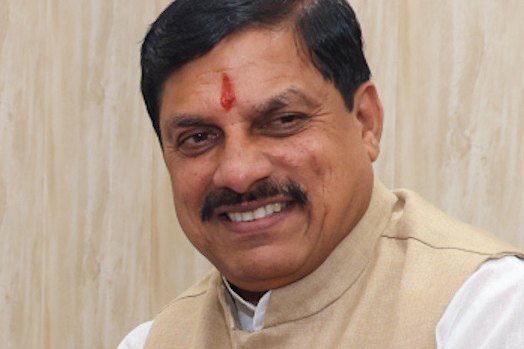
Mohan Yadav has served as the 19th Chief Minister of Madhya Pradesh since December 13, 2023, a tenure defined by his direct oversight of the state’s law-and-order apparatus and mounting public scrutiny over crimes against women. A BJP member long familiar in Ujjain politics, Yadav represents the Ujjain Dakshin constituency in the Madhya Pradesh Legislative Assembly, a seat he has held since 2013.
Before assuming the state’s top post, he was Higher Education Minister in the cabinet of former Chief Minister Shivraj Singh Chouhan. As chief executive, Yadav retains direct responsibility for the Madhya Pradesh Police and for the government’s handling of high-profile incidents. That portfolio placed him at the center of a national spotlight after the Alirajpur gang rape case, which tested his administration’s repeated claims of a tough-on-crime approach.
The case drew intense scrutiny from opposition parties and the media, raising questions about police responsiveness, the thoroughness of investigations, and the broader pattern of violence against women in the state.
Chief Minister’s Law-and-Order Mandate
Madhya Pradesh, one of India’s largest states by area, carries a long historical legacy. Its capital, Bhopal, anchors a region that traces back to the ancient Avanti Mahajanapada, whose capital Ujjain was a major urban center by the sixth century BCE. The area later fell under successive dynasties, including the Maratha Empire, before being divided into princely states under British control.
After independence, the territory was reorganized, merging former provinces and agencies to create the present-day state in 1956. In 2000, its southeastern region became the separate state of Chhattisgarh.
Today, Madhya Pradesh is a significant agricultural producer, known for its mineral wealth and extensive forest cover. Its governance, particularly on law and order, now commands national attention, with recent scrutiny over crimes against women testing the administration’s commitments. The state’s political and historical weight makes its leadership decisions closely watched by observers across India.
Yadav’s direct control over the police force and his public emphasis on law enforcement reflect a deliberate strategy. He has taken a public stance on the issue, vowing swift action and promising stricter enforcement.
Official data and opposition criticism, however, have pointed to rising crime rates against women in Madhya Pradesh, a trend that predates Yadav’s tenure but has not abated under his watch. Critics argue that the gap between rhetoric and results remains wide, even as the BJP state government has announced policy measures and administrative reviews. Whether those promises translate into measurable change remains an open question.
The Alirajpur Case and Its Aftermath
The Alirajpur gang rape case became a defining test for the Yadav government. It drew national attention and put direct pressure on his administration to demonstrate that its law-and-order platform was more than political messaging.
Questions mounted about the speed and quality of the police response, the conduct of the investigation, and what the case said about a broader pattern of violence against women in the state. For a chief minister who has staked political capital on being tough on crime, the case represented both a challenge and an opportunity to prove that his policies could produce results. The incident also amplified longstanding criticism from opposition parties, who have used the state’s crime statistics to argue that the government’s actions fall short of its promises.
Political Calculus and Long-Term Challenges
Yadav’s political position within the BJP appears stable for now. He enjoys the backing of the party’s central leadership, and the BJP holds a comfortable majority in the Madhya Pradesh state assembly.
With state elections still several years away, the immediate horizon is shaped not by electoral pressure but by the need to manage crises and build a record of sustained governance. The coming months will test whether Yadav can shift the narrative from crisis management to steady administration, and whether the law-and-order record he is building will ultimately serve as a political asset or a liability. The state’s historical weight, its agricultural and industrial importance, and the national visibility of its social challenges mean that the outcome of that test will be watched far beyond Madhya Pradesh’s borders.




