
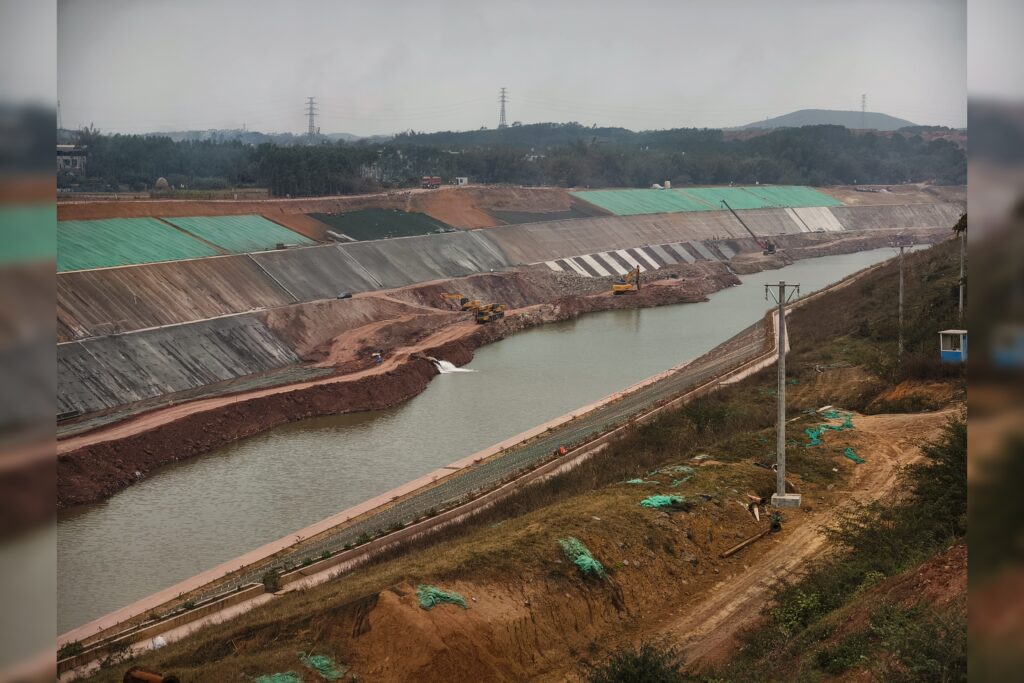
NANNING, Sept. 3 — China is set to officially open the Pinglu Canal later this month, a 134-kilometer (83-mile) inland waterway linking Nanning, capital of Guangxi Zhuang Autonomous Region, to the Gulf of Tonkin, also known as the Beibu Gulf, between China and Vietnam. The canal is a signature megaproject for the world’s second-largest economy as Beijing seeks to accelerate freight flow and cut transit costs with its largest trading partner, the Association of Southeast Asian Nations (ASEAN).
The project cost 72.7 billion yuan (about US$10.8 billion) and is designed to accommodate 5,000-tonne vessels, marking China’s first river-to-sea canal.
Regional reach
By connecting an extensive network of rivers and tributaries to the sea, the canal shortens the transit route between inland Guangxi and the ocean by 560 kilometers (348 miles). That gives landlocked regions in southern and southwestern China — including Yunnan, Guizhou, and Sichuan provinces — faster access to ASEAN and global shipping lanes. The waterway is expected to serve as a critical logistics artery for moving goods such as textiles and other products from inland regions to international markets.
The first command and management vessel for the canal, named Pinglu 001, was delivered on Monday and will soon enter service. A fleet of command vessels will patrol the canal to oversee navigation and handle emergency responses, according to the state-run People’s Daily.
The command ships can operate in both coastal and inland waters and carry up to 50 operational personnel. Their smart navigation systems will undergo testing at shore-based facilities in Qinzhou, Guangxi, where the canal empties into the sea. The canal’s debut is expected to align with the 23rd China-ASEAN Expo, scheduled for September 17 to 21 in Nanning.
The waterway arrives as Beijing attempts to redraw regional development patterns and further diversify trade relations across the Asia-Pacific.




