
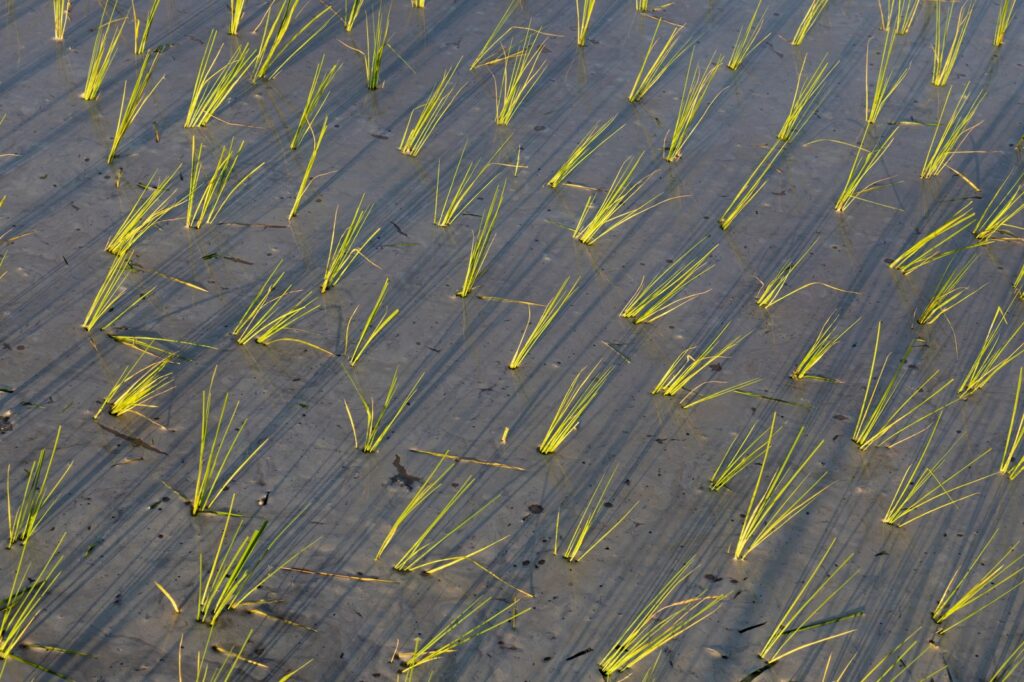
MIRI, October 20, 2026 — Chinese-developed perennial rice is taking root in Malaysia’s Sarawak, offering hope for food security as families across the region look for new ways to secure their harvests. For communities working hard to feed their towns and villages, the arrival of this long-lived crop brings a practical answer to ancient farming challenges.
Understanding Perennial Rice And Its Botanical Roots
Perennial rice varieties are long-lived crops capable of regrowing season after season without reseeding, according to Wikipedia. Unlike most domesticated Asian rice cultivars that die after producing seeds, perennial types can spread via underground or above-ground stems, as documented by Wikipedia. While these varieties can still reproduce sexually by producing flowers, pollen, and seeds that humans harvest and eat, their unique lifespan sets them apart from standard grain crops. Plant geneticists at several institutions are currently developing these varieties, building on early breeding work initiated at the International Rice Research Institute in the Philippines and carried forward by the Yunnan Academy of Agricultural Sciences in the People’s Republic of China, as noted by Wikipedia.
To understand the botanical shift, agronomists look to the wild ancestors of modern grains. Domesticated Asian rice, known scientifically as Oryza sativa, is a short-lived plant where most cultivars die after producing seeds, though some can regrow and produce a second crop under favorable conditions, according to Wikipedia. In contrast, the wild ancestor of Asian rice, Oryza rufipogon, often lives for many years, setting seed each year and spreading vegetatively, as reported by Wikipedia. Other wild species in the genus Oryza are also perennial, with some spreading by above-ground stems called stolons and others spreading by underground stems known as rhizomes, according to Wikipedia.
Protecting Humid Tropical Soils From Erosion
For farmers working in humid tropical farm fields, traditional cultivation methods often expose the earth to heavy degradation. Farm fields that have been cleared of vegetation or recently plowed are highly vulnerable to soil and nutrient loss through wind or water erosion, soil compaction, and a decline in soil organic matter and microbial biomass, according to Wikipedia. When fields erode, they become less productive, while soil particles and dissolved nutrients cause environmental problems downstream, including hypoxia in oceans and rivers and the silting of reservoirs and waterways, as detailed by Wikipedia.
Perennial crops offer a natural defense for farm soils across Asia. Perennial plants regrow quickly after being harvested, re-establishing a protective cover so that fields do not need to be plowed after the initial planting, according to Wikipedia. Agronomists have argued that increasing the amount of agricultural landscapes covered at any given time with perennial crops is an excellent way to stabilize and improve the soil while providing valuable wildlife habitat, as reported by Wikipedia.
Cross-Border Scientific Collaboration In Sarawak
Closer to home, this scientific innovation has found a welcoming home through international cooperation. In Malaysia’s Sarawak state, joint trials of perennial rice from Yunnan University began on swampy land in Miri, according to Xinhua. Hii King Chiong, executive chairman of Borneoland Paddy Sdn Bhd, shared his excitement with Xinhua after seeing the fields turn golden following months of joint work between Yunnan University and Borneoland Paddy. Before partnering with the Chinese team, Hii had invited several teams of experts to assess the land, but the challenging conditions of the swampy terrain left many doubtful, according to Xinhua. The breakthrough came when he approached a team led by Hu Fengyi, dean of Yunnan University’s College of Agriculture, whose team inspected the site and offered a positive path forward, as reported by Xinhua.
Bringing the varieties to Malaysia was only the first step for the researchers, who needed to help the plants adapt to local climatic, soil, and water conditions while equipping the Malaysian team with necessary skills, according to Xinhua. In March, 30 perennial rice varieties entered the trial phase with hands-on guidance from Chinese researchers covering field preparation, building bunds, setting up irrigation and drainage systems, sowing, transplanting, water and fertilizer management, and pest control, as detailed by Xinhua.
Transforming Regional Food Self-Sufficiency
The success of these trials carries profound implications for local communities and regional food supplies. At the harvest ceremony on August 6, Sarawak Premier Abang Johari Openg stated that if the technology could be widely adopted, the state could significantly improve its rice self-sufficiency and potentially become a rice exporter, according to Xinhua. Sarawak currently meets only about 21 percent of its rice needs through domestic production, and the state government aims to raise that share to 60 percent by 2030, as reported by Xinhua. Boosting local production and reducing dependence on external supplies have become important priorities for strengthening food security for families across the region, according to Xinhua.
The Life Cycle And Growth Habits Of Perennial Rice
Perennial rice varieties are defined by their ability to persist over multiple seasons, a trait that distinguishes them from the majority of domesticated Asian rice cultivars, according to Wikipedia. While standard rice typically dies after a single harvest, necessitating the removal of dead stalks and the preparation of new seed, perennial types utilize underground or above-ground stems to spread vegetatively. This allows the plants to regrow season after season without the need for reseeding, as documented by Wikipedia.
The botanical mechanisms behind this longevity are rooted in the species’ wild ancestors. While some domesticated Oryza sativa can produce a second crop through ratooning under favorable conditions, wild relatives such as Oryza rufipogon often live for many years, setting seed annually while simultaneously spreading through stolons or rhizomes, according to Wikipedia. This growth pattern is also found in other wild species within the genus Oryza, such as O. longistaminata and O. rhizomatis, which rely on these specialized stems to thrive across multiple years, as noted by Wikipedia.
Sources
- Chinese-developed perennial rice takes root in Malaysia's Sarawak, offering hope for food security
- Perennial rice
- Wild Rice and Alpine Rock Plants Get New IUCN Red List Assessments
Photo: Basile Morin (CC BY-SA 4.0)




