
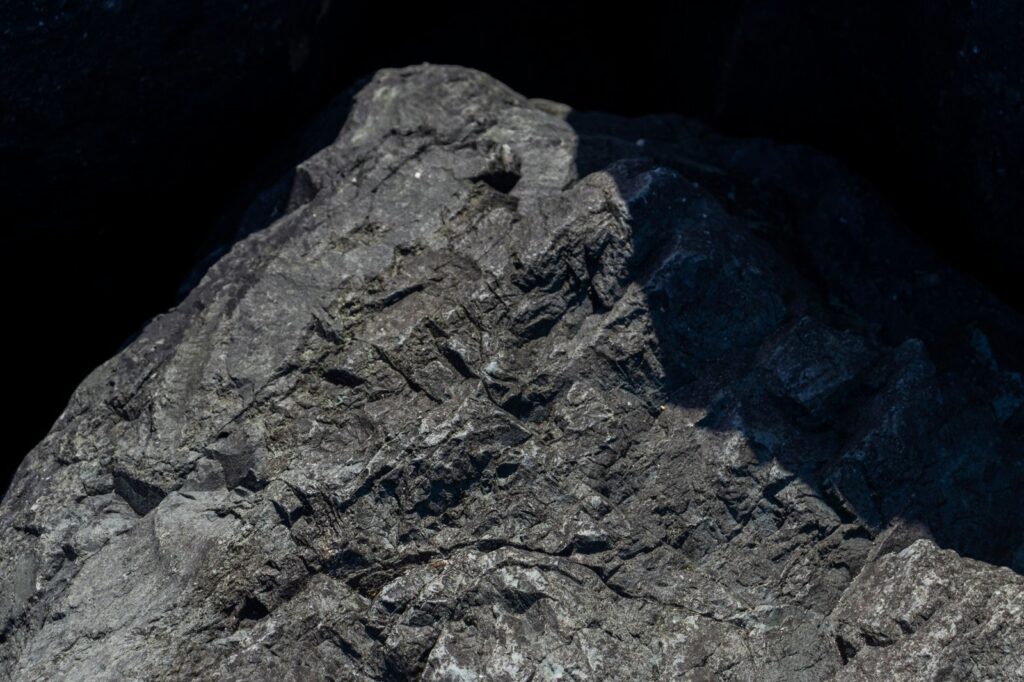
Reaching for the Potato-Shaped Moon
The Japan Aerospace Exploration Agency is preparing to launch the Martian Moons eXploration mission, targeting an October 19 liftoff aboard an H3 rocket from Tanegashima Space Center in southern Japan, according to international reports. The undertaking represents the world’s first attempt to land on the Martian moon Phobos and return a sample to Earth, according to the Guardian. As space agencies from Asia, Europe, and North America turn their attention toward the Red Planet, this small satellite stands out as a prime target for scientific study. According to statements from the Guardian, JAXA project manager Yasuhiro Kawakatsu called Martian moons the most important unclimbed mountains in the solar system.
Characteristics and Mysteries of Phobos
Discovered in 1877 by American astronomer Asaph Hall at the United States Naval Observatory in Washington, D.C., using the 26-inch Great Equatorial telescope, Phobos is the innermost and larger of the two natural satellites of Mars, according to Wikipedia. The body is named after the Greek god of fear and panic, who was a son of Ares. Phobos has a mean radius of 11 kilometers or 7 miles, and measures about 17 by 14 by 11 miles, or 27 by 22 by 18 kilometers, according to Wikipedia and Astronomy.com. It is one of the least reflective bodies in the Solar System, with an albedo of 0.071, and features a prominent impact crater named Stickney, according to Wikipedia. The moon orbits 6,000 kilometers or 3,700 miles from the Martian surface, completing an orbit in just 7 hours and 39 minutes, according to Wikipedia. Because it orbits Mars faster than the planet rotates, it appears to rise in the west and set in the east twice each Martian day, according to Wikipedia. Images and models indicate that Phobos may be a rubble pile held together by a thin crust, and tidal interactions are causing the moon to get closer to Mars by about 2 centimeters or 0.79 inches per year, according to Wikipedia.
The Debate Over Origins and Past Failures
Scientists remain divided on how Phobos and its smaller sibling Deimos formed, with theories suggesting they are either captured asteroids snared by Mars gravity or debris flung into orbit following a massive impact, according to Astronomy.com and the Guardian. Reaching the moon has historically proven difficult, with the Soviet Union losing both of its Phobos probes in 1988 and 1989, and Russia’s later Phobos-Grunt sample return mission failing to escape Earth orbit in 2011, according to Astronomy.com and the Guardian. The MMX spacecraft is scheduled to arrive at the Mars region in August 2027, spend three years collecting data and samples, and return to Earth in 2031, according to Astronomy.com and the Guardian. Kiyoshi Kuramoto, the principal investigator on the mission, stated in the Guardian that analyzing soil samples will likely settle the question of origin. Material from Mars is expected to make up about 0.1 percent of the samples collected from Phobos, according to JAXA officials cited by the Guardian.
Future Exploration and International Collaboration
Beyond answering questions about solar system formation and the origins of water and organic materials, samples from Phobos could provide useful data for considering a Martian moon as a base for a future crewed mission to the planet, according to statements by Kawakatsu in the Guardian. JAXA leads the MMX mission as the largest international collaborative mission in lunar and planetary exploration ever led by Japan, according to Astronomy.com. NASA is contributing science instruments and ten participating scientists, the French National Centre for Space Studies and the German Aerospace Center built a 55-pound rover named IDEFIX, France supplied an infrared spectrometer, and the European Space Agency is providing scientific and operational support, according to Astronomy.com and the Guardian.
Orbital Maneuvers and Surface Operations
Upon arriving at the Mars region in August 2027, the MMX spacecraft will not immediately enter a standard orbit around Phobos. Instead, it will slip into a so-called quasi-satellite orbit a month later, according to Astronomy.com. While this trajectory will make the spacecraft appear to orbit the moon, it will in fact be in orbit around Mars, tracking along with the motion of the moon. This complex maneuver allows the 30-foot-long (9 meters) spacecraft, which comprises a propulsion module, exploration module, and return capsule, to maintain a stable vantage point for its three-year data collection period.
Once in position, the mission will deploy IDEFIX, a 55-pound (25 kilograms) rover built by the French National Centre for Space Studies and the German Aerospace Center. Due to Phobos’s low gravity, the rover will weigh less than a few dozen paperclips on the surface, according to Astronomy.com. The rover is designed to navigate the moon’s terrain to collect samples, while the spacecraft will also conduct a flyby of Deimos to gather observations. Kuramoto noted that samples from Phobos could shed light on the origin of Deimos, as the two moons are believed to have similar roots, according to the Guardian.
The selection of Phobos for sampling over its smaller sibling was driven by its proximity to Mars. Scientists chose the moon because it is closer to the planet and therefore may hold more information about Mars’s history, according to the Guardian. JAXA officials state that material from Mars is expected to make up about 0.1 percent of the material collected from Phobos. This composition offers a unique opportunity to study the interaction between the planet and its satellite, potentially revealing how the Martian environment evolved over time.
Sources
- Phobos (moon)
- Japan prepares to launch sample return mission to Phobos
- Japan to launch world-first mission to collect samples from Martian moon
Photo: Michal Pokorný / Unsplash (Unsplash License)




