
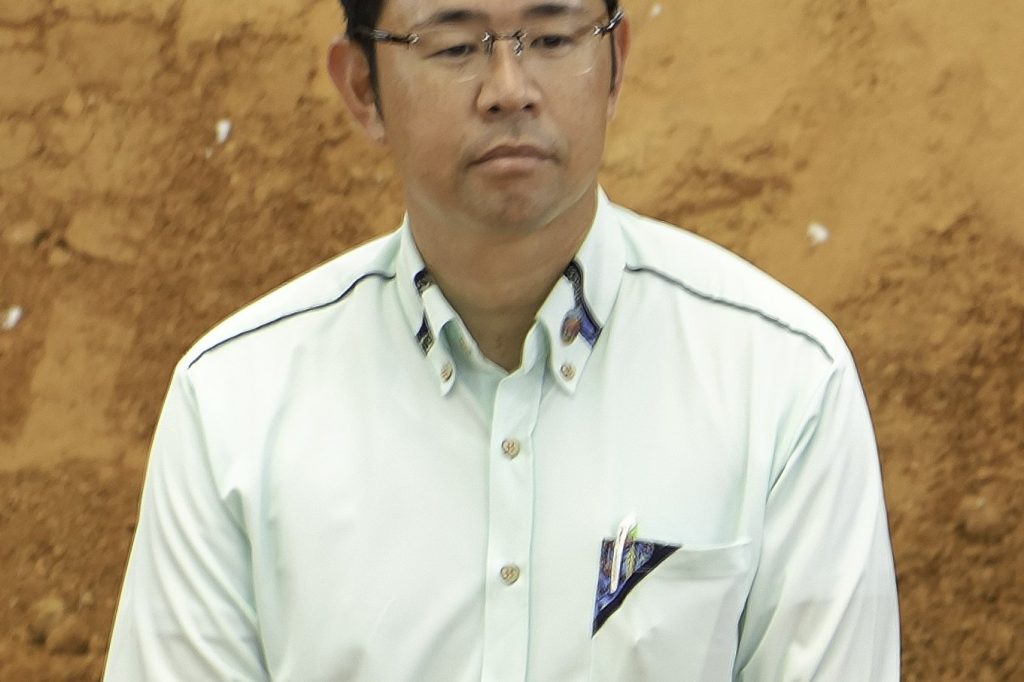
NAHA, September 23 — Okinawa has handed a landslide victory to a conservative who accepts Tokyo’s plans for relocating a controversial US airbase, delivering a blow to twelve years of anti-base politics in Japan’s southernmost prefecture. Genta Koja’s victory on Sunday over two-term governor Denny Tamaki raised a question cutting to the heart of Okinawa’s post-war politics: is it finally starting to move on from the US military base issue?
Koja, a 42-year-old conservative backed by Japanese Prime Minister Sanae Takaichi’s Liberal Democratic Party, campaigned on economic revival and accepting Tokyo’s plan to relocate the US Marine Corps’ Futenma air station from densely populated Ginowan to the coastal Henoko district in Nago, both on Okinawa Island. Tamaki, by contrast, had opposed the base project for his entire tenure as governor, a stance he inherited from his late predecessor after winning 2018’s election on an anti-base platform.
Economy beats bases at the ballot box
Exit polls conducted by Kyodo News on Sunday found that nearly half of voters ranked economic revitalisation as their top concern, while barely one-fifth of respondents cited issues related to US bases. That was reflected in the election results. Koja, a former deputy mayor of Okinawa’s capital Naha, defeated Tamaki with 59 per cent of the vote, officials said on Monday.
He will become the prefecture’s first governor born after its return to Japanese sovereignty by the United States in 1972 and the first in over a decade not to have built his career on opposition to US military bases. Okinawa has been seen as a bastion of pacifist, left-leaning opposition forces for years.
Despite accounting for less than 1 per cent of Japan’s total land area, it hosts roughly 70 per cent of the land dedicated exclusively to US military facilities in the country — a burden that has made it central to arguments over the US-Japan alliance. Tamaki and his All Okinawa movement, a broad political and civic alliance that opposes the relocation and construction of US military bases on Okinawa Island, had long framed the dispute as a test of local autonomy against central authority.
A generational divide
Sunday’s result illustrated a generational divide, according to Sebastian Maslow, an associate professor at the University of Tokyo’s Institute of Social Science. While voters over 60 largely backed Tamaki and All Okinawa, younger voters were more concerned about the economy, he said. The outcome reflected pragmatism as well as frustration with Tamaki for failing to stop new base construction, Maslow said — though that did not mean voters were unconcerned about national security implications.
Japan’s Nansei shift — the build-up of defence capabilities across its southern islands — was expected to continue under the new governor and this will place an even higher burden on Okinawa, he said. Masato Kamikubo, a political scientist and professor at Ritsumeikan University, said successive LDP governments dating back to Shinzo Abe’s administration had cut subsidies to Okinawa in an attempt to bully the prefecture for its confrontational approach to central authority.
Faced with rising prices and other economic difficulties, Okinawan voters appear to have wanted a way out of the present situation and therefore prioritised the economy over the military base issue, he said. The election result reflected a move away from the decades-old contest between conservative and liberal blocs, Kamikubo said, arguing that All Okinawa’s crushing defeat revealed a movement built on ideological resistance struggling to hold a new generation’s attention.
A younger generation is now beginning to create a new form of politics from the grass roots, moving beyond the traditional divide between left and right, he said. This election may have symbolised that emerging transformation.
Meanwhile, Takaichi’s firm stance on national security, particularly the tough line she had taken on China, also resonated with Okinawan voters. What to watch next is whether Koja’s mandate holds as the Henoko relocation proceeds and whether the Nansei defence build-up sharpens the burden on a prefecture that has spent the post-war decades arguing about it.




