
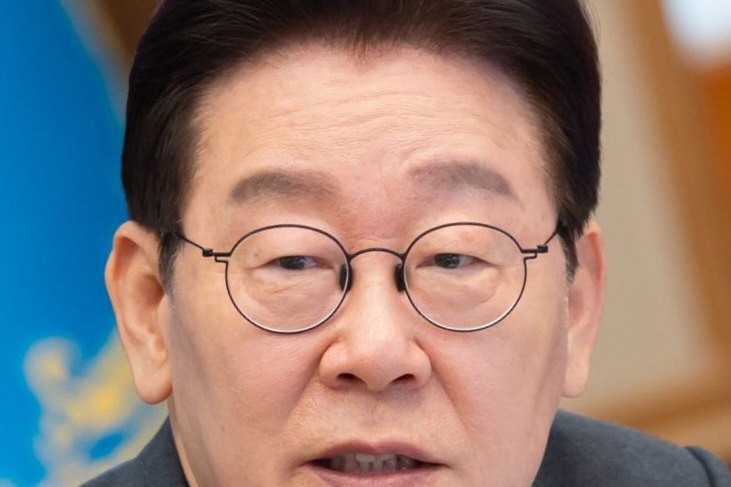
SEOUL, September 20 — South Korea has hosted the first presidential-level summit with the five Central Asian states, a meeting local media billed as historic and one that Seoul hopes will convert a long-running dialogue into something more permanent. The summit, held on Wednesday, September 16, followed bilateral meetings the previous day between South Korean President Lee Jae Myung and the leaders of Uzbekistan, Kazakhstan, Turkmenistan, Tajikistan and Kyrgyzstan.
It raises a dialogue that has existed since 2007 to the level of heads of state, according to Sanat Kushkumbayev of the Kazakhstan Institute for Strategic Studies.
What each side wants
The Central Asian states, increasingly positioning themselves as a bloc known as C5+, are looking for investments, access to technology and a way to diversify their international partnerships beyond Moscow and Beijing. South Korea, for its part, needs to diversify its own economic and supply-chain dependencies. Sabina Insebayeva, a political scientist at Nazarbayev University, noted that South Korea has a limited domestic resource base and significant supply-chain exposure to China, particularly in critical materials, components and other industrial inputs.
Central Asia can offer critical minerals, energy, alternative production opportunities and greater supply chain diversification. Korea can provide technology, capital and industrial expertise.
That exchange sits at the centre of the K-Silk Road initiative, South Korea’s strategy for Central Asia launched in 2024. The stated aim goes beyond securing raw materials to developing processing, manufacturing and technology capacity in partnership with local companies.
The hard part
Central Asia no longer wants to position itself as an exporter of raw materials. It seeks skills and technology for domestic industrial hubs, with South Korea potentially acting as a long-term partner, particularly in Kazakhstan and Uzbekistan. Kazakhstan already accounts for much of South Korea’s trade and investment presence in the region, so it can reasonably push for larger industrial projects, research facilities and local supplier networks, Kushkumbayev explained.
The difficult part, as both sides appear to recognise, will be moving from assembly and memorandums to genuine localisation and commercial production. By the end of 2025, the lump-sum volume of South Korea’s direct investment in Central Asia reached about $6.4bn.
The summit is expected to produce a framework for regular high-level cooperation, followed by more detailed bilateral deals. It also underscores Central Asia’s collective engagement with external partners without giving up national priorities. What to watch next is whether the framework yields binding projects rather than further memorandums, and whether the processing and manufacturing capacity both sides describe can be built on the ground.




