
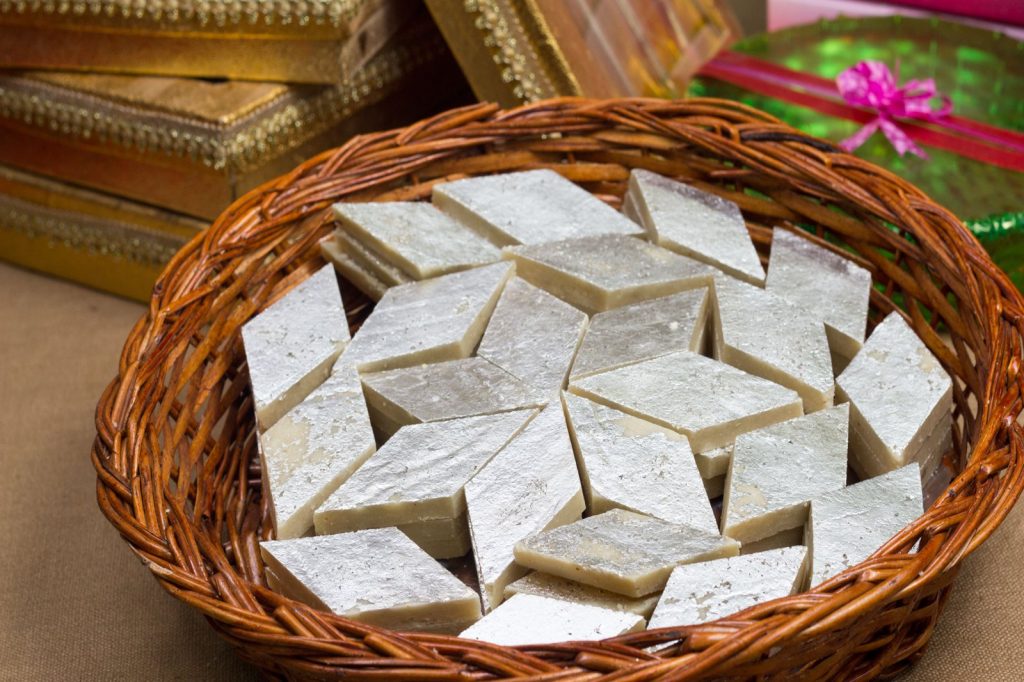
MUMBAI, Aug 2 — A rusted metal pin found inside a box of kaju katli has handed Mumbai’s mithai trade the kind of contamination scare that costs far more than the price of one sweet. For an industry built on festive gift-giving and daily counter custom, consumer confidence is the product; a foreign object in a premium cashew sweet undermines the whole chain.
The pin turned up in kaju katli purchased on July 29, 2026 from Tewari Bros Sweets in Mumbai. The same outlet is now facing separate allegations after a video surfaced that appears to show a toilet inside the kitchen and cloth being boiled in a kadhai, conditions that suggest lapses in basic hygiene and invite microbial contamination or other health hazards.
A chain with many vulnerable links
Traditional Indian sweets are not a single-step product. Kaju katli, made from cashew nuts, sugar and ghee, depends on careful processing to hold its characteristic texture and quality; motichoor laddoo, built from fine boondi — gram flour droplets — steeped in sugar syrup, is similarly labor-intensive. Every stage carries risk.
Production runs through the selection of raw materials, preparation, cooking and packaging. Contamination can enter at any of those points: in the handling of raw ingredients, in cooking done with unclean utensils, or in improper storage. The rusted pin illustrates how foreign objects can slip into the food chain inadvertently, while the video’s imagery speaks to a different failure — hygiene failures that open the door to microbial contamination.
A single foreign object is a quality failure. A toilet in the kitchen would be a systemic one.
What the sector is watching
The economics of the sweet trade hinge on volume and reputation. Cashew-based sweets like kaju katli sit at the premium end of the mithai counter, and the margin for error is thin. When contamination surfaces at a named outlet, the damage is not confined to one shop — the entire category absorbs the distrust, and repeat buyers think twice about where their boondi was boiled.
The Tewari Bros case is also a reminder that the process itself is only as safe as its weakest stage. Selecting, preparing, cooking and packing traditional sweets requires clean utensils, clean hands and clean storage; the source material notes that lapses at any point can produce microbial hazards. The pin, the alleged toilet and the cloth in the kadhai point to conditions that no quality-control step can fully redeem.
What to watch next is how the outlet responds to the allegations and whether the July 29 incident prompts a broader review of hygiene practices across the city’s sweet makers. For now, the case stands as a cautionary moment for an industry where the next box of laddoos is only as good as the last one.
Sources
{“@context”: “https://schema.org”, “@type”: “NewsArticle”, “headline”: “Mumbai’s Traditional Sweets: Manufacturing Process & Risks”, “description”: “MUMBAI, Aug 2 — A rusted metal pin found inside a box of kaju katli has handed Mumbai’s mithai trade the kind of contamination scare…”, “datePublished”: “2026-08-02T09:30:00+00:00”, “author”: {“@type”: “Person”, “name”: “Aibek Nurlan”}, “publisher”: {“@type”: “Organization”, “name”: “InfoPulse Today”, “url”: “https://newsfeed.infopulsetoday.com/”}, “citation”: [{“@type”: “CreativeWork”, “url”: “https://en.wikipedia.org/wiki/Indian_sweet”}]}




