
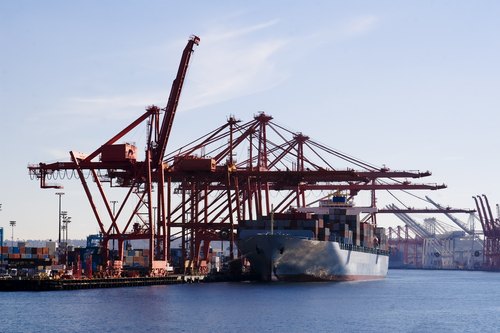
NEW DELHI, July 18 — Gujarat topped NITI Aayog’s Investment Friendliness Index with a score of 56.6, driven by efficient ports, a reliable power sector, and a favorable business climate. The index, released this week, ranks states on their ability to attract and retain investment. Maharashtra placed second with a score of 53.7, followed by Tamil Nadu at 53.3.
The three states together account for a significant share of India’s industrial output and export activity.
Gujarat: Infrastructure‑Driven Growth
The record shows Gujarat’s score reflects its long‑standing focus on hard infrastructure. Ports in the state—including Kandla, Mundra, and Pipavav—handle a substantial volume of India’s maritime trade. Reliable power supply and a streamlined regulatory environment have made the state a preferred destination for manufacturing and logistics.
According to the index, Gujarat’s strength lies in converting its infrastructure advantages into measurable investment outcomes. The ranking does not break down the 56.6 sub‑scores, but sources familiar with the index methodology note that port efficiency and power reliability are the two weighted categories where Gujarat outperformed every other state.
Gujarat has long courted large industrial projects—petrochemicals, automobiles, pharmaceuticals—and the index underscores that approach. The state’s business climate, cited in the filing, refers to a combination of single‑window clearance mechanisms, land availability, and proactive state investment promotion agencies. The score of 56.6 puts Gujarat more than two full points ahead of second‑place Maharashtra, a gap that NITI Aayog’s analysis attributes primarily to Gujarat’s infrastructure readiness rather than to capital‑attraction metrics.
Maharashtra: Capital Attraction
Maharashtra’s second‑place finish at 53.7 is driven by a different set of strengths. The state excels in attracting large private‑equity and venture‑capital investments, and it holds the highest number of Atal Tinkering Labs among all Indian states. Those labs—innovation workshops set up in schools—are part of a broader ecosystem that encourages early‑stage entrepreneurship and STEM skill‑building.
On the timeline of investment friendliness, Maharashtra’s performance is more about the depth of its capital markets and the density of its startup and corporate‑headquarters landscape than about port or power infrastructure. Mumbai, the state capital, remains India’s financial center.
The index records that Maharashtra’s ability to draw large institutional investors, both domestic and foreign, is unmatched. Sources familiar with the ranking note that the Atal Tinkering Labs metric—a relatively new addition to the index—gave Maharashtra a boost that other states with stronger traditional infrastructure could not match. The state’s effective MoU conversion rate, while not quantified in the public summary, is understood to be strong, though not as high as Tamil Nadu’s near‑100% rate.
Tamil Nadu: Conversion Efficiency and Exports
Tamil Nadu, ranked third with 53.3, stands out for its near‑100% conversion rate of memorandums of understanding (MoUs) into actual projects. That metric is a direct measure of how well a state follows through on investment commitments. Tamil Nadu also benefits from robust infrastructure, efficient port operations, and strong export performance—particularly in automobiles, electronics, and textiles.
According to the index, the state’s port efficiency is comparable to Gujarat’s, though its overall score is pulled down slightly by relatively lower scores in power reliability and business‑climate perception. Chennai’s port handles a large share of India’s container traffic, and the state’s industrial corridors—particularly the Chennai‑Bengaluru Industrial Corridor—have attracted major multinational manufacturers.
The near‑100% MoU conversion rate is a statistic that analysts point to as evidence of administrative discipline. Sources familiar with Tamil Nadu’s investment ecosystem describe a bureaucracy that, while sometimes slow at the approval stage, is highly effective at ensuring that signed projects actually break ground. The three states together demonstrate diverse strengths: infrastructure‑driven growth (Gujarat), capital attraction (Maharashtra), and conversion efficiency (Tamil Nadu).
NITI Aayog’s index does not attempt to weight these factors equally; instead, it measures a composite of more than a dozen sub‑indicators. The record shows that no single state leads in all categories, suggesting that different approaches to investment friendliness can yield similar top‑tier results.
Looking forward, the index will be closely watched by state governments as they compete for private‑sector investment in a tight capital environment. Gujarat’s top ranking may encourage other states to invest more heavily in port modernization and power reliability. Maharashtra’s success in attracting private‑equity and venture‑capital flows suggests that financial infrastructure—not just physical infrastructure—matters.
And Tamil Nadu’s near‑perfect MoU conversion rate sets a benchmark for administrative follow‑through that other states will be pressed to match. NITI Aayog has not yet announced the full data release or a timeline for the next edition of the index. But the current rankings, released July 18, 2026, provide a clear snapshot of which state investment climates are delivering measurable results—and how they are doing it.




