
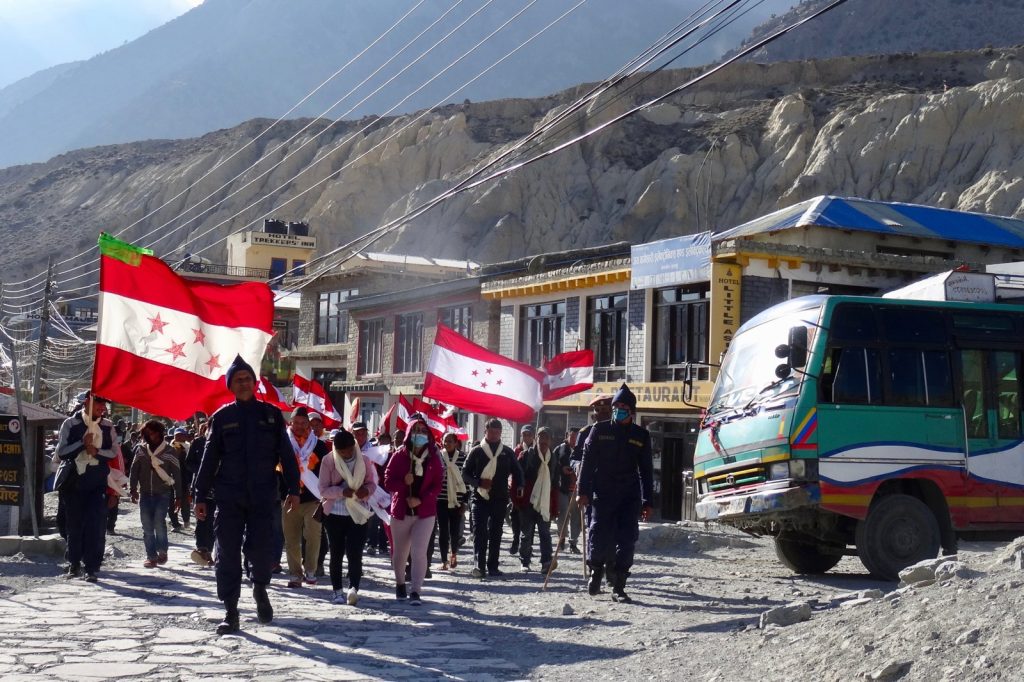
Nepal’s largest political party is sending handlers into every district of the country. The Nepali Congress has named central-level representatives for all 77 districts. Their job is straightforward: run the new active membership drive.
The party’s Membership Management Central Committee made the call. These aren’t local volunteers.
These are people dispatched from the center. The party wants the process “effective, systematic, and well-organised.” That is the official language. What it means on the ground is that the party apparatus is tightening control over who gets in and how.
The stakes are clear. The 15th General Convention is coming.
That convention will pick the party’s leadership. The membership list determines who votes. Control the list, control the outcome.
That is the oldest rule in factional politics. But the party is also making a generational bet. The representatives have a specific objective: bring in more people under 35.
That is a hard target. For younger Nepalis, this is the moment the party says it wants them.
Whether the local machinery actually lets them in is another question. The central representatives are supposed to make sure it happens. Nepal’s political parties have long been criticized as gerontocracies.
Old faces, old deals, old loyalties. The Nepali Congress is now publicly committing to change that.
The 15th General Convention will be the test. If the youth numbers are real, the party’s internal balance of power shifts. If the numbers are padded with paper members, nothing changes.
Meanwhile, a different kind of reopening happened in Kathmandu. The Bhatbhateni Supermarket in Chuchchepati unlocked its doors today. The building was fully reconstructed.
Modern infrastructure. Upgraded facilities.
The company says the goal is a more organised and convenient shopping environment. Customers showed up. A notable number, according to reports.
For families in Chuchchepati, this is not abstract. The supermarket is where they buy daily goods.
It being closed meant longer trips, more hassle, different routines. Now it is back. Same name, better building.
The two stories sit side by side in today’s news. One is about political infrastructure. The other is about commercial infrastructure.
Both are about rebuilding. The party is trying to rebuild its base before a convention.
The supermarket literally rebuilt its structure to serve customers again. Both carry risk. For the Nepali Congress, the risk is that the central representatives fail.
That the youth drive stalls. That the convention becomes a fight over a rigged membership list instead of a genuine contest of ideas.
The party’s credibility with a generation hangs on it. For Bhatbhateni, the risk was simpler. A closed store loses customers to competitors.
A badly rebuilt store loses them permanently. The first day’s crowd suggests the gamble paid off. But a supermarket lives on repeat business, not opening-day curiosity.
Nepal moves on two tracks. Political parties maneuver for power.
Businesses maneuver for customers. Both tracks matter. Both affect how ordinary people live.
The party’s membership drive will shape who represents them. The supermarket’s reopening shapes where they shop.
Neither is trivial.




