
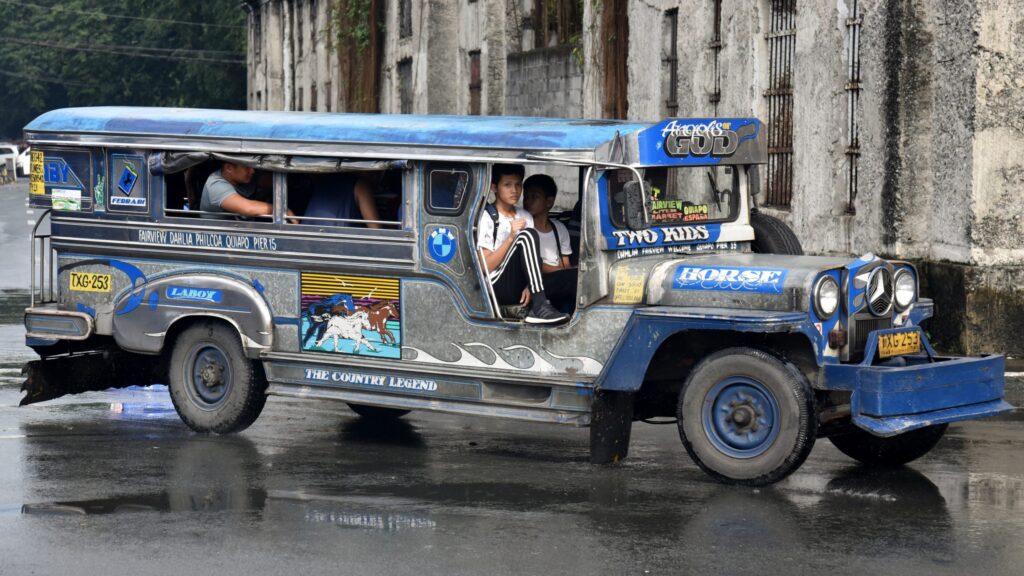
A jeepney carrying 20 passengers crashed into a tree on May 10, 2026, in Oriental Mindoro province, Philippines, leaving four people dead and 10 others injured. The accident underscores ongoing concerns about public transportation safety in a country where millions depend on these vehicles daily. Jeepneys are a common mode of transport across the Philippines, known for their vibrant decorations and crowded interiors.
Their history traces back to the American colonial era, when modified imported cars with attached carriages—called “auto calesas” or “AC”—were introduced. These early vehicles eventually evolved into the modern jeepney, which has become both a practical transit option and a cultural emblem.
The cultural significance of jeepneys was highlighted when a Sarao jeepney was displayed at the 1964 New York World’s Fair as a national symbol of the Philippines. The practice of adorning these vehicles, known as “Jeepney art,” has grown into a key element of Filipino identity and a point of pride. The Oriental Mindoro crash serves as a reminder of the need for regular vehicle maintenance, inspections, and adherence to traffic regulations.
Safety measures in public transportation are critical to reducing accident risks and protecting lives. Beyond safety, the widespread use of jeepneys raises questions about energy security and costs.
As energy demand increases, the Philippines could benefit from exploring alternative and renewable energy sources for its vehicles. Investing in renewables would reduce reliance on fossil fuels, lower energy expenses, and support a cleaner environment. Such steps could also ease the financial burden of fuel imports and create jobs in the renewable energy sector.
Balancing economic growth with environmental protection remains a challenge. Prioritizing public safety, investing in renewable energy, and promoting sustainable practices could help create a healthier environment for future generations.
The accident in Oriental Mindoro highlights the urgency of proactive measures to protect both people and the environment. Looking forward, the Philippines has an opportunity to develop a more sustainable transportation system. Options include adopting electric or hybrid vehicles, improving road infrastructure, and encouraging cycling or walking.
Stricter safety regulations and enforcement, along with regular inspections of public transport vehicles, could further enhance safety. Collaboration between the government and private sector would be key to achieving these goals.
A cleaner, safer, and more efficient public transportation system would benefit the country’s citizens and environment alike.




