
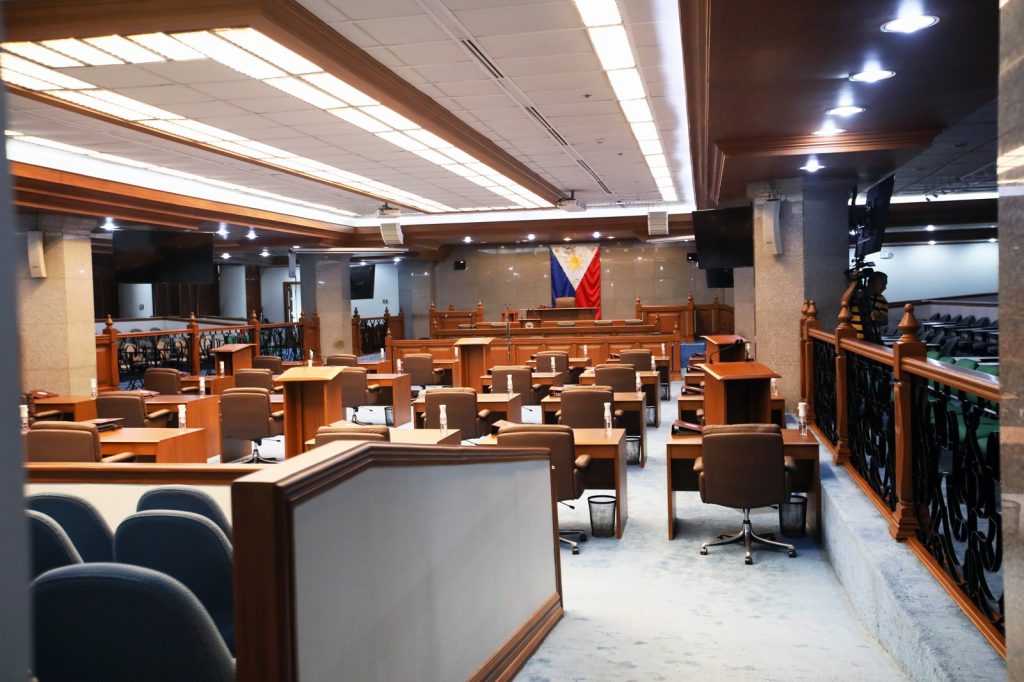
The Philippine Senate committee has taken a formal step toward eliminating the six‑year, single‑term restriction for the president and vice‑president. On April 29 the panel met in Manila to examine a draft resolution that targets Article VII of the 1987 Constitution. If adopted, the change would allow Ferdinand Marcos Jr. and any future office‑holders to seek additional terms.
The committee’s chair emphasized the need for precise language to prevent future legal challenges. Lawmakers reviewed the draft line by line, treating the session as a working meeting rather than a symbolic gesture. The discussion did not settle the broader controversy but moved the proposal forward to the next stage of legislative consideration.
Central to the debate is the existing two‑term ceiling for the presidency and vice‑presidency, which the committee now places under review. This limit was introduced after the Marcos dictatorship to guard against the emergence of another strongman who could hold power indefinitely. Supporters of the amendment argue that contemporary economic uncertainty and geopolitical pressures demand longer planning horizons. They contend that a president assured of remaining in office can make difficult decisions without the distraction of an imminent departure.
Opponents counter that the single six‑term was deliberately designed as a check on concentrated authority. They warn that lifting the restriction could recreate the very conditions the 1987 charter sought to prevent, allowing power to accumulate in the executive branch over successive administrations.
The draft resolution does not prescribe a specific new limit. Instead, it leaves open two possibilities: completely abolishing the term ceiling or establishing a framework that permits re‑election without restriction. This breadth reflects the committee’s effort to explore various options while scrutinizing the wording for unintended consequences.
Proponents highlight the extensive influence of the presidency, noting that the office controls cabinet appointments, the armed forces, and a substantial role in the legislative process. A leader able to serve multiple terms would have years to shape every branch of government, a point opponents cite as a reason for caution. They describe the potential shift as a gradual return to the system the constitution was meant to bury.
The committee ultimately favored the stability argument, advancing the resolution to the full Senate. From there it would proceed to the House of Representatives. Any constitutional amendment requires a supermajority, a high threshold that underscores the difficulty of enacting such change. Nevertheless, the April 29 vote demonstrates that the Senate is treating the matter with seriousness.
Although Ferdinand Marcos Jr. has not publicly advocated for the proposal, observers note that the timing aligns with his current single six‑year term. If the amendment were enacted swiftly, he could stand for another term, a factor that intensifies the debate. Critics claim the process is being expedited to benefit one individual, while proponents insist the focus is




