
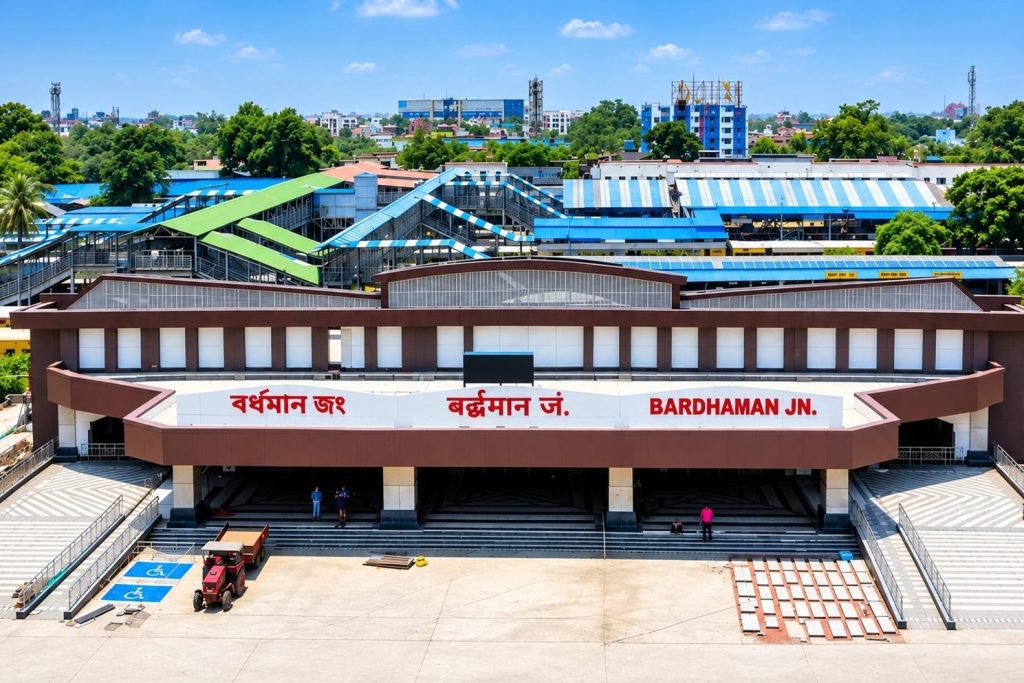
On 13 December, a water tank perched above Barddhaman Junction railway station gave way, killing three people and wounding thirty others. The incident has thrust the bustling hub, a pivotal node on Eastern India’s rail network, into the spotlight and raised urgent questions about the upkeep of its infrastructure.
Barddhaman Junction is far from a minor stop. Every day more than 300 express, mail and super‑fast trains pause at its platforms, a frequency that translates to a train roughly every five minutes during peak periods. In addition, EMU services from Howrah terminate here, delivering thousands of commuters onto the station’s concourses.
Serving Bardhaman—West Bengal’s fifth‑largest city—the station handles a volume of passengers that strains every element of its operation, from tracks and signalling to platforms and ancillary facilities such as water tanks. The collapsed tank was integral to daily station functions.
It supplied drinking water for travelers, filled the reservoirs of passing trains, and supported the water needs of restrooms and cleaning crews. Its sudden failure therefore represented not merely a structural breakdown but a disruption of essential services. Authorities have opened an investigation to determine whether the tank’s demise resulted from inadequate inspection, a design defect, or simple neglect. Engineers will examine the wreckage, assess the condition of supporting pillars, and review maintenance records.
The outcome will shape whether corrective actions focus on routine upkeep, redesign, or more comprehensive audits of similar installations across the railway network. For the families of the three victims, the investigative findings are unlikely to provide solace, but the broader implications are significant.
Passengers place implicit trust in the safety of the structures they use daily; the collapse has shaken that confidence. Moreover, Barddhaman Junction sits on the Howrah–Delhi main line and the Howrah–Bardhaman chord—critical arteries of the national railway system. If a water tank can fail at one of the busiest eastern junctions, it prompts concerns about the condition of other aging assets, many of which date back to the British colonial era.
Maintenance practices at Indian railway stations have traditionally been reactive, addressing problems after they surface rather than preventing them. Water tanks, unlike other components, do not exhibit gradual wear that can be easily monitored; they can fail catastrophically, as witnessed in this incident.
The tragedy underscores the need for systematic inspections of tanks at major stations, including checks of welds, support structures and pressure systems. Implementing such audits may require temporary platform closures and additional funding, challenges that the railway administration must weigh against the cost of human lives. Bardhaman’s population continues to grow, meaning train traffic and passenger numbers are set to rise rather than fall.
The pressure on the station’s already aging infrastructure will only intensify, making the recent collapse a warning that cannot be ignored. In the short term, repair work on the damaged tank and associated facilities will cause inconvenience for commuters, and normal operations will resume only after safety checks are completed.
Longer‑term, the incident is likely to spark debate over budget allocations for infrastructure renewal and the adoption of more proactive maintenance regimes. As the investigation proceeds, engineers and officials will compile reports that may dictate new standards for water‑tank safety at railway hubs nationwide. The tragedy at Barddhaman Junction serves as a stark reminder that the reliability of the railway system depends not just on tracks and trains, but on the often‑overlooked supporting structures that keep stations functional and passengers safe.




