
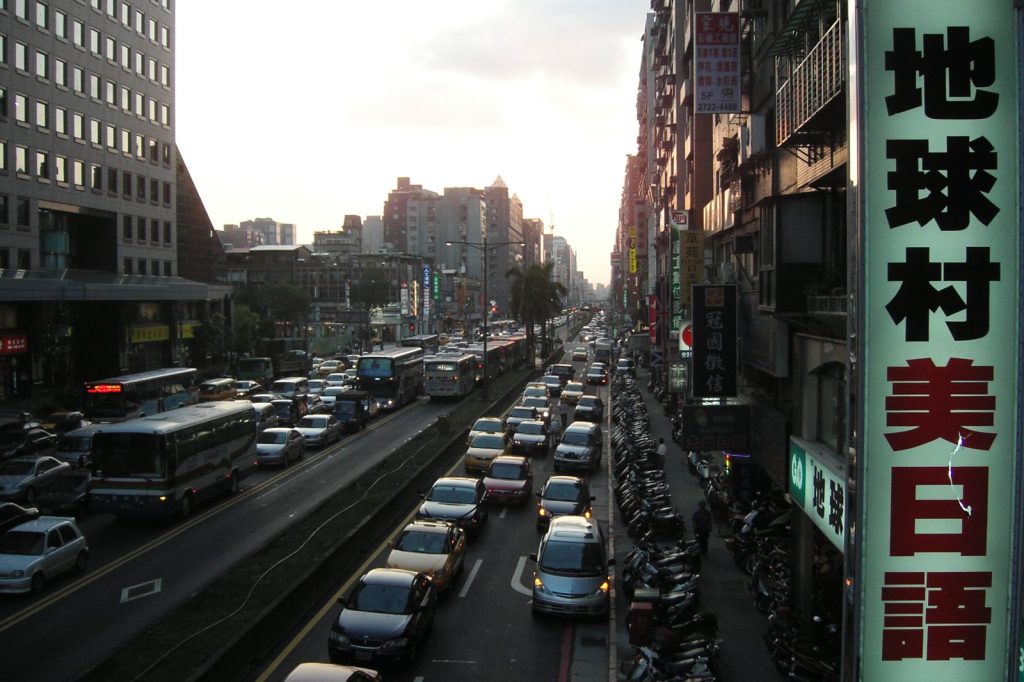
Taipei residents are increasingly choosing private vehicles over public transportation, driven by a sharp drop in fuel costs and concerns about crowded trains. The shift has produced a surge in car registrations that stands in stark contrast to global automotive trends during the pandemic.
Petrol prices have fallen 18 percent since January, with 95-octane fuel now selling at NT$22.2 per litre. For a daily 20-kilometre commute, that reduction saves roughly NT$7,000 annually — enough to cover half a monthly instalment on a NT$600,000 compact car. Automakers have promoted this calculation directly to white-collar workers through Facebook advertisements.
March car registrations reached 37,279, according to the Ministry of Transportation and Communications. That figure represents a 15.1 percent increase compared to March 2019 and a 36.3 percent jump from February 2020. The first quarter surpassed 100,000 units, an 8.2 percent year-on-year rise.
Taiwan recorded only 363 confirmed COVID-19 cases by the end of March. The government never imposed a full lockdown, allowing economic activity to continue while other nations shuttered factories and showrooms.
James Shih, sales director at Hotai Motor — Toyota’s local distributor — noted that showroom traffic declined during the first two weeks of March before rebounding as the stock market stabilised. “People want a sealed cabin they can disinfect themselves,” Shih said. Hotai sold every Corolla crossover it could unload from the port.
The market shift has favoured Japanese brands. Toyota and Lexus together captured 31.5 percent of March volume — 11,726 units — widening their lead over competitors. Mitsubishi took second place with 3,952 registrations, boosted by the Colt Plus small wagon popular with first-time buyers. Mercedes-Benz ranked third at 2,693 cars, as luxury buyers proved less affected by recession concerns. Honda, Nissan and Mazda completed the top tier.
The consequences extend beyond dealerships. Taipei’s transit authority faces reduced fare revenue as subway ridership fell 15 percent. Taxi bookings dropped 20 percent, squeezing drivers already affected by the pandemic. Lower petrol consumption cuts government tax receipts. Industry observers note that the behavioural shift toward private cars may persist even after the health crisis ends.
Several factors could alter the trajectory. April registrations may decline if global uncertainty rattles Taipei’s stock market again. Japanese brands could further extend their market dominance. The government might adjust fuel taxes or transit subsidies in response to changing travel patterns.
For now, Taiwan’s auto industry is selling more cars during the pandemic than before it — a situation unmatched elsewhere. The sustainability of this trend depends on whether cheap fuel, fear of crowds, and the island’s containment success remain stable. One new infection cluster, a spike in oil prices, or a bear market could shift the arithmetic.




