
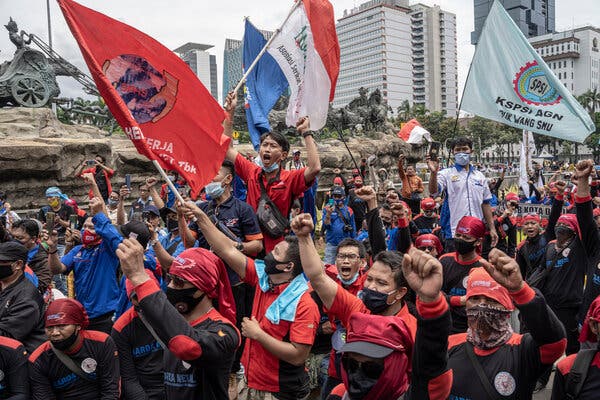
On April 5, 2020 analysts warned that Indonesia’s coronavirus relief package, valued at Rp 405 trillion (about $24.2 billion), is unlikely to stop mass layoffs. The government unveiled the stimulus on March 31, 2020, lifting the budget‑deficit ceiling, cutting corporate taxes and earmarking cash aid for 20 million poor households. Officials said the total amount is meant to cushion the economic shock from the pandemic, but experts stressed that the money must also cover healthcare and social‑protection programmes, which spreads the funds thin.
Concerns About Coverage and Impact
Bhima Yudhistira of the Institute for Development of Economics and Finance noted that if the government tries to address both health and economic needs, 405 trillion rupiah is insufficient. He pointed out that many sectors, especially informal workers and small businesses, have been hit hard by the outbreak. Ari Kuncoro, an economics professor at the University of Indonesia, said the decision to raise the cash‑aid beneficiary count to 20 million signals that authorities expect a worst‑case scenario in which that many people could lose their jobs.
Indonesia’s economy relies heavily on informal labour. About 70 million people, out of a population of roughly 270 million, work without formal contracts or benefits.
These workers typically have little savings and no access to unemployment insurance, so a lockdown or sudden drop in demand can erase their income almost instantly.
Funding Allocation and Economic Context
The package includes tax breaks for corporations and a Rp 150 trillion allocation for state‑owned enterprises. Critics argue that such measures may not reach workers, as companies could use the savings to stay afloat rather than retain staff, and many small firms that employ informal workers might not qualify for the corporate tax cuts. As of April 3, 2020 Indonesia had recorded more than 1,700 confirmed COVID‑19 cases and 170 deaths.
The rupiah had weakened by 13 % in March alone, reflecting investor anxiety and capital outflows. The government revised its budget‑deficit target to 5.07 % of GDP, up from the previous cap of 3 %, giving it room to borrow more but raising concerns about debt sustainability.
Healthcare Strain and the Need for Containment
Some economists, including Sutrisno Iwantono, argued that resources should first be directed at containing the virus, warning that without outbreak control any economic stimulus will fail to revive activity. Didik Rachbini, also from the Institute for Development of Economics and Finance, stressed that containment is key to recovery, noting that an uncontrolled virus would overwhelm the healthcare system and force greater spending on treatment.
Hospitals in Jakarta and other major cities have reported shortages of protective equipment and testing capacity. While funds have been set aside for medical supplies and hospital upgrades, experts said the amount may not be enough. They warned that a delayed or inadequate response could lead to higher infection rates, longer lockdowns and deeper economic damage, potentially requiring even larger stimulus packages later.
Challenges in Reaching Informal Workers
Informal workers—street vendors, drivers, domestic helpers and day labourers—are among the most vulnerable. Many live hand‑to‑mouth and cannot afford to stay home, making social‑distancing measures difficult to enforce. Although the cash‑aid programme aims to reach 20 million households, analysts questioned whether it will actually benefit the right people, given that Indonesia’s social‑welfare database is incomplete and outdated, leaving many informal workers unregistered.
Bhima Yudhistira suggested the package should incorporate direct transfers to informal workers, rent relief and loan moratoriums. Without such measures, layoffs could accelerate.
The coming weeks will test whether the current stimulus can slow the rise in unemployment, but the outlook remains grim.




