
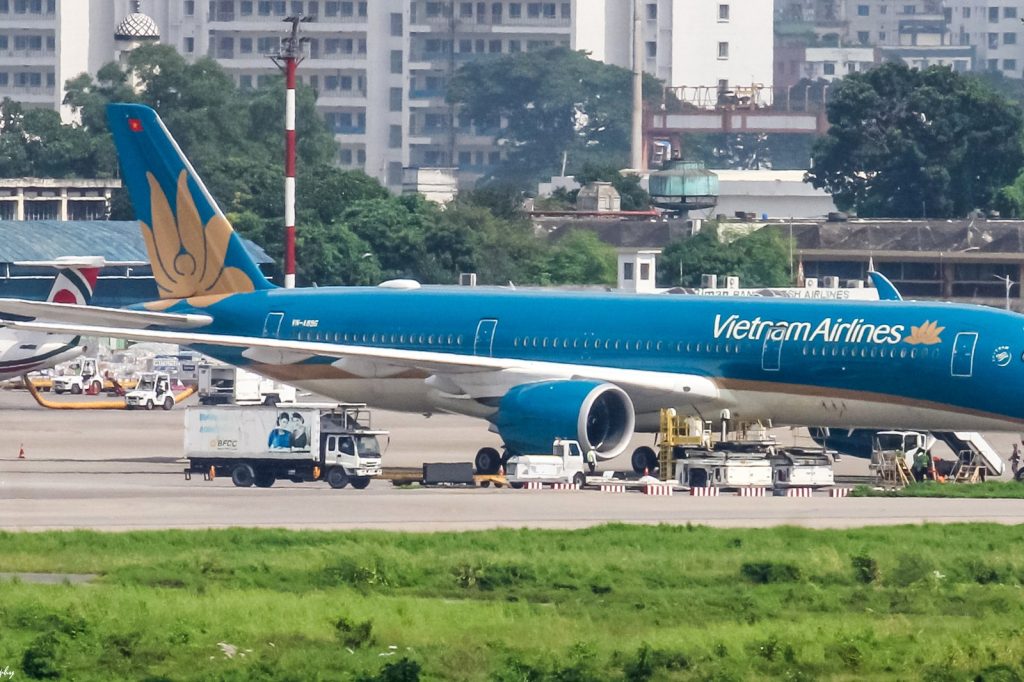
As the coronavirus (now named COVID-19) continues to spread fear in several parts of the world, Vietnamese airlines reported that they were losing up to $430 million in revenue following travel restrictions.
Vietnam has declared a state of public health emergency on February 1 and banned all flights to and from mainland China in order to control the outbreak which has now claimed thousands of lives.
The country’s civil aviation authority said that around 400,000 visitors every month are directly affected by the travel ban.
In a statement, the agency furthered that the number of international passengers dropped 14.1% during the first week of February as major carriers like Jetstar Pacific Airlines, Vietjet Aviation and Vietnam Airlines operate on 72 flight routes between Vietnam and China.
Flag carrier Vietnam Airlines, for its part, said “it is reducing operations and trying to cut costs to ride out the impact of the epidemic and achieve a positive financial result for this year.”
The company has also reported a 20 to 30% drop in its domestic travels for the past two weeks.
It furthered that there are significant losses in the country’s airlines as the flight demand of both international and domestic tourists in Vietnam network dramatically reduced.
China is considered as Vietnam’s largest source of foreign tourists and largest trading partner. According to reports, one-third of the 18 million foreign tourists that visited Vietnam last year were all Chinese citizens.
The coronavirus outbreak has had a significant impact on the global aviation industry, with many airlines around the world experiencing a decline in demand for air travel. This decline is largely due to travel restrictions and concerns about the spread of the virus. As a result, airlines have been forced to reduce their operations and implement cost-cutting measures to mitigate the financial impact of the outbreak.
The situation is particularly challenging for airlines that rely heavily on international travel, especially to and from countries with high infection rates. Vietnam’s tourism industry is a significant contributor to the country’s economy, and the coronavirus outbreak has posed a major challenge to this sector.
The country’s reliance on Chinese tourists has made it vulnerable to the impact of the outbreak. With China being Vietnam’s largest source of foreign tourists and largest trading partner, the ban on flights to and from mainland China has had a significant effect on the tourism industry. Many businesses are feeling the pinch as the number of tourists arriving in the country has dwindled.
The economic implications of the coronavirus outbreak are far-reaching, and the impact on Vietnam’s airlines is just one aspect of a broader crisis. The country’s trade relationships with China are also being affected, as the outbreak has disrupted supply chains.
Vietnamese airlines reported that they were losing up to $430 million in revenue following travel restrictions. The country’s civil aviation authority said that around 400,000 visitors every month are directly affected by the travel ban. The number of international passengers dropped 14.1% during the first week of February.
Flag carrier Vietnam Airlines said it is reducing operations and trying to cut costs. The company has also reported a 20 to 30% drop in its domestic travels. In the context of the global aviation industry, the experience of Vietnamese airlines is not unique.
Many airlines around the world are facing similar challenges. Vietnam Airlines operate on 72 flight routes between Vietnam and China.
One-third of the 18 million foreign tourists that visited Vietnam last year were Chinese citizens.




