
NVIDIA posted a 106% jump in revenue as the AI supercycle gathers pace, but the underlying driver is the infrastructure race that is increasingly centred on Asia. The surge underscores a shift from a model‑centric competition to one where the ability to supply chips, data‑center capacity and advanced packaging decides who captures the upside.
A Different Kind of Boom
Supply bottlenecks and multi‑year demand distinguish this AI cycle from past technology booms, the podcast host noted (S1). In earlier waves, the limiting factor was often the speed of software breakthroughs or the adoption curve of a single device class. This time, the constraint sits in the physical layers that turn raw compute power into usable services. NVIDIA’s own figures illustrate the point: Q2 FY2027 revenue reached $96.22 billion, up 105.8% year‑over‑year, marking the fourth consecutive quarter of faster growth (S2). Over six quarters, earnings per share climbed from $0.81 to $2.22, beating expectations each time (S2). The company’s non‑GAAP gross margin hit 75.0%, while return on equity and return on invested capital stood at 101.5% and 92.2% respectively (S2). Those margins are a direct reflection of a market where demand outstrips the ability to produce the necessary hardware.
Management’s own language reinforces the supply‑demand imbalance. NVIDIA says it has “supply for 70%” growth in fiscal 2028, yet “our demand is much higher than that” (S2). The same executives acknowledge that customers are buying the full AI stack – GPUs, CPUs, networking, systems and CUDA software – as evidenced by networking revenue soaring 138% to $40.31 billion (S2). The result is a multi‑year investment theme where capacity constraints are likely to persist, creating a structural tailwind for firms that can secure the required inputs.
Asia’s Infrastructure Edge
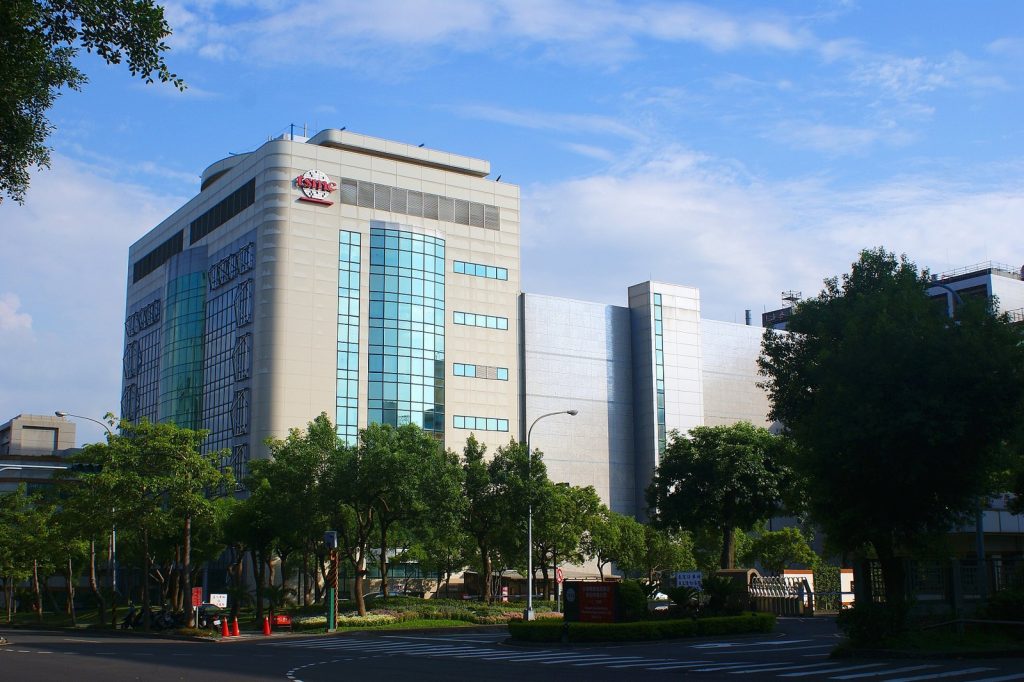
Asia sits at the heart of the AI supply chain, particularly in semiconductor fabrication, advanced packaging and data‑center construction (S1). The region hosts the majority of the world’s leading foundries, many of which have recently expanded capacity to meet the surge in AI‑related orders. Advanced packaging facilities, which stack multiple dies to improve performance and energy efficiency, are also concentrated in East and Southeast Asia, giving local manufacturers a head‑start in delivering the dense, high‑bandwidth modules that modern AI workloads demand.
Data‑center construction follows a similar pattern. Major cloud providers have announced multi‑billion‑dollar investments in new facilities across Singapore, Hong Kong, Tokyo and Jakarta, driven by the need for low‑latency access to AI services for regional enterprises. The combination of proximity to chip production and rapid rollout of compute‑dense facilities creates a virtuous loop: local suppliers can ship finished products faster, reducing lead times and logistics costs, while operators benefit from reduced latency and higher utilisation rates.
Neuberger’s thematic team, led by YT Boon, observes that “thematic investment strategies focused on Asia are increasingly focused on AI infrastructure and application layers rather than just model development” (S1). The firm’s $567 billion of assets under management, spread across equities, fixed income, private markets, real estate and hedge funds, provides a substantial pool of capital that can be directed toward companies embedded in these supply chains (S1). The emphasis on infrastructure, rather than pure‑play AI software, reflects the belief that the region’s manufacturing depth will be a decisive advantage as the supercycle unfolds.
Multi‑Year Demand From Asian Markets
Demand for AI‑enabled services in Asia is not a short‑lived flash. Industries ranging from manufacturing and logistics to finance and e‑commerce are integrating large‑language models, computer‑vision systems and predictive analytics into core operations. The sheer scale of the continent’s consumer base amplifies the need for robust back‑end infrastructure. For example, e‑commerce platforms handling billions of transactions per day are deploying recommendation engines that require continuous model retraining, a task that consumes massive GPU resources.
In the manufacturing sector, smart‑factory initiatives rely on real‑time defect detection and predictive maintenance, both of which depend on high‑throughput inference at the edge. These applications drive a steady stream of orders for specialised ASICs and system‑integrated solutions, many of which are assembled in Asian fabs. Financial institutions, too, are rolling out AI‑driven risk‑assessment tools that must process vast data sets under strict latency constraints, prompting a surge in demand for low‑latency data‑centre capacity in regional hubs.
The cumulative effect is a multi‑year demand curve that aligns with the supply‑side constraints highlighted by NVIDIA. As companies across the region scale up AI workloads, the need for additional wafer capacity, advanced packaging lines and data‑centre floor space will persist well beyond the next fiscal year, reinforcing the supercycle’s longevity.
Investment Themes and Risks
For investors, the convergence of supply bottlenecks and sustained demand translates into a clear thematic playbook. Exposure to semiconductor manufacturers, advanced‑packaging specialists and data‑centre developers offers a direct line to the infrastructure that underpins AI growth. Neuberger’s sizable asset base and thematic focus on Asia suggest that capital is already flowing toward these segments (S1). Moreover, the strong financial performance of companies like NVIDIA – which returned $26.0 billion in Q2 alone and retains $99.0 billion on its buyback authorisation (S2) – provides a benchmark for profitability in the broader ecosystem.
Nevertheless, risks remain. The same supply constraints that fuel the supercycle could also trigger price spikes or allocation delays, especially if geopolitical tensions affect cross‑border component flows. While NVIDIA’s management projects “supply for 70%” growth, the statement that “our demand is much higher than that” (S2) hints at a potential shortfall that could ripple through downstream suppliers. Additionally, the capital intensity of building new data‑centres and upgrading packaging lines means that firms must secure financing at favourable terms; any tightening of credit markets could slow capacity expansion.
Investors should also monitor the competitive dynamics within the AI stack. NVIDIA’s dominance is evident – its networking revenue rose 138% to $40.31 billion, and its non‑GAAP gross margin sits at 75.0% (S2) – but rivals such as AMD and Intel remain active, and their valuation metrics differ markedly (AMD trades at a P/E of 212 versus NVIDIA’s 44, according to the same source) (S2). While the current valuation gap appears compelling, a shift in market sentiment could re‑price the risk‑adjusted returns of the sector.
In sum, the AI supercycle is being defined not by who writes the next breakthrough algorithm but by who can deliver the chips, packaging and data‑centre capacity that turn those algorithms into commercial products. Asia’s entrenched manufacturing ecosystem, combined with a multi‑year surge in regional AI adoption, positions the continent at the forefront of this investment wave. As long as supply constraints persist and demand remains robust, thematic exposure to Asian infrastructure will likely continue to outperform, provided investors keep an eye on the underlying bottlenecks and competitive pressures.
Sources
- The AI Supercycle, Asia, And Why This Time Is Different
- The AI Supercycle Isn’t Slowing Down, and Nvidia’s Compute Moat Just Got Deeper.
- The AI Supercycle, Asia, And Why This Time Is Different




