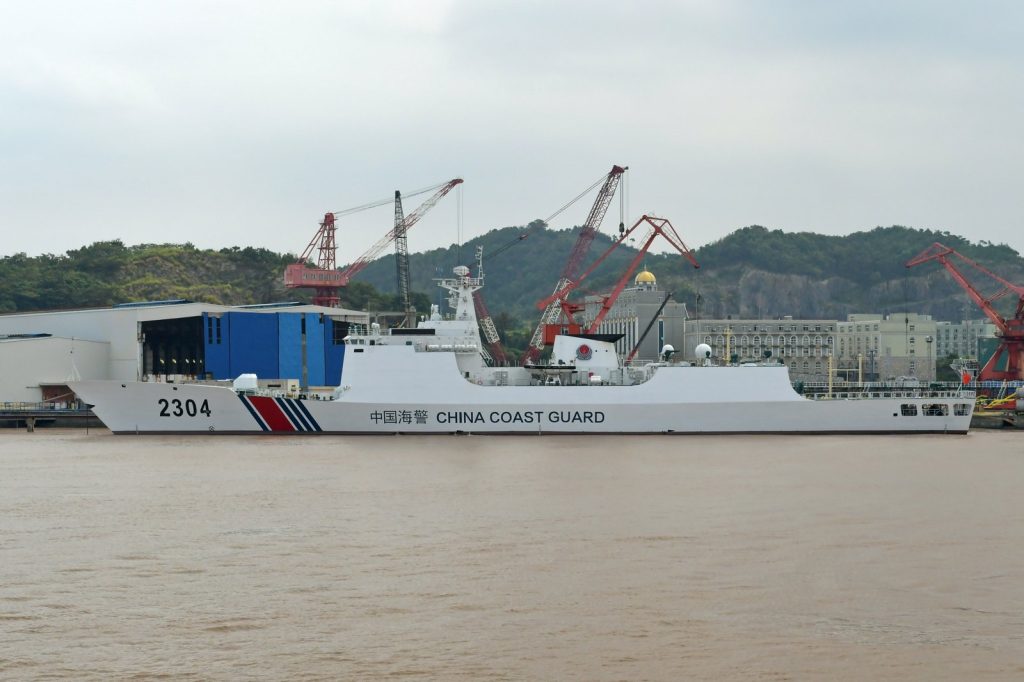
A Chinese coast guard flotilla began operating in waters east of Taiwan on Saturday, a deployment that underscores Beijing’s steady assertion of what it terms its “sovereign rights” over the area despite ongoing international objections. Chinese authorities did not specify the size of the vessels involved or how long the patrol would last.
The move comes against a backdrop of recent diplomatic friction over Taiwan’s status, a self-governing island that Beijing claims as a breakaway province.
Patrol Draws Response From Taiwan and Raises Broader Strategic Questions
Taiwan’s defense ministry said it had monitored the Chinese movements and deployed its own vessels and aircraft in response. The ministry characterized the patrol as a “routine” occurrence, a notably understated description that nonetheless underscores how frequent such encounters have become in waters that Taipei and its allies view as contested.
The Chinese foreign ministry has in the past described similar operations as routine activities within its territorial waters, and Saturday’s deployment appears consistent with that pattern. The United States maintains a complex relationship with Taiwan under the Taiwan Relations Act. The current administration has adhered to a policy of strategic ambiguity regarding its defense commitments to the island while continuing to sell arms to Taipei.
Washington has repeatedly called for restraint on all sides. Analysts will be watching in the coming days for any further Chinese naval activity and for the tone of official statements from both Beijing and Taipei to gauge whether this patrol represents a one-off operation or part of a sustained campaign.
Coast Guard’s Transformation From Civilian Agency to Paramilitary Force
The China Coast Guard is not a traditional civilian law enforcement body. It is the maritime security, law enforcement, and search-and-rescue service of the People’s Armed Police, which itself falls under the Chinese armed forces. This arrangement is the result of a decade-long reorganization that has transformed the service into a paramilitary force operating under military command.
Before 2013, five separate Chinese agencies handled maritime law enforcement, leading to what analysts described as waste, inefficiency, and disarray. That year, the National Congress authorized the creation of a unified coast guard under the State Oceanic Administration, merging several existing bodies including marine surveillance, fishery enforcement, and border defense units.
However, the merger did not create a fully integrated service. The founding organizations kept their separate identities, missions, and cultures, and the chain of command remained unclear. By 2018, those problems had not been resolved.
In a major reorganization, the coast guard was transferred to the People’s Armed Police and, through that body, placed under the command of the Central Military Commission. The State Oceanic Administration was abolished.
Control passed to a rear admiral from the Navy, a move that effectively militarized the coast guard, aligning it more closely with the People’s Liberation Army. Local maritime enforcement units remained outside the new structure. This history is pivotal to understanding the current patrol east of Taiwan.
What was once a civilian agency has been deliberately transformed into a paramilitary force that operates under military command. The patrols are not merely routine; they reflect a deliberate policy of expanding Beijing’s presence in waters that remain a flashpoint for Taiwan and its allies.
For the United States and other nations watching the region, the growing role of the coast guard signals that naval standoffs and diplomatic friction over Taiwan are likely to become more frequent, not less.