DUSHANBE, October 25, 2026 — A Japanese-led geothermal heating and cooling system began operating this month at the National Academy of Sciences of Tajikistan in the capital. The project aims to help the Central Asian nation address chronic winter power shortages and reduce its reliance on coal.
Mountains Define The Energy Challenge
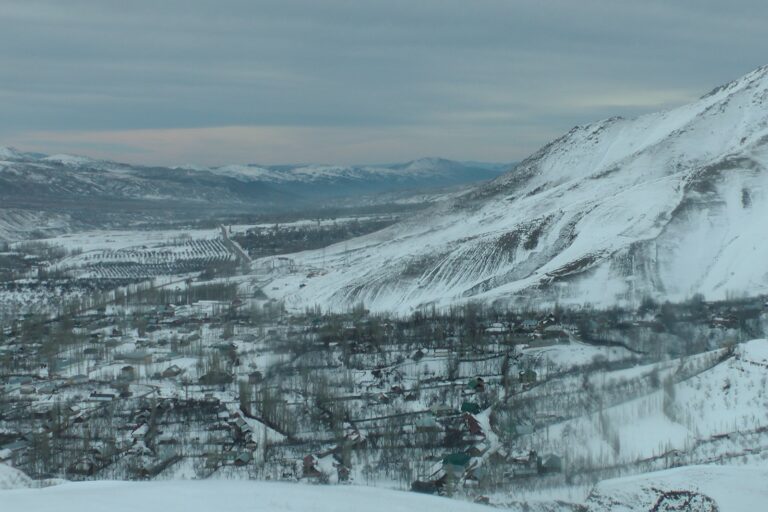
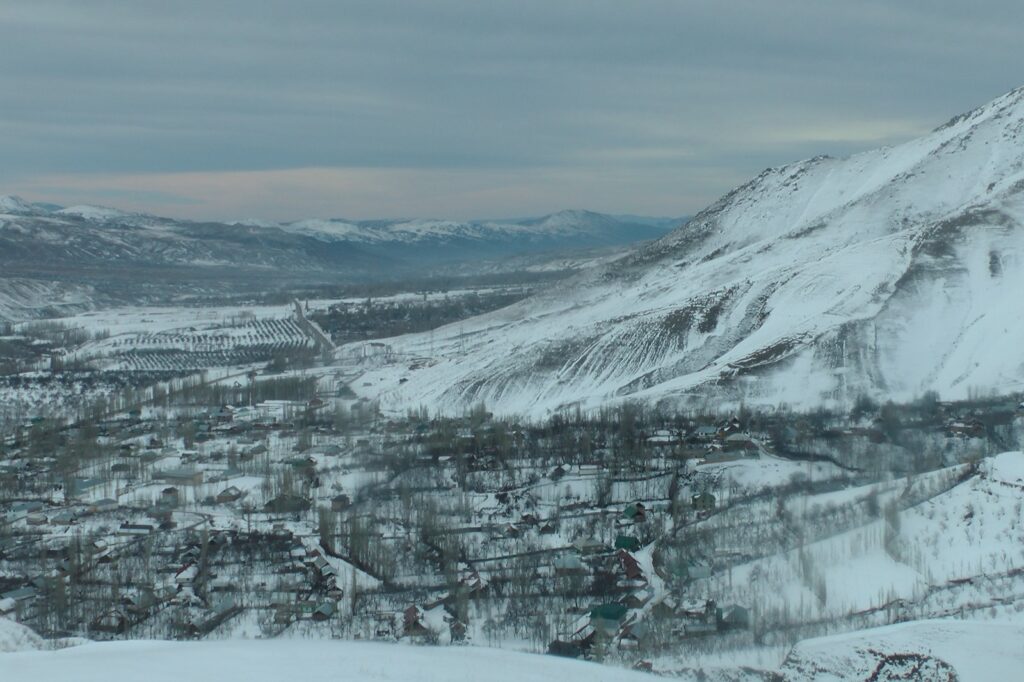
Mountains cover more than 90 percent of Tajikistan’s territory, creating a rugged landscape that complicates energy distribution and infrastructure development. The country is landlocked, bordered by Afghanistan, Uzbekistan, Kyrgyzstan, and China, with a population exceeding 11 million people. Dushanbe, the capital and largest city, is home to over 1.2 million residents. Since the end of a civil war that lasted from 1992 to 1997, political stability and foreign aid have allowed the transitional economy to grow, though it remains dependent on remittances, aluminium, and cotton production.
The mountainous terrain contributes directly to the energy crisis. Winter heating demand spikes just as hydropower output — the backbone of the national grid — drops due to frozen rivers and reduced flow. This seasonal mismatch forces many schools, hospitals, and households to burn coal for warmth, driving up carbon dioxide emissions and local air pollution. Securing reliable energy sources while cutting emissions remains a central policy challenge for the government of President Emomali Rahmon, who has led the country since 1994.
Japan Brings Geothermal Technology To Dushanbe
Professors at Japan’s Akita University have led the geothermal project since 2021, supported by the Japan Science and Technology Agency and the Japan International Cooperation Agency. The system launched this month at the National Academy of Sciences in Dushanbe and was demonstrated to government officials and local residents on Friday. It uses a simple thermal principle: at a depth of about 100 meters, underground temperatures remain stable at around 15 degrees Celsius throughout the year. The technology exploits the difference between this constant subsurface temperature and the surface air, providing heating in winter and air conditioning in summer.
Professor Inagaki Fumiaki, one of the project leaders at Akita University, said his team hopes the system will become widely available in Tajikistan and that local people will eventually be able to build the technology themselves. He added that the team will continue efforts to promote the technology and raise public awareness. The installation at the Academy is a pilot; the system is scheduled to be installed next at hospitals in the suburbs of the capital, with expectations rising for wider household adoption in the future.
Reducing Coal Dependency In Winter Months
Tajikistan suffers acute power shortages particularly in winter when heating demand rises. Many schools, hospitals, and households turn to coal, creating a cycle of energy insecurity and environmental degradation. The geothermal system offers a way to break that cycle by providing a stable, low-emission alternative for heating and cooling individual buildings. By reducing the need for coal combustion at the point of use, the technology targets both carbon dioxide emissions and the air pollution that affects communities in valleys and urban centers during the cold season.
The project aligns with broader goals to fight global warming while addressing immediate human needs. For families across the region, a reliable heating source that does not require hauling and burning coal represents a tangible improvement in daily life and health. The focus on hospitals first underscores the priority placed on vulnerable populations. Professor Inagaki’s emphasis on local capacity building — enabling Tajik engineers and technicians to construct and maintain the systems — points toward long-term sustainability rather than perpetual dependence on foreign expertise.
Regional Cooperation And The SCO Context
International engagement in Tajikistan’s infrastructure extends beyond bilateral Japanese aid. Chinese Premier Li Qiang arrived in Dushanbe on October 18 for an official visit and to attend the 25th Meeting of the Council of Heads of Government of the Shanghai Cooperation Organization (SCO). He was greeted at the airport by Prime Minister Kokhir Rasulzoda and senior officials. Li Qiang described China and Tajikistan as good neighbors, friends, and partners, noting rapid development in bilateral relations and fruitful cooperation across various fields. He referenced a meeting between the two heads of state in Beijing in May that drew up a blueprint for deepening ties.
The SCO meeting brings together prime ministers from across the region to discuss cooperation in energy, transport, and trade. Tajikistan’s membership in the SCO, as well as in the CIS, OSCE, OIC, ECO, CSTO, and as a NATO Partnership for Peace partner, reflects its position at the crossroads of multiple regional frameworks. Chinese investment has flowed into hydropower, mining, and transport corridors, while Japanese technical cooperation focuses on energy efficiency and emissions reduction. These parallel tracks illustrate how the country leverages different partnerships to address its infrastructure gaps.
Building Local Capacity For Long-Term Resilience
The Akita University project represents a model of technology transfer that prioritizes local ownership. Professor Inagaki’s stated goal — that Tajik people will eventually build the systems themselves — moves the initiative beyond a simple equipment donation. It addresses a recurring concern in development work: that advanced systems fail once foreign experts depart because local technicians lack the training or supply chains to maintain them. By designing for eventual local fabrication, the project attempts to embed the knowledge within the community.
For ordinary people in Dushanbe and the suburbs, the rollout to hospitals will be the first visible test of whether geothermal heat pumps can deliver consistent comfort without the smoke and labor of coal. If the pilot succeeds, the path to household adoption becomes a question of cost, financing, and the speed at which local firms can master the installation. The mountains that make Tajikistan’s grid fragile also insulate the ground heat that the system relies on — a geographic irony that the technology turns into an advantage. What it means for people is a potential shift from energy anxiety to energy autonomy, one building at a time.
Sources
- Japan-led geothermal project underway in Tajikistan | NHK WORLD-JAPAN News
- Tajikistan
- Li Qiang Arrives in Dushanbe for an Official Visit to Tajikistan and the 25th Meeting of the Council of Heads of Government (Prime Ministers) of the Shanghai Cooperation Organization_Embassy of the People's Republic of China in the United States of America
Photo: VASHGIRD (CC BY-SA 4.0)