A New Security Focus in Manila
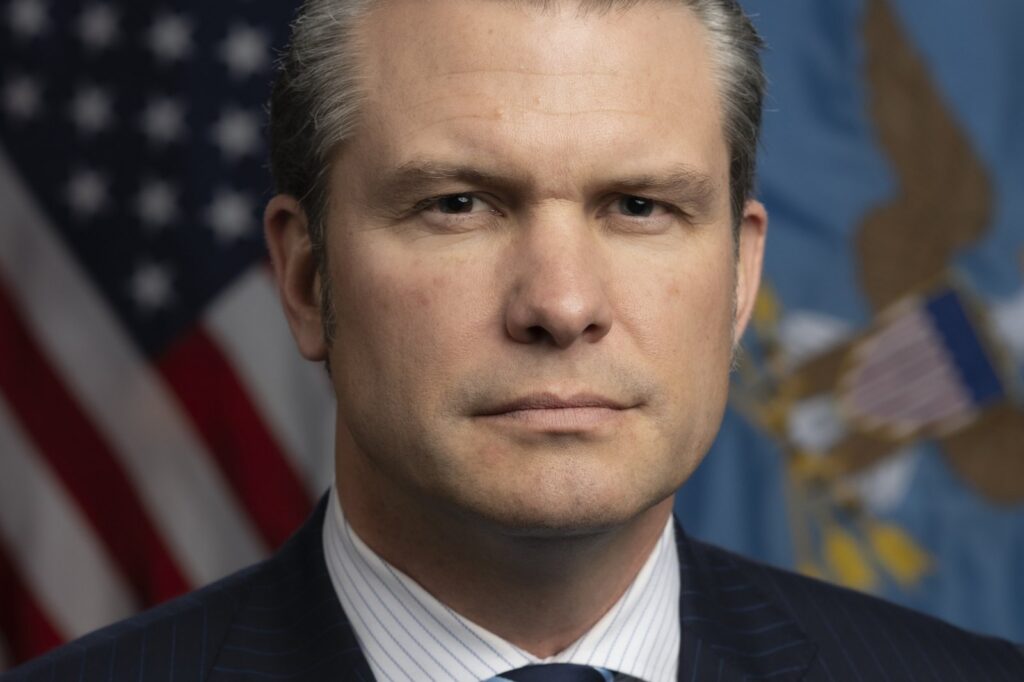
MANILA, October 28, 2026 — US Secretary of Defense Pete Hegseth arrives in the Philippine capital for the ASEAN Defense Ministers’ Meeting-Plus to strengthen ties with Asia-Pacific partners. The visit comes as Washington seeks to solidify its regional connections after a year marked by the fallout from the war on Iran.
The meeting brings together defense officials from the 11-member Association of Southeast Asian Nations plus eight dialogue partners, including Australia, New Zealand, Russia, and China. These talks run from Wednesday to Thursday in the Philippines. India is among the dialogue partners that will host bilateral meetings on the sidelines to review ongoing defense ties and explore ways to further strengthen strategic partnerships.
William Yang, senior analyst for Northeast Asia at the International Crisis Group, told Al Jazeera that the focus will be on regional security concerns like Myanmar’s ongoing civil war and maritime disputes between ASEAN states and neighboring China. He noted that the South China Sea dispute is front and center because the Philippines chairs this year’s summit.
The Philippines has been the chair of this year’s ASEAN summit, a role that places it at the heart of discussions regarding the security architecture of the region. This positioning allows Manila to push for ASEAN to finalize a code of conduct with China to outline how to approach maritime disputes and handle conflicts in the globally important waterway.
The Philippines, China, Vietnam, Malaysia, Brunei, and Taiwan all have overlapping territorial claims to the South China Sea, although Beijing claims most of it as domestic waters. These disputes often leave Beijing at odds with its neighbors, and particularly Manila, as both sides claim the uninhabited Scarborough Shoal and parts of the Spratly Islands.
Tensions Rise in the Waterway
Tensions escalated sharply this month with at least eight close encounters in the South China Sea and nearby Luzon Strait, according to the US Naval Institute. These incidents highlight the fragile nature of navigation rights in a region vital for global trade.
The spat turned into a war of words when Chinese Ambassador to the Philippines Jing Quan said Beijing could easily win a war with the Philippines. This statement prompted a Philippine senator to call for his expulsion, reflecting the deep frustration felt by families and communities across the region regarding their safety at sea.
Manila is pushing for ASEAN to finalize a code of conduct with China regarding maritime disputes. Such an agreement would provide clearer rules for how nations interact in these waters, aiming to prevent accidental conflicts that could disrupt supply chains and affect local economies.
The US and China have spent the past year thawing their relationship. A face-to-face meeting between Hegseth and Chinese Defense Minister Dong Jun could lay the groundwork for two meetings between US President Donald Trump and Chinese President Xi Jinping. Dong Jun’s attendance at ADMM-Plus in person has not yet been confirmed by Beijing, though his presence is expected based on previous years.
The Chinese defence chief attended ADMM-Plus 2024 and 2025, according to Bonnie Glaser, managing director of the German Marshall Fund’s Indo-Pacific Program. Hegseth’s presence could factor into Beijing’s calculations regarding whether to send a high-level representative or hold back entirely.
The Squad Alliance Gains Momentum
An informal defense grouping known as the Squad forms part of a US-led regional strategy to counter China’s growing influence in the Asia-Pacific region. It comprises the US and three of its treaty allies: the Philippines, Australia, and Japan.
The Quad, by contrast, includes India in place of the Philippines and is not a formal military alliance. This distinction is important for understanding how different nations choose to structure their partnerships based on shared goals rather than rigid treaties.
Washington confirmed that the Quadrilateral Security Dialogue would hold its first leaders’ summit in more than two years on the sidelines of the regional talks. The Quad has included India instead of the Philippines, highlighting a different approach to regional security cooperation.
Jose Manuel Romualdez, Philippine ambassador to the US, also signaled possible meetings of the Squad bloc ahead of the Association of Southeast Asian Nations gathering in Manila. He voiced hope that Asean would evolve into a Nato-like alliance capable of handling its own security.
A Voice for Regional Families
Romualdez also says he hopes Asean will become like Nato, capable of handling its own security. This aspiration reflects a desire among communities to have greater control over their safety without relying solely on external powers.
The Philippines ambassador to the United States signalled possible meetings of the Squad bloc ahead of the Association of Southeast Asian Nations gathering in Manila. These discussions aim to bring nations closer together, ensuring that what happens in one country affects all neighbors positively.
For families across the region, a stronger regional security framework means safer seas and more stable trade routes. It also offers hope for resolving conflicts through dialogue rather than force, which benefits everyone from fishermen to factory workers.
The Quad is an informal defence grouping that forms part of a US-led regional strategy to counter China’s growing influence in the Asia-Pacific region. By bringing together key allies like the Philippines, Australia, and Japan, these nations can work together on issues that matter most to ordinary people.
What it means for people now is that security decisions are being made with an eye toward protecting livelihoods and ensuring peace. As leaders gather in Manila, they are building a foundation for a more secure future where communities can thrive without the shadow of conflict.
Sources
- Manila
- Hegseth heads to Manila to shore up US ties with Asia-Pacific partners
- Exclusive | Quad confirmed, Manila envoy signals likely ‘Squad’ talks before Trump-Xi summit
Photo: U.S. Department of Defense (Public domain)