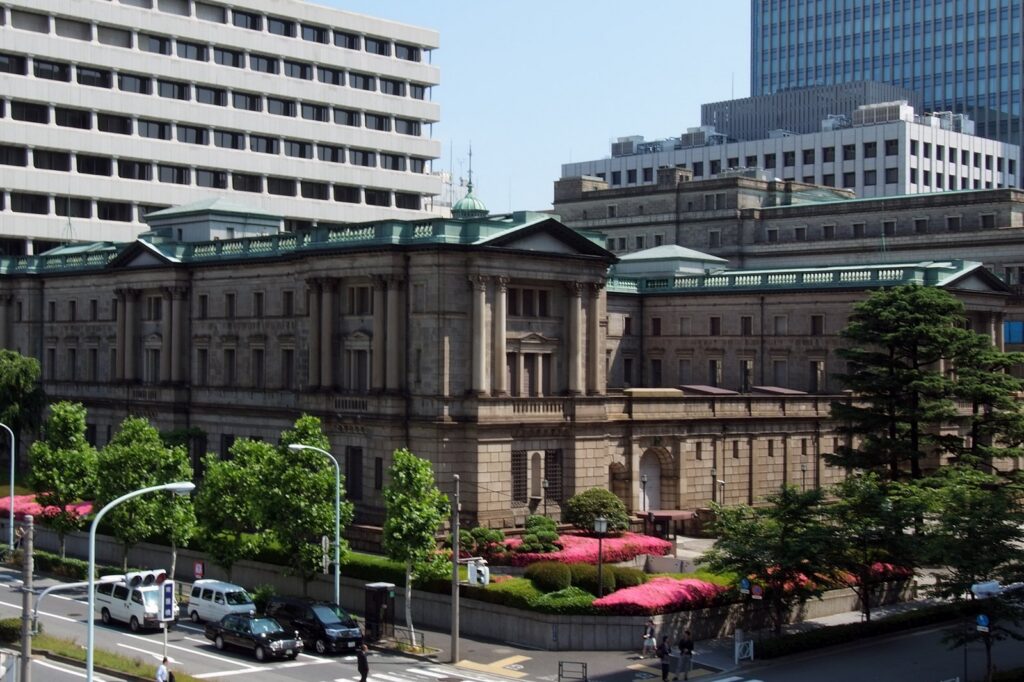
The Bank of Japan is expected to keep its policy rate at 1.25% when its two-day meeting ends on Friday. That is the view of all 16 respondents in a CNBC survey, and the reasoning is simple: the bank raised rates last month to their highest level in 31 years.
Hold now, move later
A pause is not the same as a pivot back. All respondents also said they expect the bank to set the stage for another increase in December or January, as domestic inflation and wages keep rising. Homin Lee, senior macro strategist at Lombard, said macroeconomic factors support further tightening. The survey describes expectations, not a decision; the outcome is the bank’s to announce.
The recent path has not been smooth. The bank ended eight years of negative interest rates in 2024, after Japan’s largest companies announced wage growth of about 5%, and set short-term targets of 0 to 0.1%. In December 2025 it raised its target to 0.75%, a 30-year high, judging that Japan was close to durably reaching its 2% inflation goal. Conflict in the Middle East and surging oil prices then added pressure to hold off on further rises.
A long road from ultra-loose policy
To see why a 1.25% rate makes headlines, it helps to look back. Deflation and disinflation have dogged Japan since the 1990s, and the bank’s main task for two decades has been to secure stable inflation. In 2013 it launched a large quantitative easing program under Governor Haruhiko Kuroda that included purchases of riskier assets such as stocks and REITs. In 2016 it introduced yield curve control and negative rates. Today it is the largest owner of Japanese stocks, holding 4.7% of the public equities, and has held more domestic stock than any other body since 2020.
Where the bank comes from
The institution is a child of the Meiji Restoration. Before 1871, Japan’s feudal domains issued their own incompatible money, known as hansatsu. The New Currency Act of that year replaced them with the yen, a decimal currency at parity with the Mexican silver dollar.
Finance Minister Matsukata Masayoshi proposed the central bank in 1882, and it was formally founded on October 10 of that year, with the National Bank of Belgium as its main model. It has been partly privately owned since the start, and its stock trades over the counter. The bank received a monopoly on controlling the money supply in 1884 and issued its first notes in 1885. Japan joined the gold standard in 1897, and the old “national” banknotes were formally phased out in 1899.
Independence came slowly. In the early twentieth century the bank, though a private-sector body, took direction from the finance minister. The bank describes itself today as a corporate entity separate from the government. It is not an administrative organ of the state, yet its monetary policy falls within the scope of administration. The reasoning offered for its autonomy is that long-term price stability matters to the economy, while politicians tend to favour short-term measures.
Sources
- Bank of Japan
- Bank of Japan is expected to hold rates this week — but stay hawkish: CNBC survey
- Bank of Japan is expected to hold rates this week — but stay hawkish: CNBC survey
Photo: Wiiii (CC BY-SA 3.0)