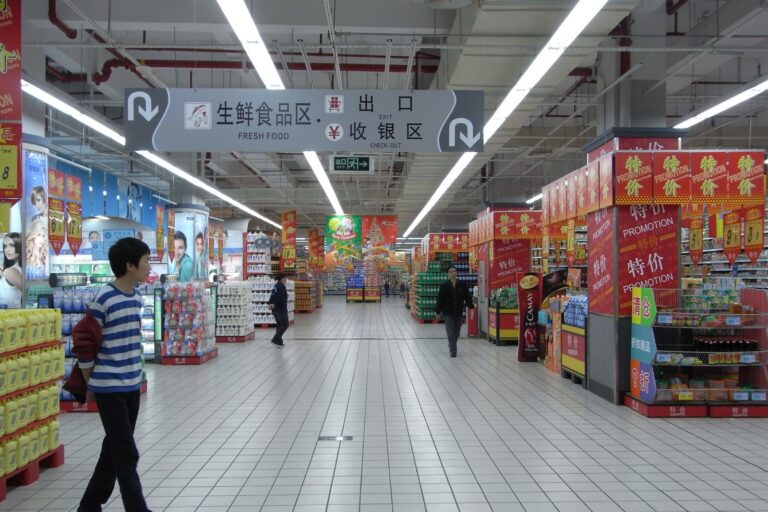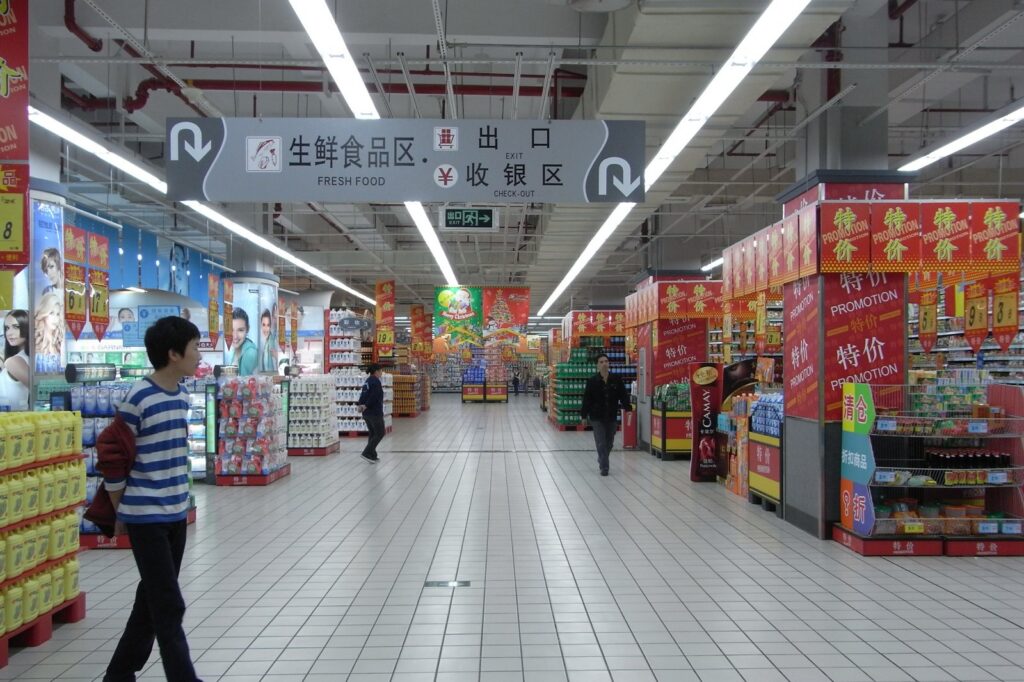
BEIJING, November 16, 2026 — China’s economy weakened across the board in October as retail sales, industrial output and fixed-asset investment all missed forecasts, suggesting Beijing’s stimulus push has yet to revive domestic demand. Retail sales rose just 0.4 per cent year-on-year, down from 1.1 per cent in September and well below the 0.8 per cent consensus estimate.
Consumption and Output Falter
Industrial output grew 4.8 per cent, missing the 5.3 per cent forecast and slowing from September’s 5.5 per cent pace, according to data released by the National Bureau of Statistics on Monday. The figures indicate that the moderate stimulus package unveiled in late September — including mortgage subsidies and expanded public borrowing quotas — has not yet fed through to the real economy.
Fixed-asset investment contracted 8.1 per cent in the first ten months of the year versus the same period in 2025, worse than the 7 per cent decline expected by economists. The January-September reading had been a 7.2 per cent fall. Property investment plunged 21.6 per cent in the first ten months, deepening from a 20.6 per cent decline in the first nine months, while residential prices continued to fall, extending a slump that has dragged on growth for more than five years.
Labour Market Mixed
The urban surveyed jobless rate unexpectedly slipped to 5.1 per cent in October from 5.2 per cent in September. Many economists regard the official gauge as an incomplete reflection of the labour market because it excludes migrant workers who returned to the countryside after losing work. Youth unemployment for those aged 16 to 24, excluding students, remained near a one-year high at 18 per cent in September.
Growth Reliant on Exports
Third-quarter GDP grew 4.5 per cent year-on-year, hitting the lower bound of Beijing’s 4.5 to 5 per cent annual target. Net exports contributed nearly 40 per cent of that expansion, the most for any quarter since early 2025. Exports surged 35.2 per cent in October while consumer inflation slowed to 0.7 per cent. China’s trade surplus reached $1 trillion by October, the fastest pace to that threshold on record.
Goldman Sachs forecasts 4.6 per cent growth for 2026 and 4.5 per cent for 2027, with consumer inflation at 0.8 per cent and 0.5 per cent respectively. The bank attributes the outlook to weak domestic demand, abundant aggregate supply and slowing commodity momentum, though it notes the projected rate would still leave China on course to meet the goal of doubling per capita income from its 2020 level by 2035.
External Risks Mount
The export-driven expansion leaves China increasingly exposed to shifts in global demand, particularly in the artificial intelligence sector. Zhiwei Zhang, president and chief economist at Pinpoint Asset Management, said concerns about a slowdown in AI capital expenditure had already emerged before the recent scrutiny over restricted semiconductor flows to China. “The market was already worried,” Zhang said, adding that “now the risk has become even more serious.”
Citi Research analysts flagged potential additional trade restrictions by the European Union as a significant downside risk for 2027. “More EU trade measures targeting China look plausible to us, potentially adding to tensions ahead,” the bank said, while noting Beijing could negotiate practical concessions including import commitments and sector-specific agreements.
Policy Focus Shifts to December
The October figures will be closely scrutinised by top officials ahead of the Central Economic Work Conference, usually held in the first half of December. The gathering will signal Beijing’s economic priorities for 2027 and the scale of any additional support. The People’s Bank of China has signalled caution about cutting interest rates when borrowing demand is already weak, suggesting policymakers may lean more heavily on fiscal measures if momentum falters further.
Sources
- China’s economy falters with surprise across-the-board slowdown
- China’s economy misses forecasts with across-the-board slowdown
- China’s Economic Slowdown Deepens as Consumer Spending, Industrial Output and Investment Weaken
Photo: Sanwuisusp (CC BY-SA 3.0)