China’s birth numbers are falling nationwide, yet Guangdong accounts for one in eight of the country’s newborns. The newly released China Statistical Yearbook 2026 shows how uneven the picture is. The northeast recorded the steepest drop, with natural population decline of up to seven per 1,000 people, and parts of central and western China also deteriorated significantly.
The Largest Province by Population and Output
Guangdong sits on the north shore of the South China Sea, with Guangzhou as its capital. Its population stands at 128.59 million as of 2026 across about 179,800 square kilometres, making it the most populous first-level administrative subdivision of any country outside South Asia. It overtook Henan and Shandong in January 2005, when it counted 79.1 million permanent residents plus 31 million migrants who lived there at least six months of the year. The 2020 census put its total at 126,012,510, or 8.93 percent of mainland China.
The economy is equally large. Guangdong’s GDP reached CN¥14.16 trillion in 2024, about US$2.0 trillion nominal, roughly 10.5 percent of mainland output and the biggest of any provincial-level division. Proximity to Hong Kong helps, and the province hosts the Canton Fair, the country’s largest import and export fair.
The Pearl River Delta
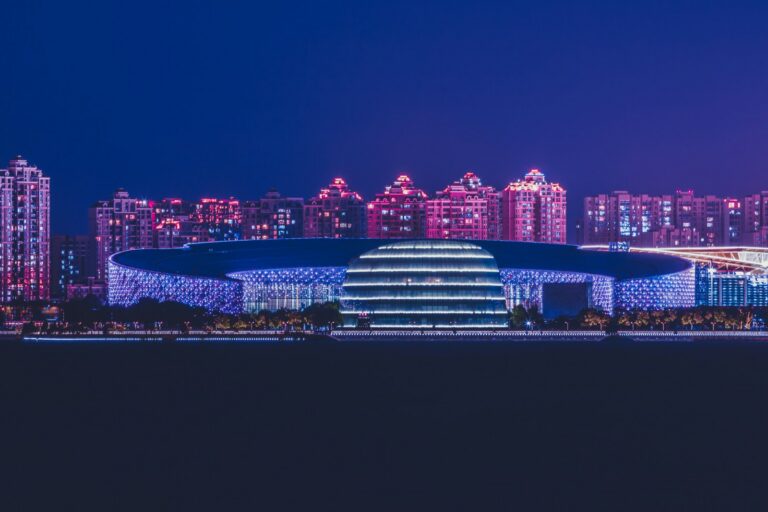
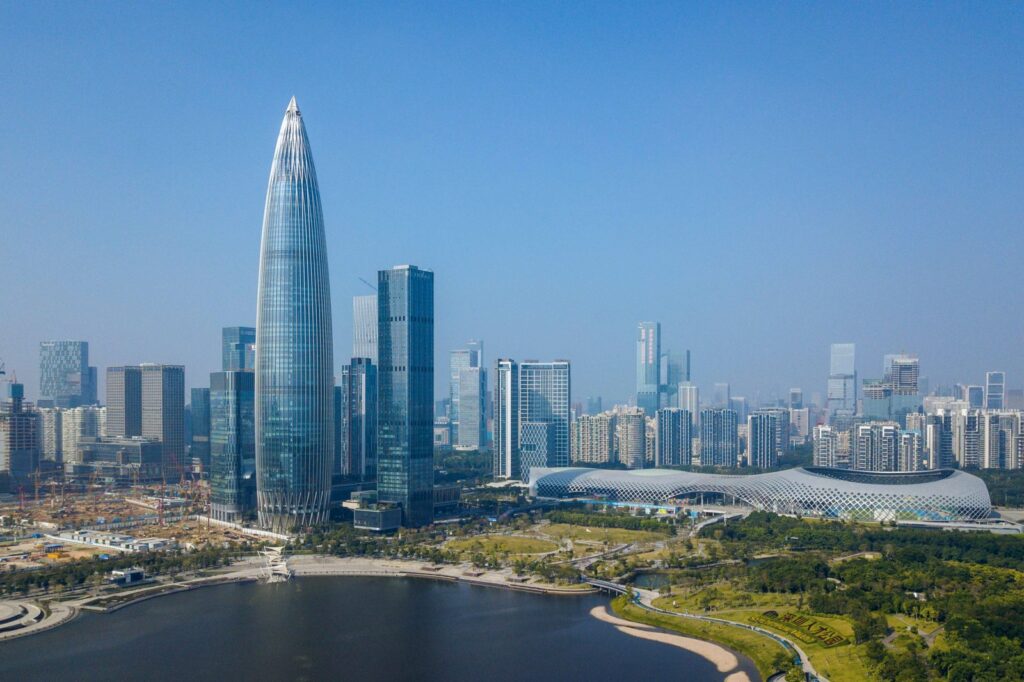
The Pearl River Delta Economic Zone, a megalopolis, is the engine: a core for high technology, manufacturing and international trade. It holds two of the four top Chinese cities by GDP, Guangzhou and Shenzhen, the latter the country’s first special economic zone. Both have grown into some of the world’s most populous megacities and leading financial centres in the Asia-Pacific.
Offshore, China General Nuclear Power Group has brought its 2 GW Yangjiang Fanshi offshore wind project to full operation, with all 131 turbines feeding the grid, 33 of them rated at 18 megawatts. The project is expected to supply more than 6.6 TWh a year.
Research and Culture
Guangdong has 160 institutions of higher education, first in South Central China and second among all Chinese provinces and municipalities, behind Jiangsu. As of 2025, two of its cities ranked in the world’s top 20 by scientific research output: Guangzhou sixth and Shenzhen 18th.
The region’s history runs deep. After the Qin dynasty unified Lingnan, immigrants from the Central Plains settled and formed a local culture with its own style. As Guangdong people moved outward, Cantonese, Hakka and Teochew languages, music, cuisine, opera and tea ceremonies spread across China and into Southeast Asia. Sun Yat-sen, founder of the Republic of China, was born in the province, and the vast majority of the Chinese diaspora in Singapore and Malaysia claims Guangdong ancestry.
Sources
- As births decline across China, 1 in 8 are born in Guangdong. What’s the secret?
- Guangdong
- Turbines off Guangdong spinning at eighty one kilometers from shore and 18 megawatts each pushed a Chinese wind farm to full power, and each blade sweep alone can run a home for nine days
Photo: Charlie fong (CC BY-SA 4.0)