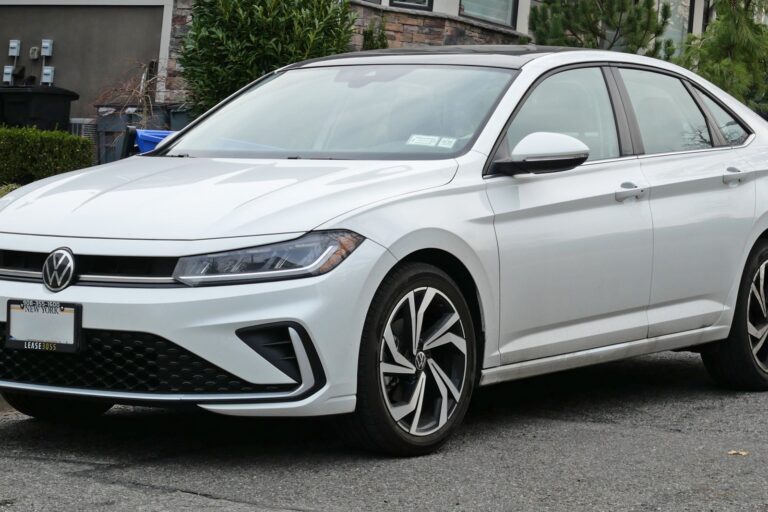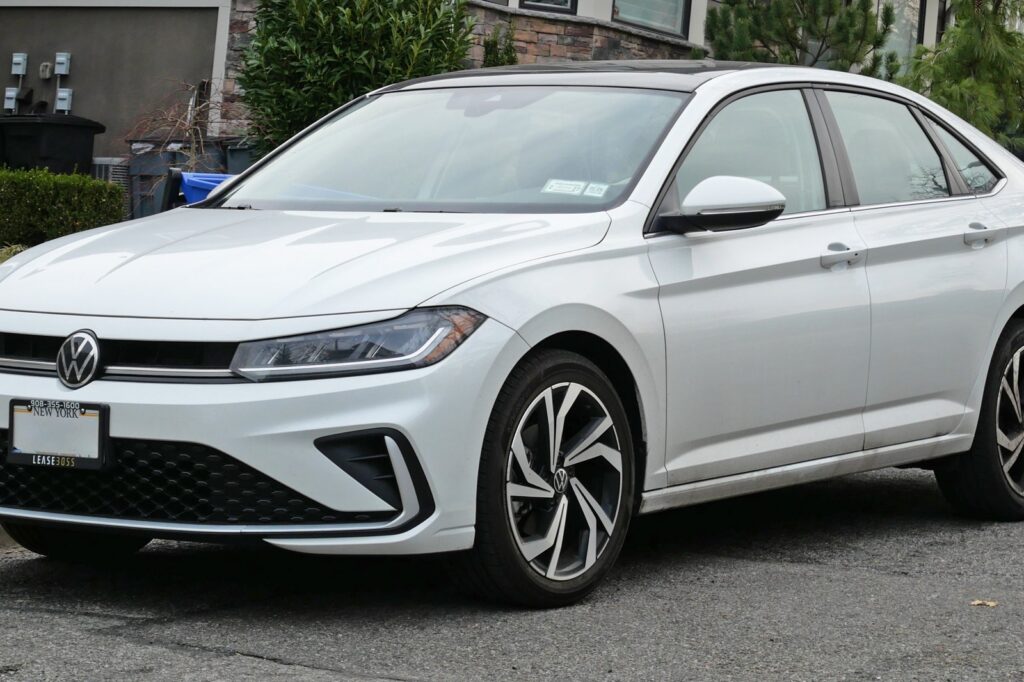
The Jetta nameplate, once the gateway for German engineering into Chinese households, has re-emerged as a serious contender in the budget electric segment. On October 22, FAW-Volkswagen’s Jetta brand unveiled the M6, its first battery electric vehicle in China, priced from 79,800 yuan, or roughly $11,800, and topping out under 100,000 yuan ($15,000). The model surpassed 10,000 locked orders within 19 hours of launch, a market response that, while modest in China’s fiercely competitive new-energy vehicle sector, signals a renewed confidence in a legacy brand embracing electrification.
From Rugged Legacy to Budget EV Pioneer
The Jetta’s lineage in China stretches back more than three decades. The compact sedan became a cultural touchstone, offering millions of families their first taste of automotive personal mobility. For much of its early history, the model represented a “German technology, assembled in China” formula, built under joint-venture structures that prioritized manufacturing execution and market reach. However, the automotive landscape has shifted dramatically with the rise of domestic electric challengers. In response, FAW-Volkswagen has restructured the partnership, moving beyond traditional assembly roles to deeper collaboration in product definition and research and development. This strategic pivot aims to revive the iconic nameplate with a new powertrain architecture tailored for the domestic market.
Decoding the FAW-Volkswagen Joint Venture Roadmap
The M6 launch is not an isolated product release but a component of a broader roadmap agreed upon in Wolfsburg. FAW and the Volkswagen Group signed a strategic cooperation agreement to jointly roll out 11 China-customized models starting in 2026. These vehicles will span battery electric, plug-in hybrid, and range-extender electric powertrains. The agreement represents a significant evolution in China-Germany automotive cooperation, elevating the Chinese partner’s role from manufacturing and market execution to active involvement in R&D and product strategy. German engineering standards and manufacturing expertise are being paired with China’s mature battery supply chains, smart-cabin technologies, and autonomous-driving solutions. This collaborative framework is designed to create a competitive edge greater than the sum of its parts, leveraging four decades of integration since the establishment of the first joint ventures in China’s passenger car industry.
Inside the Jetta M6: Pricing, Specs, and Range Numbers
The Jetta M6 is built on FAW’s Jiesi architecture and measures 4,806 mm in length and 1,868 mm in width. The lineup is stratified by battery size and claimed CLTC range. The entry-level 465 Pro features a 42.9 kWh lithium iron phosphate battery supplied by CALB and a 113 kW electric motor, offering an estimated 465 km of range. The mid-range 555 Max and top-spec 555 Ultra both utilize a larger 51.9 kWh battery and a 145 kW motor, providing an estimated 555 km of CLTC range. Both battery variants support charging from 20% to 80% in approximately 30 minutes. Pricing starts at 79,800 yuan for the base model, with the top variant retailing at 99,800 yuan, keeping the entire range under the 100,000 yuan threshold. Standard equipment includes an 8.88-inch driver display, a 15.6-inch central touchscreen integrating AI assistants Doubao and DeepSeek, and Apple CarPlay compatibility.
Leveraging Chinese Tech: AI Assistants and Advanced ADAS
Technology features form a central part of the M6’s value proposition. The cabin’s infotainment system integrates Chinese AI assistants Doubao and DeepSeek alongside Apple CarPlay. Advanced driver-assistance systems are fitted as standard, offering intelligent cruise assistance, automatic emergency braking, and automated parking. These systems are supported by the joint venture’s access to local autonomous-driving solutions, reflecting the broader trend of Chinese technology stacks being embedded into joint-venture products. The integration of these features aims to meet consumer expectations for connectivity and safety in the current new-energy vehicle market.
Broader Significance for China-Germany Automotive Cooperation
The Jetta M6’s market reception serves as a real-world test of the revived China-Germany automotive cooperation framework. For decades, the partnership has evolved from its origins in the 1980s, through successive contract renewals and increased investment in local research and development. Volkswagen has established its first overseas research and development center in Hefei, capable of fully developing and validating products, reportedly cutting the overall vehicle development cycle by 30 percent. The current agreement builds on this history, aiming to align technologies, talent pools, and supply chains from both nations. As legacy brands navigate the transition to electrification, the collaboration between FAW and Volkswagen illustrates how established partnerships can adapt to new market dynamics, combining German engineering standards with local Chinese supply chains to produce vehicles positioned at accessible price points.
Performance Metrics and Powertrain Capabilities
The Jetta M6 offers distinct performance profiles tailored to its three trim levels. The entry-level 465 Pro model is equipped with a 113 kW electric motor, which the company states enables a 0 to 100 km/h sprint in 8.3 seconds. By opting for the higher-tier 555 Max or 555 Ultra variants, drivers gain access to a more powerful 145 kW motor. This upgrade reduces the vehicle’s acceleration time to 6.8 seconds, providing a more responsive driving experience for those prioritizing power.
Beyond acceleration, the vehicle’s handling and efficiency are supported by the FAW-developed Jiesi architecture. Measuring 4,806 mm in length and 1,868 mm in width, the M6 is positioned to compete in the sedan segment, offering dimensions comparable to the Tesla Model 3. This physical footprint is designed to provide sufficient interior space for families and young professionals, balancing the brand’s heritage as a provider of accessible personal mobility with the modern requirements of the electric vehicle market.
FAW-Volkswagen’s Joint Venture Evolution
FAW-Volkswagen’s restructuring represents a significant shift in the China-Germany automotive landscape. The strategic cooperation agreement signed in Wolfsburg commits the two parties to jointly roll out 11 China-customized models starting in 2026, spanning battery electric, plug-in hybrid, and range-extender electric powertrains. This framework elevates FAW’s role beyond traditional manufacturing and market execution to deep involvement in product definition and research and development. German engineering standards and manufacturing expertise are being paired with China’s mature battery supply chains, smart-cabin technologies, and autonomous-driving solutions. This collaborative model leverages four decades of integration since the establishment of the first joint ventures in China’s passenger car industry, aiming to create a competitive edge greater than the sum of its parts.
Volkswagen’s investment in local research capabilities further underscores this partnership evolution. The group has established its first overseas research and development center in Hefei, East China’s Anhui Province, with the capacity to fully develop and validate products. According to industry reports, this facility cuts the overall vehicle development cycle by 30 percent. The current agreement builds on this infrastructure, aiming to align technologies, talent pools, and supply chains from both nations. As legacy brands navigate the transition to electrification, the collaboration between FAW and Volkswagen illustrates how established partnerships can adapt to new market dynamics, combining German engineering standards with local Chinese supply chains to produce vehicles positioned at accessible price points.
Sources
- Jetta's 'comeback' in China proves the move was right
- Volkswagen Jetta
- Volkswagen's new electric Jetta offers 285 miles of range for under $12K
Photo: Kevauto (CC BY-SA 4.0)