
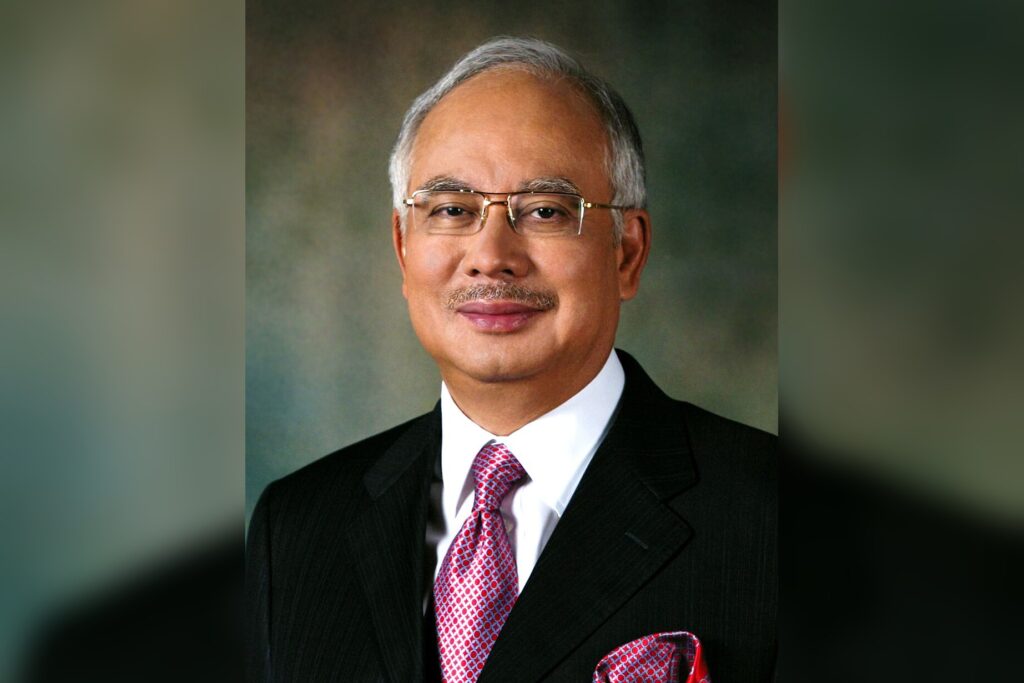
Najib Razak, who served as Malaysia’s sixth Prime Minister from 2009 to 2018, began serving a 12-year prison sentence in 2022 following his conviction on charges related to the 1MDB sovereign wealth fund scandal, marking a dramatic fall from power for a figure once positioned at the pinnacle of Malaysian politics.
Political Dynasty and Rise to Power
Born in 1953, Najib Razak is the son of Abdul Razak Hussein, Malaysia’s second Prime Minister, and nephew of Hussein Onn, the country’s third Prime Minister. He entered parliament in 1976 at the age of 23, winning the seat previously held by his deceased father. Najib steadily rose through the ranks of the United Malays National Organisation (UMNO), the dominant party in the ruling Barisan Nasional coalition. He held multiple ministerial portfolios, including Education, Finance, and Defence, before becoming Deputy Prime Minister in 2004. Upon the retirement of Prime Minister Abdullah Ahmad Badawi in 2009, Najib succeeded him as Malaysia’s sixth Prime Minister, initially promising reform and economic transformation.
The 1MDB Scandal Erupts
In 2015, serious allegations emerged regarding the 1Malaysia Development Berhad (1MDB) fund, a strategic development company established by Najib in 2009. Investigations by Malaysian authorities and international bodies, including the U.S. Department of Justice, alleged that billions of dollars were misappropriated from 1MDB through a complex web of shell companies and fraudulent transactions. Reports indicated that approximately USD 700 million had been deposited into personal bank accounts linked to Najib. The Prime Minister denied wrongdoing, claiming the funds were a political donation from Saudi Arabian sources, a claim later disputed by Saudi officials and undermined by investigative findings. The scandal triggered widespread public protests, notably the Bersih rallies demanding clean government, and drew intense international scrutiny.
Electoral Defeat and Legal Proceedings
The growing controversy surrounding 1MDB contributed significantly to Barisan Nasional’s historic defeat in the May 2018 general election. Najib led UMNO to its first loss of federal power since Malaysia’s independence in 1957, as the opposition Pakatan Harapan coalition took office under Mahathir Mohamad. Following the election, Najib was barred from leaving Malaysia. In July 2018, he was arrested and charged in relation to the SRC International Sdn Bhd subsidiary of 1MDB. SRC International had received a USD 100 million loan from 1MDB, and prosecutors alleged that funds from this amount were diverted into Najib’s personal accounts.
Conviction in the SRC International Case
Najib Razak stood trial on seven charges: three counts of criminal breach of trust, three counts of abuse of power, and one count of money laundering, all connected to the misappropriation of funds from SRC International. In July 2020, the High Court found him guilty on all seven counts. He was sentenced to 12 years’ imprisonment and fined RM 210 million (approximately USD 50 million). Najib appealed both the conviction and sentence. The Court of Appeal upheld the guilty verdict in December 2021. His final appeal was dismissed by the Federal Court, Malaysia’s highest judicial body, in August 2022, confirming the conviction and sentence as final.
Imprisonment and Ongoing 1MDB Fallout
Following the Federal Court’s decision in August 2022, Najib Razak began serving his 12-year prison sentence at Kajang Prison in Selangor. He remains incarcerated as of the date of this article. The SRC International case was one of several trials stemming from the broader 1MDB scandal. Investigations and prosecutions related to 1MDB have involved numerous individuals, both within Malaysia and abroad, and have led to civil recovery efforts by the Malaysian government to reclaim misappropriated assets. The U.S. Department of Justice has pursued asset forfeiture actions alleging that over USD 4.5 billion was stolen from 1MDB, with funds allegedly used to purchase luxury real estate, art, and finance Hollywood productions. While Najib’s conviction in the SRC International case is legally distinct from the broader 1MDB investigations, it is widely regarded as a pivotal component of accountability efforts tied to the scandal. His imprisonment represents a significant moment in Malaysian political history, underscoring the consequences faced by a former leader convicted of corruption-related offenses.




