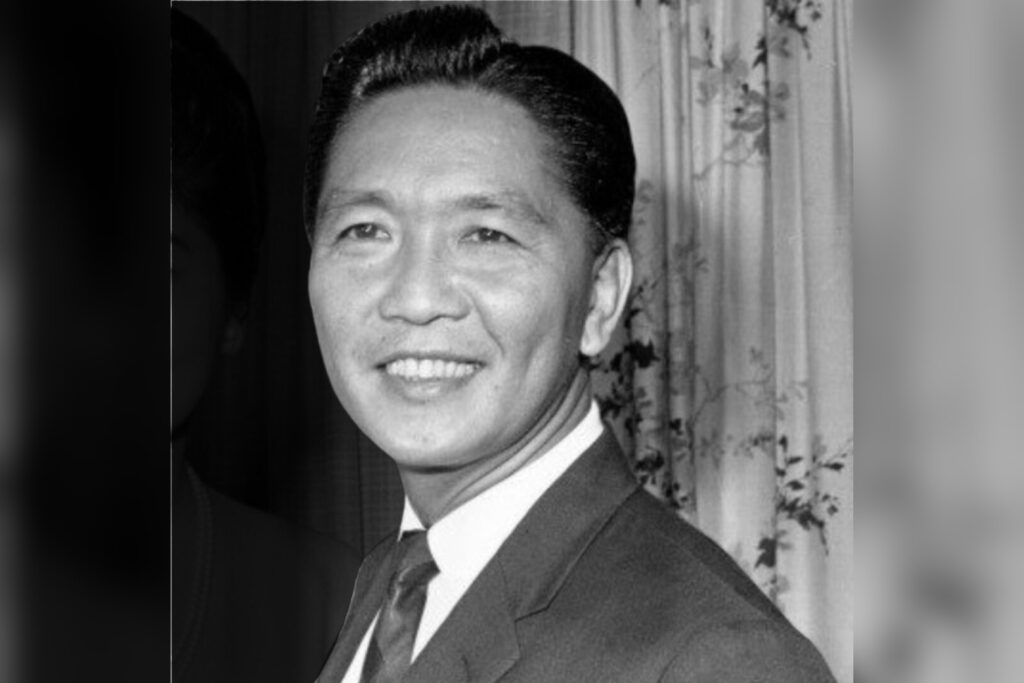
The US customs record of what Ferdinand and Imelda Marcos carried to Hawaii in February 1986 runs to 23 pages. Two C-141 transport planes brought 23 wooden crates and 12 suitcases and bags, enough clothes to fill 67 racks, 413 pieces of jewellery, 24 gold bricks inscribed “To my husband on our 24th anniversary”, and more than 27 million pesos in freshly printed notes. Total value: $15 million.
It was a small part of the haul. Marcos had spent 21 years as president, and the Philippine supreme court later estimated he had amassed up to $10 billion. His official salary never rose above $13,500 a year.
Recovering the money
The first executive order of the new president, Cory Aquino, created the Presidential Commission on Good Government to recover “all ill-gotten wealth” of Marcos, his family and his associates. Thirty years on, the commission still works, with 94 staff and an annual budget of $2.2 million. According to the Guardian’s 2016 account, it has recovered only a fraction of what was taken, and no one has served a prison sentence for the theft. At the time the commission’s survival was in doubt, since Marcos’s son, Ferdinand Marcos Jr, known as “Bongbong”, was a frontrunner for vice-president in the 9 May election.
How the theft worked
The commission’s archive shows a slow education in crime. As a congressman and senator, Marcos was just another “Mr Ten Per Cent” selling influence. After he became president in 1965 the kickbacks grew, but he stashed only $215,000 in a New York bank under his own name. On 20 March 1968 he and Imelda used false names, William Saunders and Jane Ryan, to deposit $950,000 in four Credit Suisse accounts. By February 1970 ownership had moved to foundations registered in Liechtenstein.
Martial law gave him a free hand. Over the following nine years an estimated 34,000 trade unionists, student leaders, writers and politicians were tortured, 3,240 people were dumped dead in public places and 398 disappeared.
He also took whole companies. He wanted Meralco, the electricity company owned by Eugenio Lopez, so he had Lopez’s son charged with plotting to assassinate him, a capital offense. The old oligarch handed the company over for $220. It was worth $400 million.
Most takeovers needed no violence, only decrees. In sugar, which brought in 27% of export earnings, Marcos set up companies, decreed they dominate planting, milling and marketing, and created a monopoly exchange company that bought from farmers at rock-bottom prices. He then exempted the industry from the minimum wage, and 500,000 laborers fell to less than $1 a day. Coconuts, tobacco and bananas followed, and then logging, meat, oil, insurance, shipping, airlines, beer, hotels, casinos and the media.
To hide ownership, he used cronies. Each signed a deed handing over most of a business, usually 60%, with the name left blank, so nothing on paper showed that Marcos owned it. Japanese war reparations, international aid, gold from the central bank and US military aid all went the same way. A levy of $216 million on more than a million coconut farmers was largely stolen too.
Imelda’s shopping, the Guardian wrote, was only a distraction. Her perfume was bought by the gallon, but in that circus she was “only a clown”.
The night they fled
On the night of the flight, a young civil servant named Chito Roque found the palace living quarters in disarray: food still warm on the table, shredding machines stuffed with paper. In the president’s bedroom he opened a safe and found records of bank accounts in Switzerland and Canada, share certificates and letters signed by Marcos. Those papers started the search for the money.