
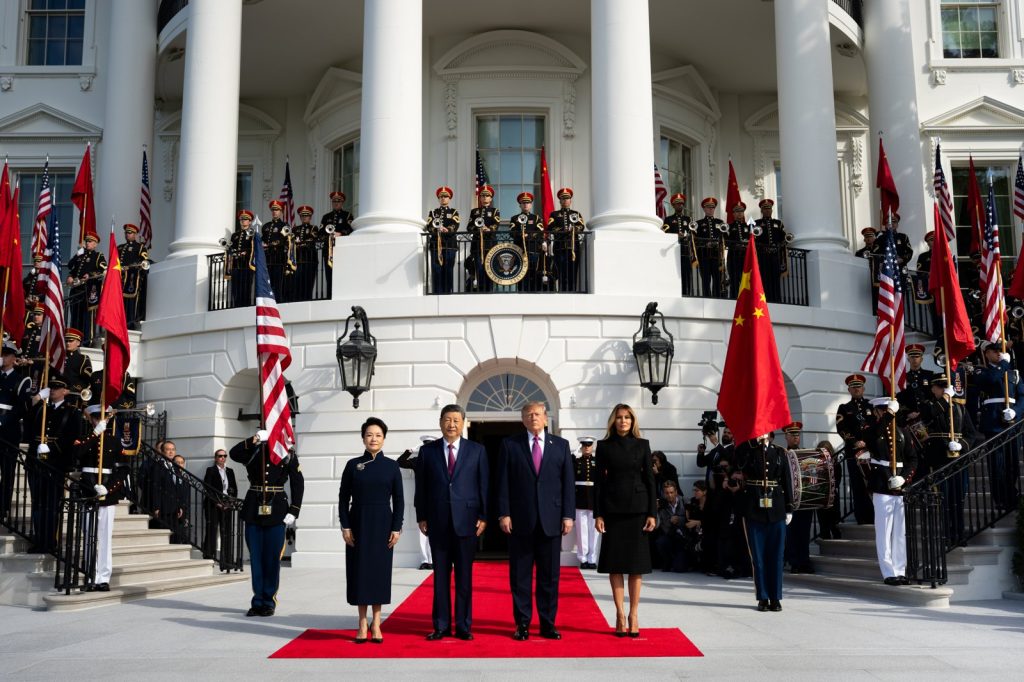
WASHINGTON — President Donald Trump engaged in high-stakes diplomacy with Chinese leader Xi Jinping earlier this week, touching on a range of issues including U.S. arms sales to Taiwan and the ongoing legal troubles of Hong Kong tycoon Jimmy Lai. The discussions, which took place during a high-profile visit to Washington, have reignited long-standing tensions over U.S. military support for Taiwan and the legal and diplomatic implications of such actions.
The current debate over arms sales to Taiwan is rooted in the 1982 joint statement between the United States and China. Reached during the Reagan administration, the agreement was a cornerstone of U.S.-China relations and was intended to pave the way for greater diplomatic and economic cooperation.
According to state and international reports, Beijing has long cited this statement as a basis for pressuring Washington to reduce, and eventually end, U.S. arms transfers to Taiwan. China has consistently maintained that Taiwan is an inalienable part of its territory, and that U.S. arms sales to the island undermine the stability of the region and the broader U.S.-China relationship. The 1982 joint statement, while not a treaty, has been interpreted differently by the two nations.
Beijing emphasizes the commitment to gradually reduce arms sales to Taiwan, while Washington has maintained that its arms sales are defensive in nature and consistent with U.S. laws and commitments.
A Delicate Balancing Act
During his meeting with Xi, Trump reportedly said he would discuss the $14 billion arms sale to Taiwan and the case of Jimmy Lai, the jailed Hong Kong tycoon. Trump later indicated he had not yet decided whether to proceed with the sale, stating that he wanted China to “cool down” its rhetoric toward Taiwan. The U.S. administration has been careful to navigate this issue, balancing its longstanding security commitments to Taiwan with the broader goal of managing U.S.-China relations.
Taiwan’s president, meanwhile, has expressed hope that the arms sale can be approved soon, emphasizing that Taiwan is not “provoking” China. However, officials have been described as on edge, fearing that Taiwan’s security could become part of a broader negotiation between the two superpowers.
The regional impact of the sale is significant, with analysts noting that the stability of the Taiwan Strait and the broader U.S.-China relationship all hinge on whether the sale proceeds.
What Comes Next
Xi is expected to press Trump on the issue of arms sales to Taiwan, citing the 1982 joint statement as a key diplomatic instrument. The U.S. administration has not yet announced a final decision on the $14 billion arms sale, and the outcome of the discussions between Trump and Xi will likely shape the trajectory of U.S.-China relations in the coming months. As the situation unfolds, the world will be watching closely to see how the U.S. and China navigate this complex and sensitive issue.




