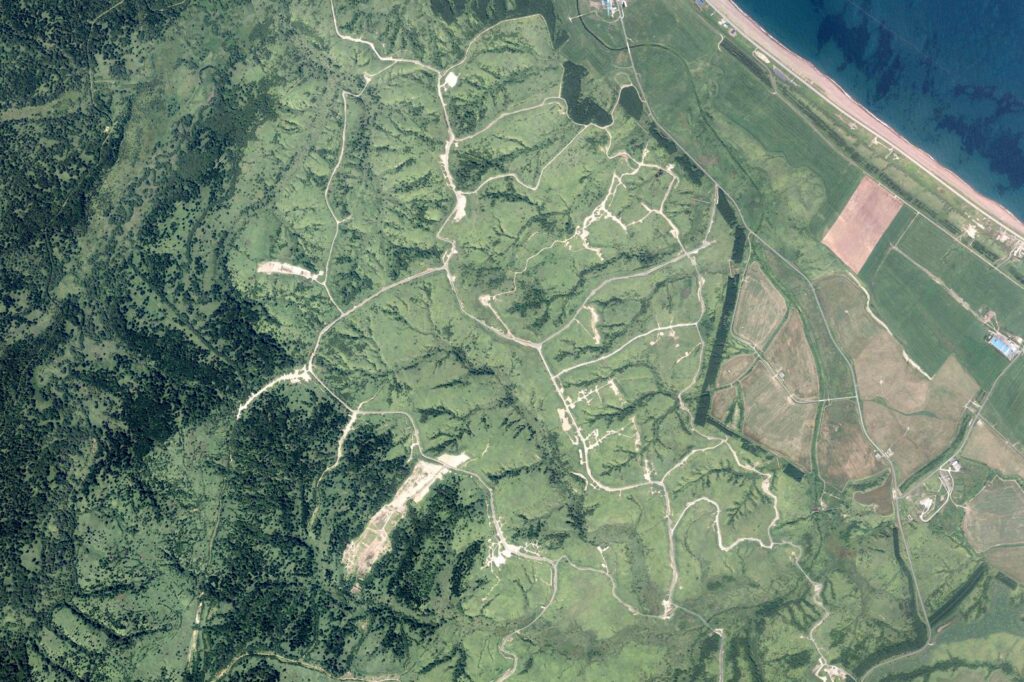
TOKYO, November 23, 2026 — Japan’s Self-Defense Forces are operating with record budgets and new strike capabilities that stretch the constitutional logic of Article 9 to its limit. The government’s latest moves — abolishing export restrictions, securing overseas firing ranges, and deepening joint development — signal a structural shift in what Tokyo considers permissible self-defense.
The Constitutional Architecture
Article 9 of the Japanese Constitution renounces war and prohibits maintaining military forces, creating the foundational constraint on defense policy since 1947. Cold War tensions forced a reinterpretation allowing self-defense forces, establishing the JSDF in 1954 as a de facto military under civilian control. The 2015 Legislation for Peace and Security further amended the law to permit collective self-defense, allowing Japan to mobilize the JSDF to assist an ally under attack in an “existential crisis situation.” For all the legal scaffolding, the JSDF remains constitutionally constrained to self-defense, disaster response, and peacekeeping.
Budget and Procurement Shifts
Increased tensions with China, North Korea, and Russia have reignited debate over JSDF status and its relationship to Japanese society. The government has responded with record defense budgets and a procurement shift toward capabilities that blur the line between defense and offense. The salient point is not the spending figure alone but the nature of the hardware: long-range missiles and counterstrike systems that can reach targets beyond Japan’s immediate periphery.
Counterstrike Capabilities and Training Gaps
Japan’s acquisition of counterstrike capabilities — surface-to-ship missiles with extended range — has exposed a practical problem: geographical limitations in domestic training space. The solution, formalized on November 19, 2026, came via a Letter of Intent signed during the fourth India-Japan 2+2 Foreign and Defence Ministerial Dialogue in Tokyo. Japanese forces will conduct surface-to-ship missile training at Indian firing ranges starting in 2027. Defence Minister Shinjiro Koizumi described the agreement as a major strategic step for both countries. It would seem the arrangement acknowledges that Japan’s new capabilities cannot be fully exercised within its own borders.
Arms Export Liberalization
Japan abolished five restrictions on arms exports in April 2026, expanding beyond the previous limits of rescue, transport, warning, surveillance and minesweeping purposes. The Three Principles on Transfer of Defense Equipment and Technology, adopted in 2014, had already enabled equipment transfers and international joint development. The latest change is expected to strengthen the deterrence and response capabilities of allies and like-minded partners while safeguarding Japan’s domestic production capacity. Notably, Japanese defense attaches at embassies are playing increasingly important roles as equipment and technology cooperation expands.
International Defense Cooperation
The JSDF maintains close alliance with the United States and prioritizes cooperation with Australia, India, Taiwan, South Korea, and NATO. Recent weeks have demonstrated the breadth of this engagement. KLab and Trajectory showcased drone technologies at the Self-Defense Forces Day Reception in Abu Dhabi on November 11, 2026, attended by senior UAE defense officials and Japanese embassy staff. The JSDF Sasebo Parade on November 8 featured the Amphibious Rapid Deployment Brigade demonstrating expeditionary capabilities. Meanwhile, the Blue Impulse aerobatic team performed in Nara Prefecture on November 21-22 for JASDF Nara Base’s 70th anniversary.
Domestic Legal Challenges
Proposals to amend the constitution to formalize the status of the JSDF persist, but the political sustainability of incremental reinterpretation remains untested. The government continues to rely on cabinet-level reinterpretation rather than the higher threshold of a national referendum. For now, the gap between constitutional text and operational reality widens with each budget cycle, each missile purchase, and each overseas training deployment.
Sources
- Japan Self-Defense Forces
- KLab Showcases Drone-Related Technologies at the Self-Defense Forces Day Reception Hosted by the Embassy of Japan in the UAE
- CFAS Attends JSDF Sasebo Parade 2026
- How attaches can strengthen defense cooperation
- Japan Chooses Indian Firing Ranges For Missile Training! A Big Win For India's Defence Capabilities – https://indianmasterminds.com
- [Nara Prefecture] I went to see the Blue Impulse ~A record of cycling to the air show and taking photos~|神楽坂つむり@毎週更新
Photo: 国土地理院 (Attribution)