
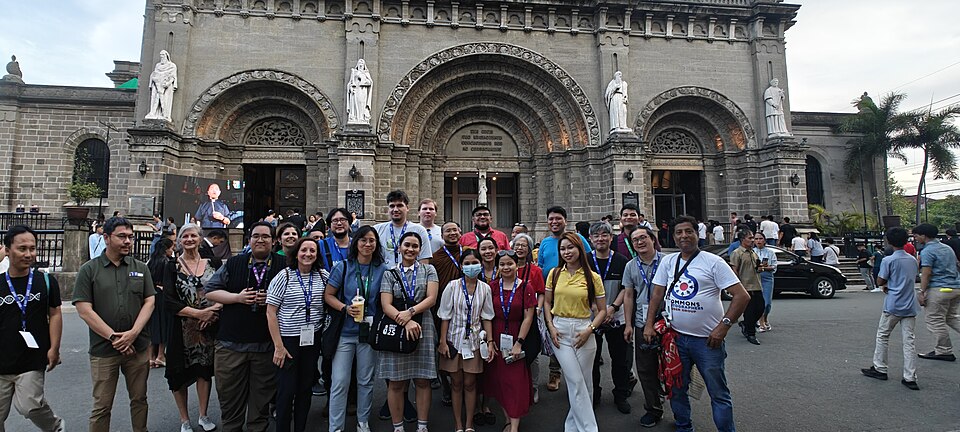
MANILA, September 22 — The story begins with a warning, and it is printed right at the top. A first-timer’s travel guide to Manila, published by a travel website and last updated September 17, 2026, carries an editor’s note stating plainly that the guide has not been updated in 2026 and cautioning that prices and travel guidelines may no longer be accurate. Readers are advised to verify information before proceeding.
That note sits above a guide that has been rewritten from the ground up. Its author, who has lived in Manila most of their life, explains that the original edition was first written more than two years before this one, after hearing more than one foreigner describe Manila as the scariest city they had ever visited.
The author came to believe that focusing heavily on traveler safety had inadvertently portrayed the city in a negative light. The new edition aims instead to reflect the hospitality Filipinos are known for — summed up in the phrase travelers repeat: when you’re here, you’re family.
A city, and a metro area
At its heart, the guide is an exercise in clearing things up. Manila, it notes, strictly refers to one specific city, home to recognized attractions like Intramuros and Fort Santiago. But the name is also used as a blanket term for the wider metropolitan area, which consists of several cities including the city of Manila, Makati, Pasay, and Quezon City.
The guide cites Wikipedia in stating that Manila is the most densely populated city in the world as of June 2016. It attributes part of that density to Filipinos flocking to the capital from the provinces in search of work, in a developing country with a dearth of well-paying provincial jobs.
When to go, and what to expect
On timing, the guide is candid. Manila is often a stopover, so there is no single best time to visit. It does note two seasons: dry season from December to May and rainy season from June to November.
March to May is the hottest and most humid period, with temperatures frequently exceeding 40°C (104°F). July to September are the wettest months.
December to February are the coolest, making that window the most ideal time to visit — which holds true for most of the Philippines. For arrivals, most international flights land at Ninoy Aquino International Airport (NAIA) Terminal 1. Terminal 2 services Philippine Air Lines only, while the few airlines not served by Terminal 1 land at Terminal 3.
The guide recommends three ways to reach a hotel from the airport: the UBE Express Bus, Grab, or a private transfer. UBE Express operates air-conditioned buses with onboard wifi costing PHP 150 each way (approximately US$2.60), with tickets purchasable at airport kiosks or in advance via the UBE Express booking website.
It serves all three airport terminals. Grab rides can be booked even without a smartphone or wifi connectivity at booths located at Terminal 1’s main arrival curbside, Terminal 2’s inner arrival curbside between Bays 7 and 8, Terminal 3’s secondary arrival curbside between Bays 5 and 6, and Terminal 4’s curbside. Private transfers are described as probably more expensive.
Metered and coupon taxis exist, though the author has never used them. What to watch next is whether the guide’s own warning catches up with it. The site’s affiliate disclosure and terms of use advise readers to verify information and stay safe — the same instruction the editor’s note gives before a single word of the guide is read.




