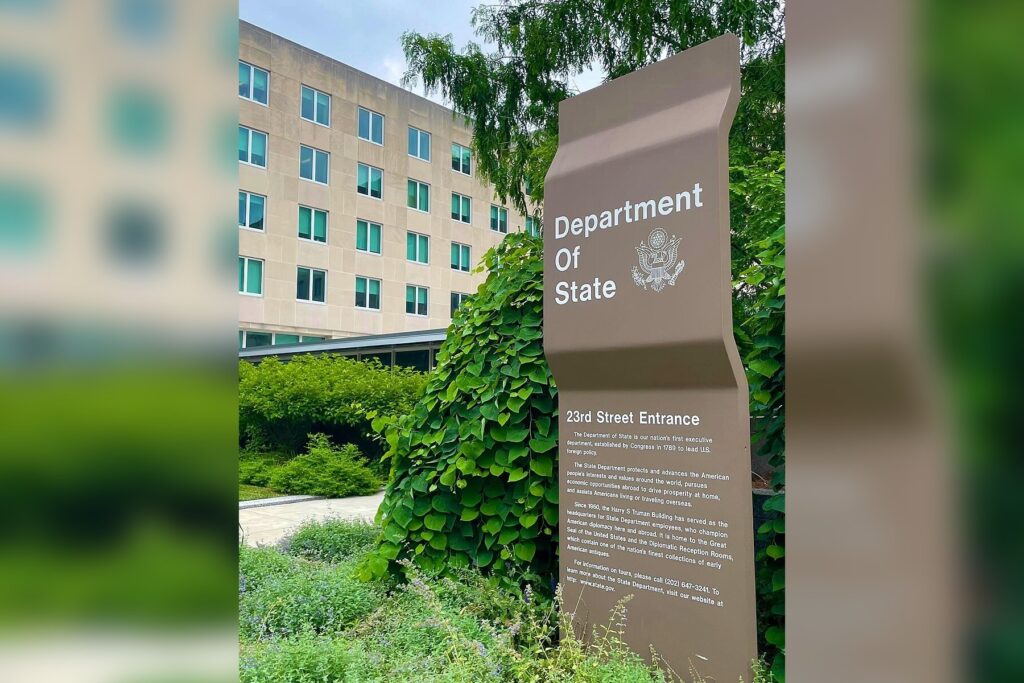
“To be part of everything is to be part of nothing.” That line sits in a draft State Department letter that Reuters reviewed in mid-August, and it carries the whole message: Washington wants its AI partners to stop hedging.
The letter is addressed to the 35 countries that signed the U.S. “AI Opportunity Statement” in June. It says that putting a name to the Pax Silica Declaration “is not merely a membership subscription, but a commitment,” and it tells recipients to “choose deliberately.” Membership, the draft says, “cannot be held alongside membership in duplicative initiatives whose expectations conflict with our own.” China is never named. It does not need to be.
Two coalitions, one overlap
Pax Silica was launched in December 2025 to secure supply chains for AI models, chips and critical minerals. According to the Diplomat it counts 24 signatories, while Reuters puts the membership at about two dozen, among them Japan, Australia and South Korea. The rival is China’s World Artificial Intelligence Cooperation Organization, or WAICO. Xi Jinping launched it in July, and the Diplomat counts 37 members, 29 of them founders.
Only one country is known to sit in both: Kazakhstan. Its deputy prime minister, Zhaslan Madiyev, signed the Pax Silica declaration in Washington on June 27. Less than three weeks later he was in Shanghai, signing on as a WAICO founding member. Washington values Kazakhstan for its critical minerals, which is why the overlap set off alarm bells there.
A U.S. official who spoke to Reuters on condition of anonymity was blunt about the purpose: “you can’t have it both ways.” In the official’s words, it is hard to see how a country can credibly present itself as a trusted partner in one technology ecosystem while joining an initiative China designed around a competing vision.
What is still unknown
The draft is undated. Reuters could not learn when it might go out or whether it would be changed first, and as of the Diplomat’s later reporting it did not appear to have been sent. The State Department declined to comment on what it called “purportedly leaked internal documents.” China’s embassy in Washington said Beijing opposes politicizing trade and technology issues. “Such actions will only stifle global AI advances and serve no one’s interests,” a spokesperson said. Kazakhstan’s embassy did not answer Reuters.
Central Asia pushes back
For governments in the region, the ultimatum lands on a long habit of keeping several partners at once. Uzbekistan joined WAICO in July, as did Kyrgyzstan and Tajikistan. In late August its ambassador to the United States, Furqat Sidikov, told journalists that Tashkent had sent a diplomatic note asking to join Pax Silica: “Now, the U.S. should confirm. We are ready to sign.” He called red lines around participation “counterproductive” and said countries should have a “chance to be part of any kind of international cooperation.”
The Diplomat adds that Paul Kapur, the assistant secretary of state for South and Central Asian affairs, visited Kazakhstan and Uzbekistan in early August, and met Madiyev to discuss digital development. How Washington treats Uzbekistan’s request may show how hard it intends to press.
Sources
- EXCLUSIVE: US to tell partners they must pick sides in AI race with China | Reuters
- Pax Silica vs WAICO: Will Central Asia Have to Pick a Side? | The Diplomat