
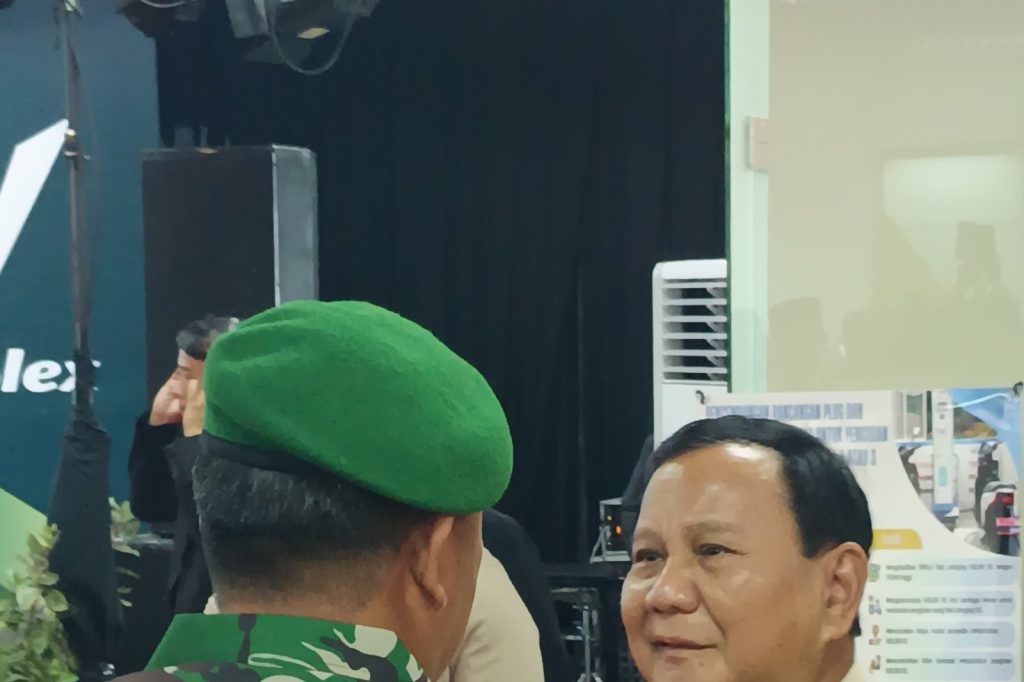
JAKARTA — Prabowo Subianto was inaugurated as president on 20 October following a February election where he secured 58 percent of the vote. Despite this apparent landslide, his administration faces a significant challenge: opposition parties control 44 percent of the 580-seat legislature, a bloc that represents nearly half of parliament and signals a deeply divided political landscape.
The Indonesian Democratic Party of Struggle (PDI-P), which supported losing candidate Ganjar Pranowo, holds 110 seats. Its chair, Megawati Sukarnoputri, stated on 26 June that the party would function as “a corrective force, not a rubber stamp,” a position she has maintained. The PDI-P’s refusal to accept cabinet posts underscores its adversarial stance toward the new government.
Prabowo’s own party, Gerindra, commands only 86 seats. To achieve a working majority, he assembled a coalition including Golkar, the National Awakening Party (PKB), and two Islam-based parties, totaling 324 seats. This coalition, while sufficient to govern, is described as fragile and vulnerable to defections or policy missteps.
A critical early test will be the 2025 budget. The opposition has signaled its intention to challenge proposed cuts to fuel subsidies worth USD 8.5 billion. These cuts disproportionately affect urban, rights-oriented voters who largely supported Prabowo’s rivals. Street protests followed the final vote tally, and social-media disinformation surged during and after the campaign, indicating unresolved societal tensions.
Prabowo’s human-rights record also remains a point of contention. His tenure as commander of the Army’s special forces in the late 1990s is linked to disappearances that human-rights groups continue to investigate. The president has appointed at least four retired generals who served under him to security-related ministries. Amnesty Indonesia executive director Usman Hamid remarked on 28 June that “victims have waited decades,” and activists have expressed alarm over these appointments.
The administration’s slogan, “continuity plus acceleration,” is framed as a policy platform, but for many Indonesians, it raises concerns about past practices. The opposition’s 44 percent seat share gives it the ability to delay, amend, or embarrass the government on key legislation. One defection or policy error could shift the parliamentary arithmetic.
Indonesia has experienced divided parliaments and fragile coalitions before, but the current situation is notable for the scale of opposition. Prabowo inherits a growing economy and a stable democracy, but also a fractured legislature, a skeptical urban electorate, and a rights record that continues to draw scrutiny. The coming months will test whether his coalition can hold, with analysts suggesting the odds are not in his favor.




