China added 123.69 gigawatts of solar capacity in the first ten months of 2026, a figure that would represent a record year for almost any other nation. It also marked a 51.1 per cent collapse from the 252.87 gigawatts installed over the same period in 2025, according to the National Energy Administration.
The Numbers Behind the Noise
The cumulative total reached 1.33 billion kilowatts by the end of October, up 16.3 per cent year on year, while total installed power generation capacity hit 4.16 billion kilowatts, a rise of 10.9 per cent. Wind capacity grew faster still, climbing 20 per cent to 710 million kilowatts. The salient point is not the slowdown; it is the base from which it has fallen. Even in a “down” year, China is installing solar at a rate that dwarfs the rest of the world combined.
For all the noise about overcapacity, the utilisation data tells its own story. The average utilisation of power generation equipment dropped to 2,406 hours in the first ten months, down 214 hours from a year earlier. The grid is struggling to absorb the sheer volume of electrons being pushed onto it, a structural bottleneck that no amount of manufacturing prowess can solve alone.
How the Ecosystem Was Built
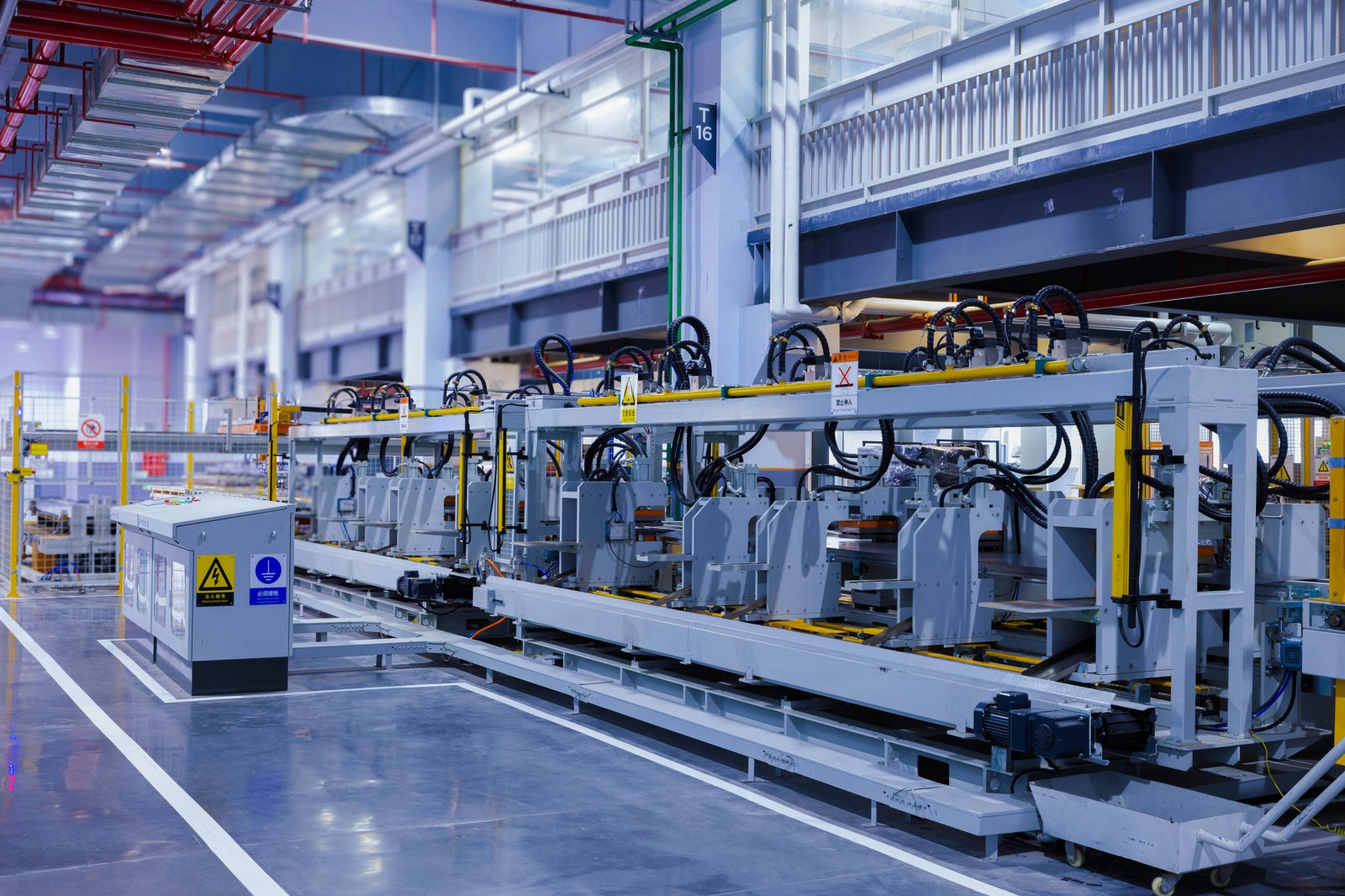
China’s dominance was not assembled by accident. It rests on a vertically integrated supply chain — from polysilicon and wafers to cells and modules — concentrated in industrial clusters where state-backed finance, cheap coal-fired power and a deep labour pool sit within logistics distance of major ports. The policy signal was consistent: solar was designated a strategic industry, eligible for preferential land, credit and export support. That consistency allowed manufacturers to plan in decades, not quarters.
The result is a cost structure that competitors in Southeast Asia, India or the United States struggle to match without heavy subsidies of their own. When the Inflation Reduction Act or India’s Production Linked Incentive scheme try to onshore parts of this chain, they are effectively attempting to replicate thirty years of industrial accretion in a single parliamentary term.
The Cracks in the Facade
The bankruptcy restructuring filing by Sunport Power at the Wuxi Intermediate People’s Court illustrates the pressure now bearing down on the sector’s fringes. Founded in 2012, Sunport was an early commercialiser of metal wrap-through technology, a niche designed for lightweight and flexible modules. Its state-owned backer, Wuxi Industry Development Group, holds a 62.11 per cent stake. That did not prevent the firm from ending 2025 with liabilities of 1.19 billion yuan against assets of 575 million yuan, a net loss of 182 million yuan on revenue of just 162 million yuan.
Soochow Securities attributed the collapse to limited demand for specialised modules, a lack of economies of scale in conventional lines, and falling selling prices. Sunport had already idled capacity and switched to mass-produced n-type cells in a bid to survive. It would seem that even state affiliation offers limited shelter when the mainstream market turns into a commodity bloodbath.
Export Channels and the Kenya Circuit
The overcapacity has to go somewhere. In the first ten months of 2026, Chinese solar cell exports to Kenya surged to $576 million from $5 million a year earlier, making Kenya the top destination for Chinese components in October. Kenyan panel exports to the United States, negligible in January, hit $138 million by August. The route — Chinese cells assembled in Kenya for the US market — is a direct response to trade restrictions on Chinese-made product. Africa’s broader demand is real, driven by diesel costs and subsidy removals, with installations expected to jump 45 per cent to 17 gigawatts this year. But the Kenyan spike has the hallmarks of a tariff arbitrage play.
The Belt and Road Dual Track
At the Fourth Belt and Road Energy Ministerial Conference in Qingdao this week, NEA Administrator Wang Hongzhi declared the green transition “irreversible” while pledging to “vigorously advance oil and gas exploration and production” over the next five years. The numbers bear out the duality: Chinese official energy commitments to emerging economies totalled roughly $565 billion over 2015-2024, split $335 billion for fossil fuels and $230 billion for clean energy. Partner-country new-energy capacity under the initiative has more than quadrupled in a decade to above 600 gigawatts, with nearly 70 projects launched in 2025 alone. China is not choosing between hydrocarbons and renewables; it is selling both to the same buyers, financing the grids and storage that make the solar usable.
The restructuring case number for Sunport Power is (2026) Su 02 Po Shen 45.
Sources
- East Africa’s second-largest economy emerges as top destination for Chinese solar exports as imports jump from $5 million to $576 million and panel shipments to the lucrative US market surge
- China’s solar power capacity reaches 1.33bn kW up 16.3pc
- Chinese solar module maker Sunport files for bankruptcy restructuring – pv magazine Global
- VinEnergo Breaks Ground On 126 MWp Solar Power Project In The Philippines, Advancing Strategic Cooperation With The Department Of Energy
- China Pairs Clean Tech With Oil and Gas in Belt and Road Energy Push
- China Adds 124 GW of Solar Capacity in January-October 2026, Down 51% YoY – Mercom India
Photo: TruckRun / Unsplash (Unsplash License)