In Shenzhen, Presidents Donald Trump and Xi Jinping stood side by side and spoke of AI cooperation. Two days earlier, the US Commerce Department had issued new licensing requirements designed to sever Chinese access to the most advanced American chips, and Nvidia’s interim chief confirmed the company would stop selling its H200 processors in China entirely.
The Remote Access Loophole
The new rules target a workaround that had flourished for months. Data centers in countries like Malaysia were buying Nvidia’s top-tier chips, then renting out computing power to Chinese firms through remote connections, according to TechCrunch. The Commerce Department’s latest licensing requirements aim to close that channel by treating remote access as a controlled export. Interim CEO Colette Kress told analysts the H200 would no longer be offered in the Chinese market, a direct response to the tightened framework.
A Leadership Vacuum
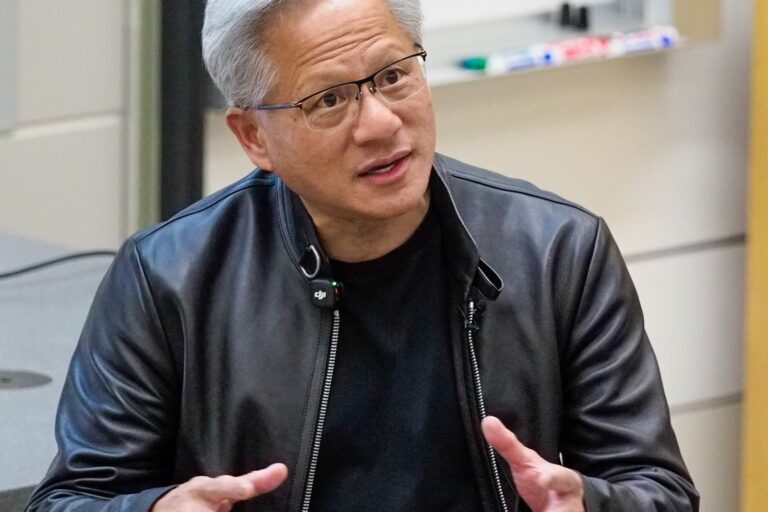
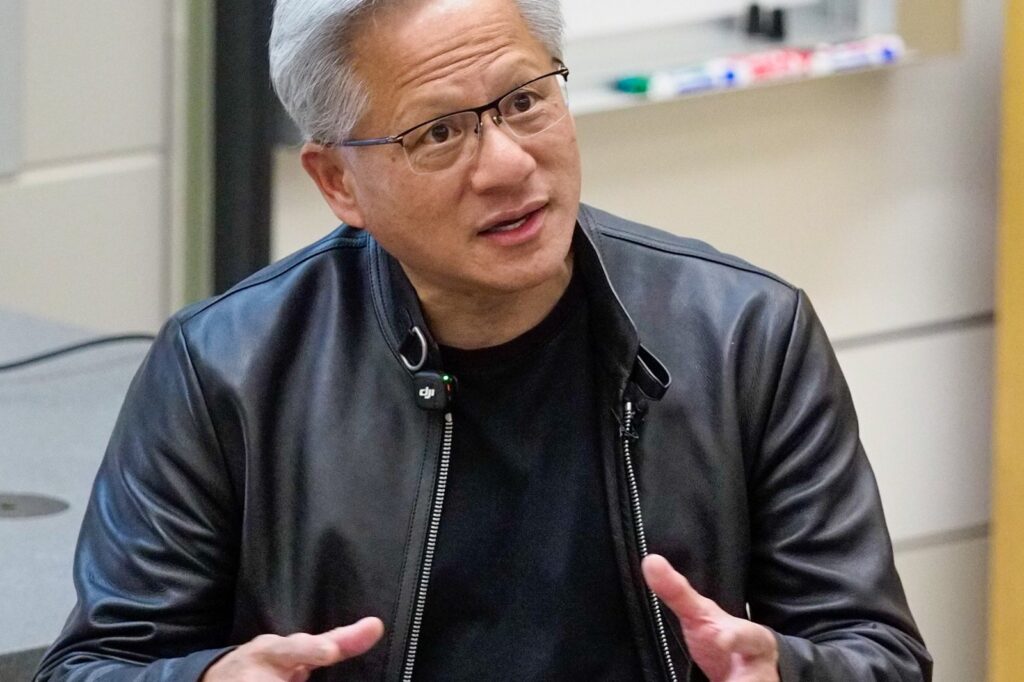
The export controls landed as Nvidia’s founder was walking out the door. Jensen Huang resigned on November 12 after acknowledging “personal behavior inconsistent with the company’s code of conduct,” the board said in a statement released through NPR. The company’s chair, Harvey Jones, added that the board unanimously accepted the resignation and does not intend to reinstate him. Huang had been linked in press reports to a woman suspected by US intelligence of working with Chinese security services, and to an executive at Megaspeed, a Singapore-based firm that was a major Nvidia customer. He has agreed to testify behind closed doors before three House committees on December 1 and 2.
Market Shock
Investors have not waited for the hearings. Nvidia shares have fallen nearly 30 percent since the start of November, according to The Motley Fool, wiping out hundreds of billions in market value. The company had become the first to surpass $5 trillion in market capitalization earlier in 2025, driven by insatiable demand for AI hardware. Third-quarter revenue still jumped 103 percent year over year to $115.8 billion, but analysts warn the leadership vacuum and the China revenue exposure — estimated by some critics at 20 percent of total business when indirect sales are counted — create an unpredictable risk profile.
Supply Chain Moat
For now, Nvidia’s physical advantages remain intact. The company has locked down future supply of high-bandwidth memory through a $500 billion agreement with SK Hynix and retains priority access to TSMC’s most advanced fabrication capacity, according to an analysis published by AOL. Those assets mean Nvidia can still outbuild rivals on sheer volume, even as the political ceiling over its largest growth market drops lower.
Diplomatic Dissonance
Neither Trump nor Xi mentioned the chip curbs or the espionage allegations during their Shenzhen meeting, CNN reported. China’s Foreign Ministry called the restrictions “economic coercion,” and the Ministry of Commerce warned of countermeasures if Washington persists. The third summit between the two leaders this year produced warm optics but no bridge across the hardening technology divide.
Sources
- In China’s tech mecca, Trump and Xi touted AI cooperation. Now comes the harsh reality. | CNN Business
- Nvidia
- Nvidia board says it does not intend to reinstate Jensen Huang as CEO
- A tale of two Nvidias | TechCrunch
- Nvidia Without Jensen Huang: 3 Things That Could Go Right and 3 That Could Go Wrong – AOL
- Should You Buy Nvidia Stock Right Now? | The Motley Fool
Photo: Anders Eidesvik (CC BY 4.0)