China’s nuclear buildup is “hot and heavy,” President Donald Trump said Thursday, a day after a historic trilateral meeting with President Xi Jinping and President Vladimir Putin in Shenzhen. The remark underscores a shift that arms control analysts have tracked for years: China is now the only Nuclear Non-Proliferation Treaty state significantly expanding its arsenal.
Current Stockpile and Global Ranking
As of 2026, China possesses an estimated 620 nuclear warheads, according to state and international reports, placing it third globally behind the United States and Russia. The account indicates this figure represents a substantial increase from previous years. China tested its first nuclear device in 1964, becoming the last of the five recognized NPT nuclear-weapon states to do so. It carried out 45 nuclear tests before signing the Comprehensive Nuclear-Test-Ban Treaty in 1996. Beijing acceded to the NPT in 1992 and ratified the Chemical Weapons Convention in 1997.
Projected Growth Through 2035
Projections indicate the stockpile will reach 1,000 warheads by 2030 and could climb to 1,500 by 2035. Officials said this trajectory makes China the sole NPT nuclear-weapon state engaged in a significant quantitative expansion. While the United States and Russia maintain larger total inventories, their numbers have generally trended downward or stabilized under arms control frameworks. China’s expansion occurs outside those bilateral treaties.
Triad Composition and Deployment Status
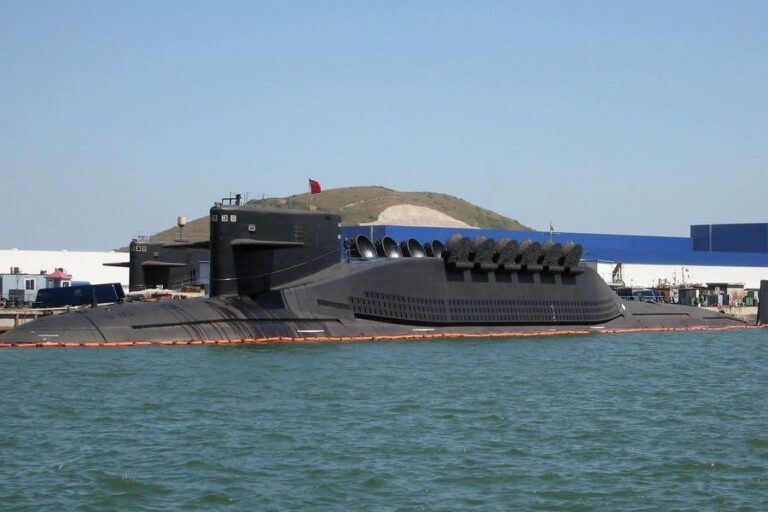
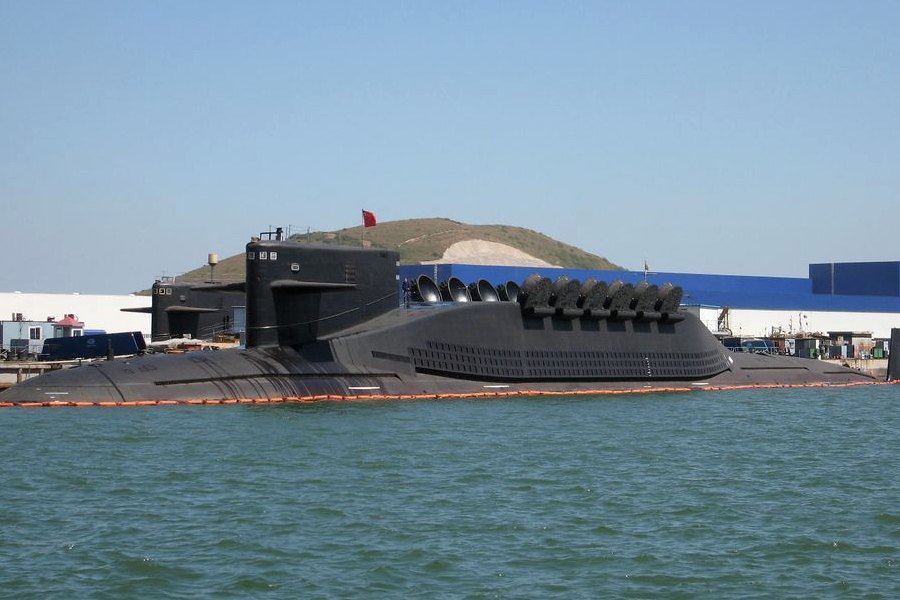
Since 2020, the People’s Liberation Army has operated a nuclear triad. Of the current stockpile, 376 warheads are assigned to the Rocket Force’s Dongfeng intermediate and intercontinental ballistic missiles. The Navy accounts for 72 warheads on Julang-3 submarine-launched ballistic missiles deployed aboard six Type 094 submarines. The Air Force holds 20 warheads for Jinglei-1 air-launched ballistic missiles carried by 20 Xi’an H-6N strategic bombers. Approximately 132 warheads await assignment to delivery systems.
Compared to the arsenals of the United States and Russia, a much smaller proportion of China’s warheads are believed to be deployed on their delivery systems, with the remainder stored separately. Beijing has maintained a no-first-use policy since 1964, though some nuclear forces have reportedly moved toward a launch-on-warning posture in the early 2020s. Development continues on the Xi’an H-20 stealth bomber, the Type 096 submarine, and extensive missile silo fields.
Strategic Implications for Regional Security
The expansion coincides with a broader modernization that includes multiple independently targetable reentry vehicles, hypersonic glide vehicles, and a fractional orbital bombardment system. At the Shenzhen summit, the three leaders discussed preventing the proliferation of weapons of mass destruction, according to the Kremlin readout. President Putin described the trilateral format as opening “a new page in the history of diplomacy.” China’s deputy permanent representative to the UN, Sun Lei, separately reaffirmed Beijing’s opposition to the proliferation of weapons of mass destruction and their delivery systems during a Security Council briefing Thursday.
Sources
- China and weapons of mass destruction
- Press conference following visit to China
- Are Space Weapons Legal? The Outer Space Treaty | MiGFlug
- Russia is developing a nuclear space weapon, US intelligence report finds
- China firmly supports UN's counter-terrorism work, opposes all forms of terrorism: envoy
- U.S. and Israel considering new assault on Iran, sources say
Photo: CSR Report RL33153 China Naval Modernization: Implications for U.S. Navy Capabil (Public domain)