US Secretary of State Marco Rubio arrived in Samarkand on Sunday night, stepping into a historic Silk Road city to meet foreign ministers from five Central Asian nations. His visit underscores a strategic push to deepen American engagement with a resource-rich region wedged between Russia, Iran, and China.
Rubio’s trip, which included a dinner with Uzbek President Shavkat Mirziyoyev and a business council event featuring more than 200 American executives, highlights Washington’s interest in securing access to critical minerals. Uzbekistan, a doubly landlocked nation of 39 million people, signed the Artemis Accords on Monday, becoming the 77th member of the US-led framework for lunar exploration. The signing, led by NASA Deputy Administrator Matt Anderson and Uzbek Foreign Minister Bakhtiyor Saidov, occurred during the 2026 International Astronautical Congress in Antalya, where Uzbek students are developing the country’s first CubeSat with a target launch date of 2028. Uzbekistan is scheduled to host the annual global space event in 2028 following its recent engagement with NASA.
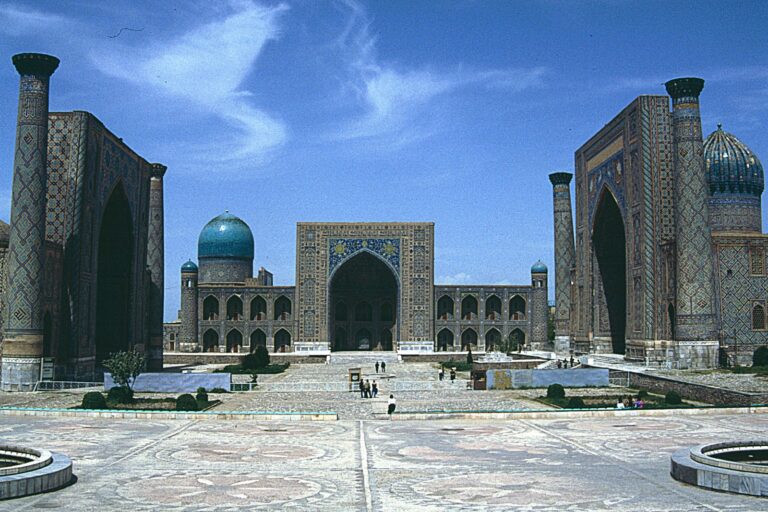
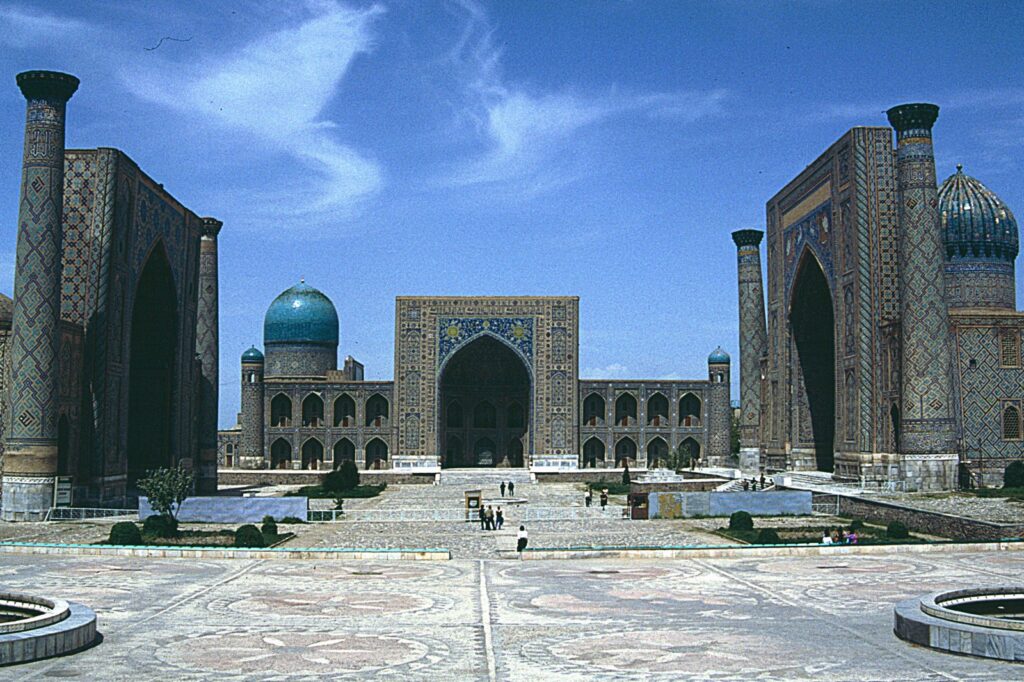
The Trump administration views Central Asia as a major geopolitical battleground. Rubio told journalists after strolling through Registan Square that the United States must balance addressing immediate global crises with building long-term relationships. “Our focus on a problem region or a problem country or a problem issue in the world still has to be there, but it cannot come at the expense of embracing opportunities,” Rubio said. “You have to be able to do both.”
Uzbekistan’s recent reforms under President Mirziyoyev have transformed the country from an authoritarian state into one with limited civil rights improvements, opening space for greater international cooperation. The nation’s vast mineral wealth—including significant reserves of gold, uranium, and rare earth elements—makes it a strategic partner for Washington. By aligning with the Artemis Accords, Uzbekistan commits to explore peaceably, render aid, ensure transparency, and preserve historically significant sites, aligning its space ambitions with US-led norms.
Rubio’s engagement with the five Central Asian foreign ministers—representing Uzbekistan, Kazakhstan, Kyrgyzstan, Tajikistan, and Turkmenistan—signals an effort to counter competing influences in a region where post-Soviet states are deepening diplomatic and economic links with multiple powers. The United States, Russia, and China all vie for influence in a territory rich in natural resources but strategically isolated by its geography. Uzbekistan’s entry into the Artemis Accords adds a new member to the US-led coalition, potentially expanding American access to scientific collaboration and technological partnerships in the region.
Uzbekistan’s Emerging Space Industry and Satellite Ambitions
Beyond the diplomatic symbolism of the Artemis Accords, Uzbekistan is actively building a domestic space infrastructure. According to NASA source material, Uzbek students are currently developing the country’s first CubeSat, a small satellite technology demonstration, with a target launch date set for 2028. This initiative forms part of a broader national space program aimed at advancing Uzbekistan’s space industry and increasing participation in global space forums. The development of satellite technology represents a significant step for a nation historically focused on agricultural production, signaling a shift toward high-tech sector growth.
Uzbekistan’s space ambitions are further reinforced by its role as a future host of major international events. As noted in the source material, the country is scheduled to host the annual global space event in 2028, following its recent engagement with NASA and the 2026 International Astronautical Congress in Antalya, Türkiye. This upcoming hosting responsibility underscores the government’s commitment to deepening its integration with the international space community. The combination of student-led satellite projects and the prospect of hosting a global space conference illustrates a multi-layered approach to expanding Uzbekistan’s capabilities and profile in the aerospace sector.
Artemis Accords Principles and Strategic Implications
NASA Deputy Administrator Matt Anderson hailed Uzbekistan’s accession, noting, “Uzbekistan joins the Artemis Accords at a pivotal moment.” He added that President Trump has directed NASA to “build a Moon Base and establish an enduring presence on the lunar surface,” underscoring the United States’ ambition to expand a permanent foothold on the Moon while welcoming new partners.
The Artemis Accords, first established in 2020 by NASA and the State Department with seven founding nations, set out a “first set of practical principles” to guide safe, transparent, and responsible civil space exploration. Those principles obligate signatories to explore peaceably, render aid when needed, share scientific data openly, avoid interference with other missions, and preserve historically significant sites and artifacts. Uzbekistan’s signing therefore commits the nation to these standards, aligning its nascent space program with the broader coalition of like‑minded countries.
According to NASA, the Accords are designed to “enhance the safety and coordination between nations as they explore the Moon, Mars, and beyond.” Uzbekistan’s inclusion as the 77th signatory expands the coalition’s geographic diversity and signals a growing appetite among Central Asian states to participate in lunar and deep‑space activities, potentially opening new avenues for scientific collaboration and technology transfer across the region.
Rare Earth Mineral Access and Geopolitical Strategy
Uzbekistan’s strategic importance to the United States is increasingly defined by its vast mineral wealth, particularly rare earth elements critical to modern technology and defense industries. The Trump administration has portrayed resource-rich Central Asia — wedged between Russia, Iran and China — as a major geopolitical battleground that deserves more attention than it has received under previous administrations. U.S. officials have placed a particular emphasis on trying to secure greater access to the area’s rare earth mineral supplies. Rubio arrived in Samarkand with more than 200 U.S. business leaders in tow, the State Department said, underscoring Washington’s interest in leveraging the region’s natural resources.
Rubio’s engagement with the five Central Asian foreign ministers signals an effort to counter competing influences in a region where post-Soviet states are deepening diplomatic and economic links with multiple powers. The United States, Russia, and China all vie for influence in a territory rich in natural resources but strategically isolated by its geography. While the article notes Uzbekistan’s recent reforms and its signing of the Artemis Accords, the strategic goal of securing rare earth mineral access remains a central, though often understated, driver of U.S. engagement. As Rubio told journalists, the United States must balance addressing immediate global crises with building long-term relationships, acknowledging that opportunities in resource-rich regions cannot be overlooked amid competing global priorities.
Sources
- Uzbekistan
- NASA Welcomes Uzbekistan as Newest Artemis Accords Signatory – NASA
- Rubio seeks to expand Central Asia ties with pomp-filled Uzbekistan visit
Photo: Ziegler175 (CC BY-SA 4.0)