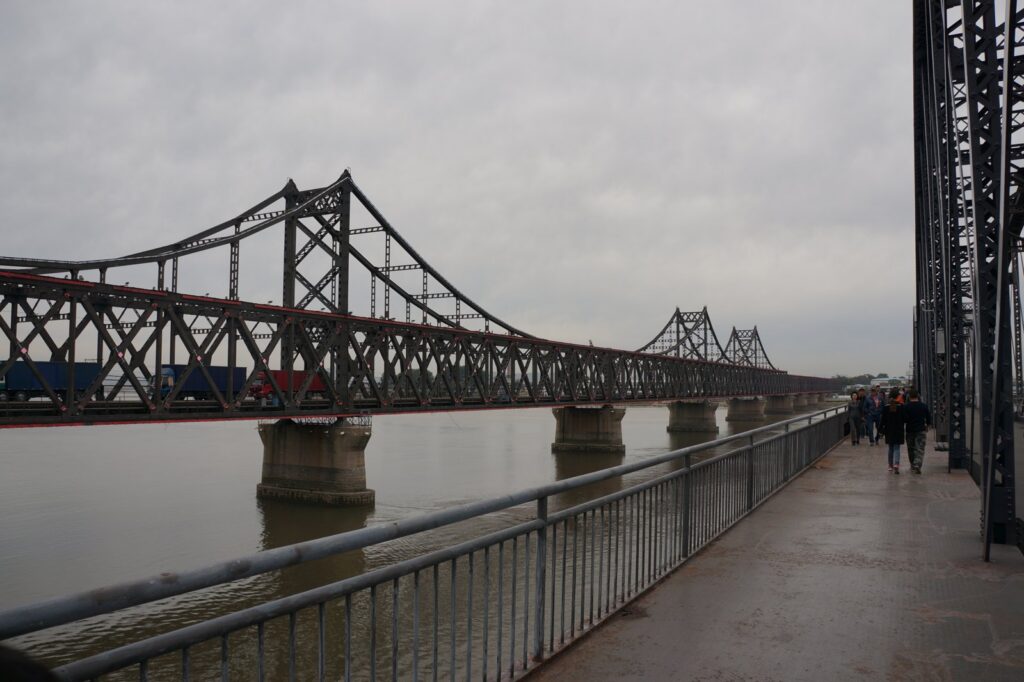
Two new crossings over the Tumen and Yalu rivers opened a month apart, turning a routine infrastructure milestone into a high-stakes diplomatic contest. The Yakov Novichenko Bridge now links North Korea and Russia across the Tumen, while the long-dormant Yalu River bridge to China finally saw trains roll after more than a decade of silence. For readers following the shifting balance of power in Northeast Asia, the story is about how Pyongyang has become the prize both Moscow and Beijing are racing to claim.
The Yalu Bridge: From Inactivity to Activation
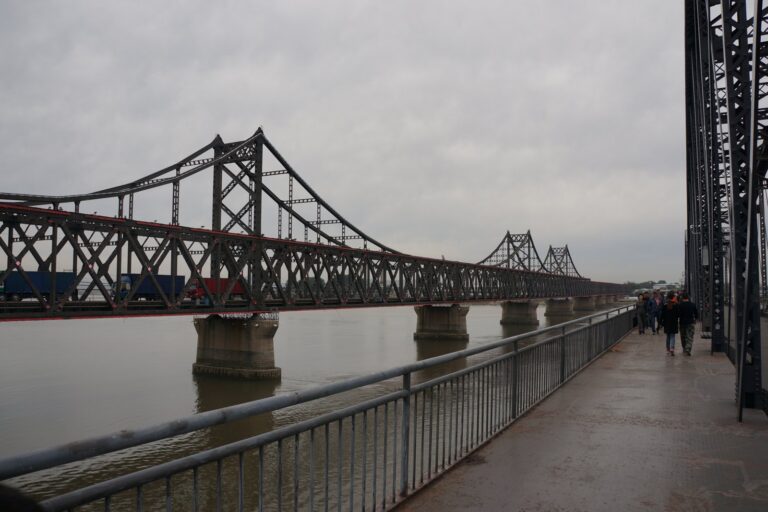
The Yalu River bridge, completed in 2014, had become a symbol of stalled cooperation. North Korea never finished the access roads, leaving the crossing idle for more than ten years. That changed when Russia began using the corridor to funnel North Korean troops and weapons into its war in Ukraine. The bridge’s reactivation came as Moscow signaled that Pyongyang’s wartime contributions were no longer going unnoticed. For Beijing, the reactivation highlights a growing anxiety: an 800-mile border with North Korea means that any shift in Pyongyang’s alignment could ripple through Northeast China. China has been making its own moves to strengthen ties, but the speed of Russia’s response has forced Beijing into a reactive posture.
The Novichenko Bridge: A New Arctic-Alternative Route
Russia moved faster. After President Vladimir Putin’s visit to Pyongyang in June 2024, construction on the Yakov Novichenko Bridge began on April 30, 2025. The structure itself was finished by April 2026, though road approaches and customs facilities took an additional five months to complete. Russian Prime Minister Mikhail Mishustin opened the bridge, calling it a “reliable basis for closer cooperation.” Unlike the Yalu crossing, this bridge was built from the ground up with Moscow’s war effort in mind. It provides a direct overland link across the eleven-mile Tumen River border, bypassing longer sea routes and giving Russia a overland lifeline to its northern neighbor.
Kim’s Bargaining Chip
North Korea’s leader Kim Jong Un is now in a position to play the two rivals against each other. With both Moscow and Beijing courting him, Kim has little incentive to accept a meeting with former U.S. President Donald Trump, despite indications that such a meeting was being arranged. North Korea provided troops and material to Russia, and Moscow rewarded Pyongyang handsomely. That support has made North Korea an essential partner for Russia, which has struggled to sustain its war effort without adding to domestic pressure. China, meanwhile, worries that if it does not keep pace, it will lose the influence it has long held over its northeastern neighbor. The competition puts Kim in the enviable position of extracting infrastructure and diplomatic concessions from both sides, while Trump’s diplomatic overtures remain sidelined.
What It Means for the Region
The race to court Kim Jong Un is not just about bridges. It is about who controls the flow of people, goods, and influence along a border that has long been a flashpoint. For communities across Northeast Asia, the new crossings mean more movement, but also more uncertainty. A North Korea that leans too far one way could disrupt trade, alter security calculations, or change the calculus of a war that has already dragged on for years. As the bridges open, the real question is whether Pyongyang will use its new leverage to dictate terms, or whether Moscow and Beijing can find a way to coordinate without sidelining the very partner they are both courting.
The Tumen River’s Strategic Shift
The Yakov Novichenko Bridge represents a significant upgrade in Russia’s logistical capabilities along the North Korean border. Unlike the Yalu River crossing, which required North Korea to complete access roads completed over a decade after its 2014 construction, the Novichenko project was designed as a comprehensive infrastructure initiative from its inception. Russian officials have emphasized that the bridge shortens transport times for goods and personnel moving between the two nations, providing a direct route across the Tumen River that bypasses longer maritime alternatives. This development comes as Moscow seeks to solidify supply lines for its ongoing operations, utilizing the bridge’s proximity to existing rail networks to facilitate the movement of resources.
Furthermore, the bridge’s opening has implications for the broader geopolitical dynamics of the region. With the structure now operational, Russia has established a permanent overland connection to North Korea’s northeastern provinces. This connectivity allows for increased frequency of high-level visits and economic exchanges, reinforcing the bilateral relationship. While the bridge facilitates movement, it also serves as a physical manifestation of the shifting allegiances in Northeast Asia, where infrastructure projects are increasingly used as tools of diplomatic influence rather than mere transportation links.
Customs and Road Completion
The Yakov Novichenko Bridge structure itself was finished by April 2026, but Russian Prime Minister Mikhail Mishustin noted that road approaches and customs facilities required an additional five months to complete. This delay highlights the complexity of integrating new infrastructure into existing border protocols. The bridge now provides a direct overland link across the eleven-mile Tumen River border, bypassing longer sea routes.
Russian officials emphasized that the bridge shortens transport times for goods and personnel moving between the two nations. By utilizing the bridge’s proximity to existing rail networks, Moscow facilitates the movement of resources essential for its ongoing operations. The opening has implications for broader geopolitical dynamics, establishing a permanent overland connection to North Korea’s northeastern provinces.
This connectivity allows for increased frequency of high-level visits and economic exchanges, reinforcing the bilateral relationship. While the bridge facilitates movement, it also serves as a physical manifestation of shifting allegiances in Northeast Asia, where infrastructure projects are increasingly used as tools of diplomatic influence rather than mere transportation links.
Sources
- Two Bridges, Manhattan
- Two new bridges show China and Russia competing for North Korea – Asia Times
- A Bullet for the General by Tony O’Reilly
Photo: Geraldshields11 (CC BY-SA 4.0)