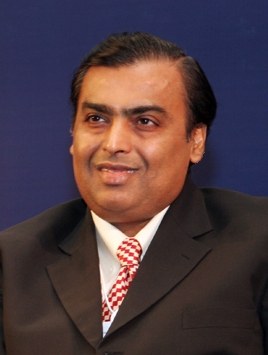
“Build this business from scratch, without taking anyone from Reliance.” That was the ground rule Mukesh Ambani says he was handed when he entered the family’s polyester business in the 1980s, and he has spent four decades since showing how far a discipline like that can go.
Speaking to the personal finance magazine MoneyLIFE in 2007, Ambani, then Reliance Industries chairman, described an industry that ran on “heroes”. Experts would arrive with notebooks of process conditions, temperatures and pressures, then carry the readings away with them. Managers did much the same. He called it a feudal style and said it simply would not scale. Reliance wrote standard operating procedures instead, so that, in his words, “everybody contributes but the business is not dependent on a few individuals.”
Paying for the best
When competitors bought licences for half a million or a million dollars, Reliance agreed to pay DuPont $5 million. Capital was limited, but Ambani wanted to work with the best in the world. A few DuPont experts were paired with 25-year-olds who were there to learn how to run operations and sustain chemical processes. His reference points were American, he said, and a senior public-sector manager, KK Malhotra, who stayed 15 years from 1985, became what Ambani called his guru.
The test came in 1985. Rasikbhai, one of the three people running the business, died on 30 August. His father, Dhirubhai, had a stroke in February. “From three of us running the business, for some time, I suddenly became alone,” Ambani recalled. He said there was no panic. The polyester business was institutionalised and a plan existed. “We just kept our heads down and executed it.”
Between 1981 and 1991, under the licence-permit regime, Reliance built polyester capacity of 75,000 tonnes. When the economy opened in 1992, he said, the company was ready. By the middle of 1995 it was producing 1 million tonnes, while tariffs fell from 150% to 30% and later 10%. Beating the Taiwanese and Koreans who dominated polyester had been, he said, “an obsession”.
Passing on IT, betting on infocomm
Ambani saw the IT wave coming. He lived in Silicon Valley and mentioned the software opportunity in a 1995 speech. Reliance even signed a joint venture with Microsoft, then passed it up. The company was not ready to do two things at once, he said. “We have too much soap on our body and we need to take a bath in the chemicals business.”
By the late 1990s, with strong cash flows, there were two options: make the existing business bigger, or do something else. Ambani told his father the group should use its cash to “make a difference to millions of Indians”. Dhirubhai replied that this was exactly what he had in mind. Infocomm was born, built on his view that pure communication would not deliver lasting value without information alongside it.
Jio
That bet became Jio, launched in 2016. A 2026 profile in Global Cover Story called it the most consequential decision of his career. Reliance had spent years and an enormous sum building a nationwide 4G network, then gave the service away, offering months of free voice and data before settling on prices a fraction of what rivals charged.
The price war collapsed the old telecom order almost overnight. Weaker operators merged or exited, and India went from one of the costlier places to buy mobile data to one of the cheapest. Two advantages were hard to counter, the profile noted: cash from the oil-to-chemicals business to absorb years of telecom losses, and patience to keep losing money until the market was won.
Reliance Retail grew into India’s largest retailer by revenue and store count. Global technology and private-equity investors put billions into Jio Platforms and Reliance Retail. Ambani is now handing operational control of telecom, retail and new energy to his three children, and has committed a vast sum to solar manufacturing, batteries and green hydrogen.