
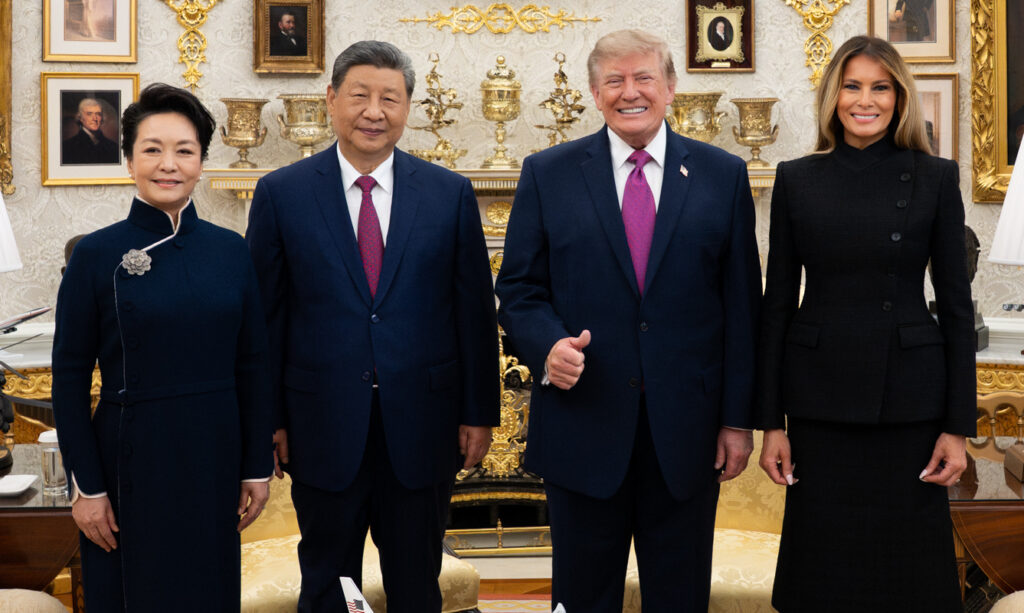
The main thing to come out of Xi Jinping’s state visit to Washington was an extra two months. Treasury Secretary Scott Bessent said on Wednesday, September 23, 2026, that the United States and China had agreed to extend the “Busan Agreement” until January 10. It had been due to expire on November 10.
“We have agreed today that we will extend what we call the Busan Agreement,” Bessent said in an interview with Fox News. He announced it after meeting Chinese Vice Premier He Lifeng, with Reuters and NBC News also reporting his remarks.
What the truce is, and what it is not
The arrangement dates from the Trump-Xi meeting in South Korea in October 2025, after a year of tariff escalation that pushed bilateral rates above 100% at their peak. China suspended retaliatory tariffs on a broad range of American agricultural products, promised more soybean purchases and put new export controls on rare earths and other critical minerals on hold. The United States suspended or reduced certain tariffs and trade restrictions in return.
It lowered the temperature. It did not settle the underlying disputes, and Newsmax made the point that January 10 is an extension of the framework, not the end of the negotiation.
Deliverables “not perfect”
Bessent was candid about the Chinese side. “There are some deliverables that have not been perfect on the Chinese side,” he said, according to NBC News. U.S. officials told Reuters that Chinese rare-earth deliveries “have not been up to par.” Gulf News listed the unresolved items after the summit: tariffs, Chinese commitments to buy American farm goods, rare earths and restrictions on advanced technology.
U.S. Trade Representative Jamieson Greer has described a “Board of Trade” process that could pick categories of goods for reciprocal tariff cuts, including Chinese consumer and low-tech products and American energy, agricultural and possibly medical-device exports.
Warm words, few breakthroughs
The summit itself was heavy on ceremony. Trump greeted Xi and his wife, Peng Liyuan, at Joint Base Andrews, hosted a state dinner on September 24 and presented a custom-made bald eagle statue. He called theirs a “truly great friendship.” Xi was more measured, describing the countries’ interests as “deeply intertwined” and competition as something that should stay “healthy.”
On artificial intelligence, the two leaders sounded unalike. Xi said both countries had “the capability and responsibility” to manage AI safely. Trump said he wanted to “leave it exactly where it is.” The preparatory talks did produce a mechanism for discussing significant AI safety incidents.
Xi also pressed Washington on Taiwan, urging “prudence,” and called for regular military communication to head off crises. He backed a return to a ceasefire between the United States and Iran, according to Xinhua.
Gulf News summed up the outcome as a display of friendship with limited public evidence of progress on the biggest disagreements. The truce survives to January 10. Whatever follows is still to be negotiated.
Sources
- US-China Trade Truce Extended as Trump Rolls Out Welcome for Xi
- US-China Summit: Trump and Xi Talk Trade, AI and Iran Amid Rising Superpower Rivalry




