
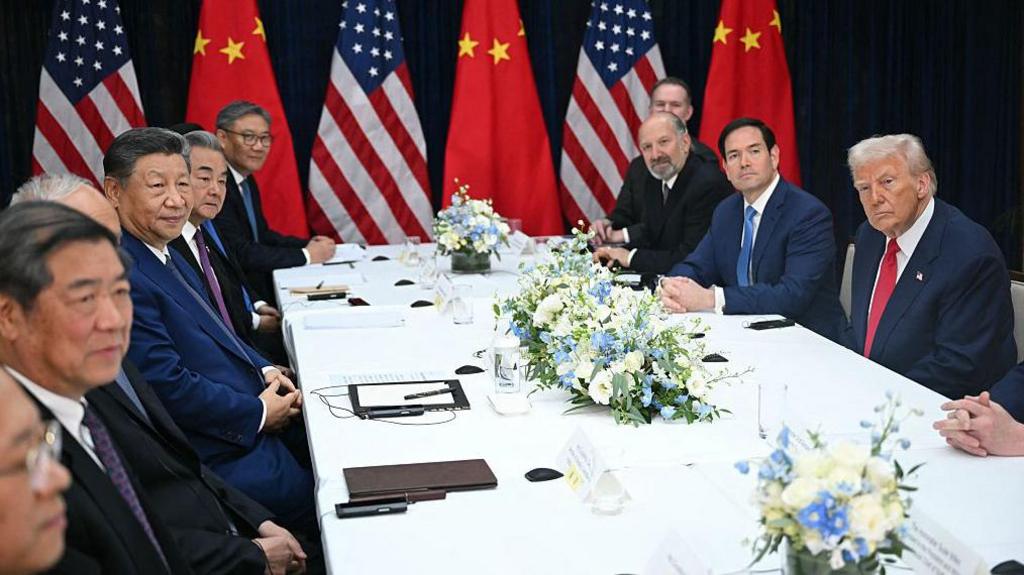
WASHINGTON, September 27 — President Donald Trump will host Chinese leader Xi Jinping at the White House on Thursday, a summit that follows a coordinated show of allied unity this week as Japan and South Korea pressed Washington for assurances on defense and trade. The meeting is scheduled for Thursday in Washington.
Officials said both Japanese Prime Minister Sanae Takaichi and South Korean President Lee Jae Myung were keen to see the US president during the UN General Assembly in New York, where all three were scheduled to speak on Tuesday. On Monday, Sept 21, the United States reiterated its commitment to the defense of key Asian allies Japan and South Korea, and the three nations expressed support for Taiwan ahead of the summit.
Allies Seek Reassurance Before the Summit
Analysts say the US allies are anxious that Trump may offer concessions to Xi, including over Taiwan and trade, in return for an economic win with Beijing. That anxiety has deep roots in the region, where the security architecture built after the Second World War has long rested on American extended deterrence. US Secretary of State Marco Rubio met with his South Korean counterpart Cho Hyun and Japan’s Foreign Minister Toshimitsu Motegi in New York on Monday.
The three issued a joint statement vowing, in apparent reference to China, to stand firm “against economic coercion and non-market policies and practices” and “arbitrary export restrictions that disrupt supply chains.” They also welcomed the launch of a new trilateral consultation mechanism on economic security, part of broader efforts to strengthen supply chains and cooperation on critical technologies.
The statement said the US “reiterated its ironclad commitments to the defense of Japan and the ROK, backed by America’s unmatched military strength, including its nuclear capabilities, and reaffirmed its extended deterrence commitments to Japan and the ROK,” using the initials for the Republic of Korea, South Korea’s official name. The ministers emphasized their commitment to robust security cooperation and the importance of maintaining peace and stability across the Taiwan Strait.
It also “expressed support for Taiwan’s meaningful participation in appropriate international organizations.” Referring to North Korea, the ministers “reaffirmed their resolute commitment to the complete denuclearization of the Democratic People’s Republic of Korea” and called on it to resume dialogue.
Trade and Taiwan Top the Watch List
In addition to concerns about Taiwan, a democratically governed island China claims as its own, analysts said allies will be scrutinizing any trade announcements from the Trump-Xi summit for their impact on competitiveness relative to China. Even a modest reduction in trade barriers for Beijing could erode their positions. Takaichi angered Beijing last year by saying Tokyo could be drawn into a conflict over Taiwan.
Seoul and Washington have been negotiating details of South Korea’s $350 billion investment package in the United States under a trade deal struck by the allies last year. On Monday, a South Korean opposition lawmaker called for parliamentary scrutiny of the investment package, warning that negotiations over energy projects could leave South Korea carrying disproportionate financial risks.
What to watch next: whether the White House summit produces concrete trade announcements, and whether the trilateral consultation mechanism on economic security translates into coordinated action on export controls and supply chains.




