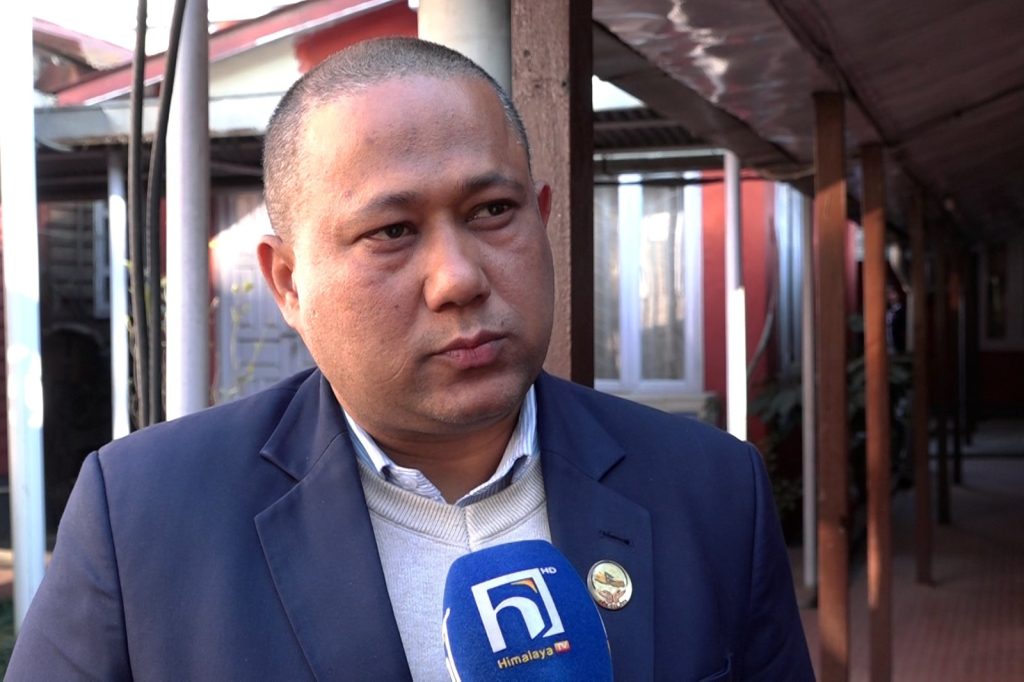
“Nepal is not small. Nepal is strategically located.” Foreign Minister Shishir Khanal opened with that line before an Asia Society audience in New York, in remarks Republica reported on September 25, 2026, citing his private secretariat.
The event was titled “Steering Nepal’s Future in Asia’s Rising Century.” Khanal used it to argue that Nepal’s difficult geography should not cap what the country tries to do. “The size of our neighbours is a geographical reality, but it should never set the limits of our ambition,” he said.
Between two giants
He framed Asia’s rise as an opening. The continent holds about 60 percent of the world’s population, he noted, and a large share of the global economy, and he said Kathmandu could become a centre of Asia’s economic and social transformation.
Then came the line that carried the speech. “Our question is no longer how Nepal survives between two large neighbours. Our question is how Nepal creates value between them and beyond them,” Khanal said.
He reached back to Lumbini, the birthplace of Gautam Buddha, and to historical figures such as Arniko and Bhrikuti, as proof of Nepal’s old place in Asian culture. “Our ancestors understood a simple truth: connection creates prosperity; isolation deepens poverty,” he said.
Power lines, border zones and roads
The practical pitch was about trade and energy. Khanal said Nepal could tie its hydropower potential to the region’s growth, and pointed out that clean electricity already flows from Nepal to Bangladesh through India. Special economic zones near the border could plug Nepal into global supply chains, he added.
On China, he called for cooperation built on practical, commercial and long-term foundations. He listed what he wants across the Himalayas: roads, tunnels, dry ports, air services, digital networks and cross-border rail links.
Floods as foreign policy
Khanal described the recent floods as a “Himalayan tsunami” and said they showed why climate change has to sit among Nepal’s strategic priorities abroad. He asked for effective early warning systems, shared water data and predictable grant-based climate finance, along with practical cooperation with neighbours and international partners.
Nepalis must decide their own future, he said, but partnerships can help them pursue it. He welcomed investment and cooperation from the United States, Europe, ASEAN, Latin America and other partners.