
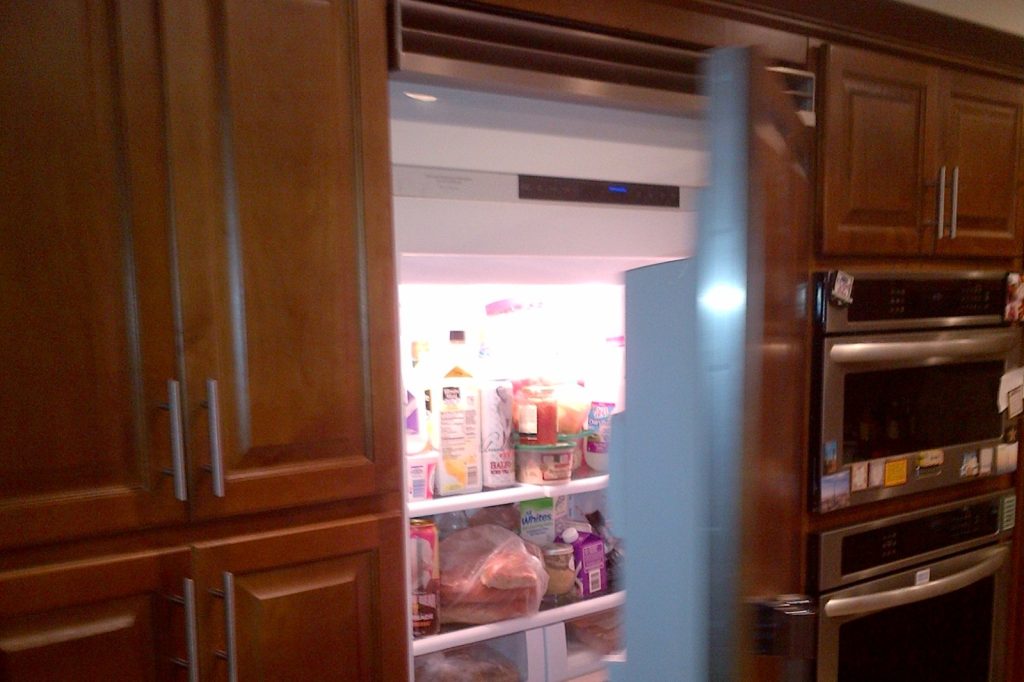
SUWON, September 23 — Samsung Electronics has yet to announce a compensation plan for tens of thousands of South Korean households whose Wi-Fi-connected refrigerators malfunctioned after an automatic software update, an episode that has become the company’s most visible home-appliance failure in years. The trouble surfaced in late September 2025, when owners of Bespoke and other connected refrigerator models reported repeated reboots, unresponsive touchscreens and, in some cases, complete cooling failure.
Complaints were first widely reported on September 24, 2025, according to user posts on Samsung’s official community forums and social media. Samsung acknowledged the issue the following day, saying it was investigating the cause and working on a fix.
A workaround that did not work
The company advised affected customers to unplug their refrigerators for 30 seconds and plug them back in. For many users, that temporary workaround did not resolve the problem. By September 26, Samsung had released a corrective firmware update, but customers continued to report that their appliances remained faulty.
Timing made matters worse. Chuseok, one of South Korea’s biggest holidays, fell on October 6, 2025, with the holiday running from October 5 to October 7.
Families gather and prepare large meals. Social media in South Korea filled with complaints; some users called for compensation, others threatened to switch to rival brands such as LG. Customer service centres reportedly faced long wait times, and some consumers said they were told repairs would not be possible until after the holiday.
Industry sources cited by Yonhap News Agency estimated the malfunction affected tens of thousands of refrigerators. Samsung did not confirm the exact number.
Questions over connected appliances
The incident raised questions about internet-connected home appliances, which can be remotely updated but also remotely disrupted. Consumer advocates called for greater transparency and the ability to opt out of automatic updates. Samsung said it would review its update procedures.
The Korea Consumer Agency said it had received multiple complaints and was monitoring the situation. As of September 27, 2025, Samsung had not announced a compensation plan, though a company spokesperson said it was considering “appropriate measures.” The company’s shares fell slightly on September 26, 2025, closing down 1.2% on the Korea Exchange, amid broader economic pressure on the stock.
For all the noise, the salient point is one of scale and exposure. Samsung Electronics, founded in 1969 and headquartered in Suwon, is a subsidiary of the Samsung Group, South Korea’s largest chaebol. It reported revenue of 279 trillion won (about US$210 billion) in 2024.
Its home appliance division, part of the Device eXperience (DX) division, generated approximately 55 trillion won (about US$41 billion) in revenue in 2024. The episode is the latest in a series of quality and reliability issues for that division.
In 2023, Samsung faced criticism over its Bespoke refrigerators after reports of cooling problems and noise issues. More broadly, the company has been under pressure from competitors in the premium appliance market, particularly LG Electronics and Chinese brands like Haier. It also echoes the 2016 Galaxy Note 7 battery crisis, which led to a global recall and cost Samsung more than US$5 billion.
The story drew international attention, with technology publications noting it highlighted the potential pitfalls of the Internet of Things. What to watch next: whether Samsung sets out a compensation plan, how the Korea Consumer Agency’s monitoring develops, and whether the company’s promised review of its update procedures produces any change to how automatically connected appliances are patched.




