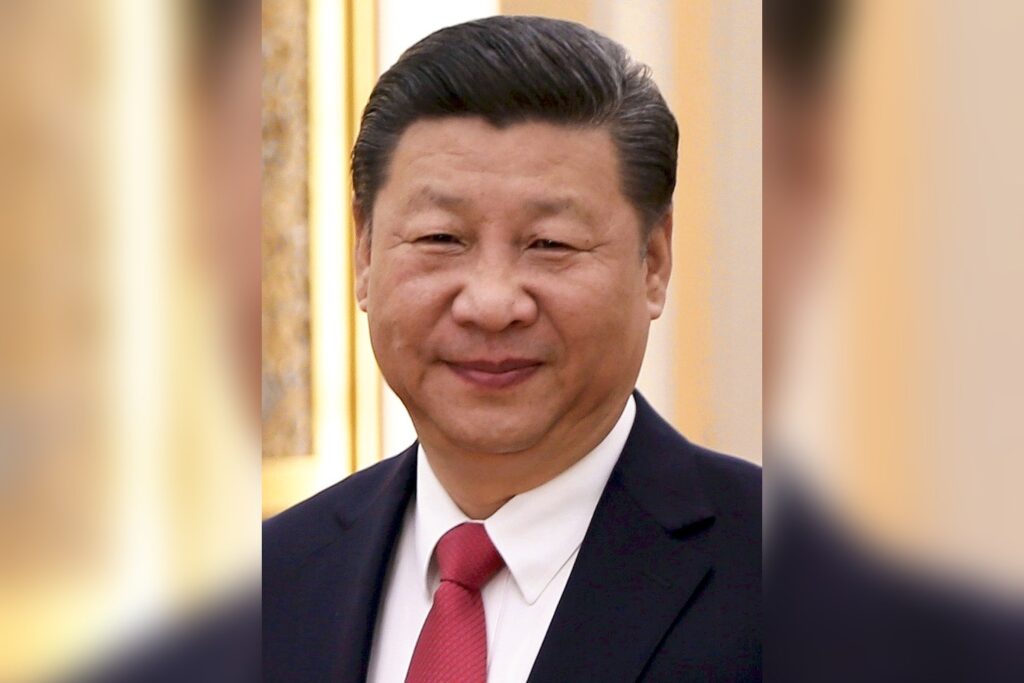
The scene was staged for the cameras. On a Sunday in October 2022, Xi Jinping walked onto a red-carpeted stage in Beijing’s Great Hall of the People, and the men of his new inner circle followed him out. Xi thanked the party for “placing their trust in him.” He had just won a third term as head of the Chinese Communist Party, something no leader of his generation had done.
The twice-a-decade party congress had run through the weekend. Two moments drew attention. On Saturday, Xi’s predecessor Hu Jintao was unexpectedly removed from the congress, ostensibly because of “ill health.” And Premier Li Keqiang, seen as more moderate than Xi, was dropped from senior leadership.
A committee of loyalists
The Politburo Standing Committee, China’s top decision-making body, filled up with Xi’s allies. One of them was Shanghai Party Secretary Li Qiang, expected to replace Li Keqiang as premier and become the country’s second most powerful official. Xi also promoted military commanders and officials with national security and engineering backgrounds.
He was 69. Party rules had required officials who were 68 or older to retire by the next congress, and Xi changed them. The third term itself surprised nobody, since lawmakers had abolished presidential term limits in 2018.
More than 300 senior party members endorsed Xi’s position as the core of the leadership, and the congress amended the party charter to make “Xi Jinping Thought” the party’s guiding philosophy.
What analysts said
“All members of the Politburo are officials groomed by Xi Jinping and this outcome proves that political loyalty is very important,” said Hsin-Hsien Wang of National Chengchi University in Taiwan. Personnel changes, he told DW, were “no longer bound by any precedence or existing rules.”
Alfred Wu of the Lee Kuan Yew School of Public Policy in Singapore was blunter. The result, he said, pushes the party-state “further towards one-man dictatorship.” Information reaching Xi would favour what he already assumes, Wu added. “It will look like an echo chamber.”
Patricia Thornton of Oxford University pointed to history. Officials under heavy pressure to comply with Beijing, she said, have failed to report back the damage that central policies do locally. Putting loyalty ahead of expertise “greatly raises the risks of avoidable and correctable political disasters.”
Li Ling of the University of Vienna read the choice differently: a costly way to ready the committee for “some radical policies” that might otherwise stall.
Ten years of hard line
Since taking power in 2012, Xi has pushed a hardline agenda. Anti-corruption drives have purged party ranks at every level. Beijing has modernised its armed forces, militarised the South China Sea and repeated its pledge of “reunification” with Taiwan, by force if necessary. At home, press freedom and civil liberties have been squeezed, and “zero-COVID” rules locked down whole neighbourhoods. In Xinjiang, millions of Uyghurs were forced into “reeducation camps.”
Ian Chong, a political scientist at the National University of Singapore, said there is no clear way to pick a successor. When Xi leaves, “there is likely going to be a power vacuum,” and rivals could compete on increasingly nationalistic terms. For the next five years at least, he said, decisions may come faster, “but everything will rely on Xi not making a mistake.”