
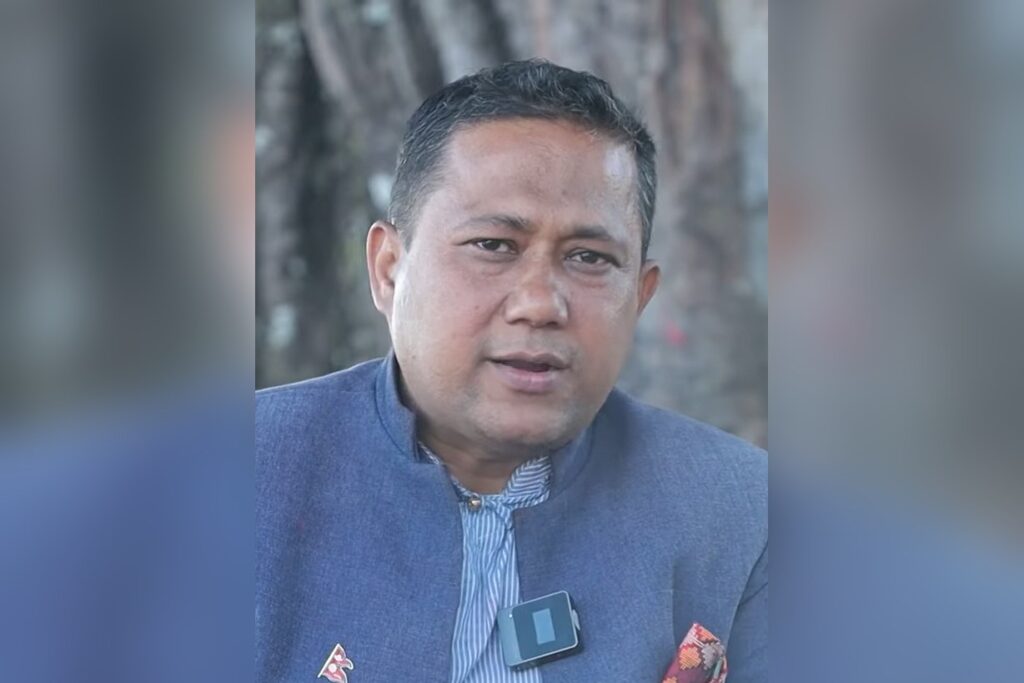
Foreign Minister Shishir Khanal delivered a definitive denial to Nepal’s National Assembly on Monday, dismissing recent public speculation that the Nepali Army and the United States Army had entered into an agreement for uranium mining in Mustang district. Addressing lawmakers directly, Khanal called the circulating claims “baseless and untrue,” and stressed that no formal arrangement regarding mineral extraction in the region exists between the two militaries or any other parties.
“There is no truth in the matter of an agreement between the Nepali Army and the US Army for uranium mining in Mustang district,” Khanal stated. “No agreement or agreement has been made with anyone regarding mining in this area.”
Uranium speculation and constitutional guardrails
The foreign minister’s remarks come after questions from legislators focused on persistent rumors of a secret pact that would allow American forces to exploit uranium deposits in Mustang, a remote and culturally sensitive Himalayan district. Khanal sought to put that speculation to rest by reaffirming the government’s full commitment to Article 289 of the Constitution of Nepal 2072 BS, which lays out strict provisions governing the ownership and utilization of the country’s natural resources.
He emphasized that Nepal will not enter into any agreement that contradicts its longstanding non-aligned foreign policy or the principles of Panchasheel, the five tenets of peaceful coexistence that have guided the nation’s international relations for decades. The minister added that the Department of Mines will follow all necessary procedures and take required steps before any mining activity is considered, effectively placing any future exploration under a rigorous legal and policy framework.
No timeline was provided for the department’s next moves, leaving the status of mineral surveys in Mustang district uncertain.
Border demarcation dispute with India remains unresolved
In the same National Assembly session, Khanal also addressed a separate but equally sensitive issue: the longstanding border demarcation disagreement between Nepal and India. He acknowledged that the bilateral technical committee established by the two countries has successfully finalized the demarcation of many territories along their shared frontier. However, he confirmed that the demarcation of four specific areas — Limpiyadhura, Lipulekh, Kalapani, and Susta — has not yet been completed.
“It is a fact that the demarcation of those areas has not been done by the technical team,” Khanal said. “But we are clear — those territories belong to Nepal.
We have historical basis, evidence and maps.” The foreign minister disclosed that he raised the same border question during his meeting with his Indian counterpart, and expressed a desire to resolve the dispute through diplomatic dialogue anchored in historical facts and evidence. Khanal’s remarks signal that Nepal continues to assert its territorial claims over those contested points while seeking a negotiated settlement. The lack of a specified timeline for the technical committee’s further work means the boundary issue remains open, with both nations unlikely to find a swift resolution.
The foreign minister’s dual statements — on the uranium rumor and the border impasse — underscore the domestic and international pressures facing Nepal as it tries to balance natural resource sovereignty with diplomatic engagement. No additional details were provided about the Department of Mines’ potential schedule or the next steps for the Nepal-India technical team.




