
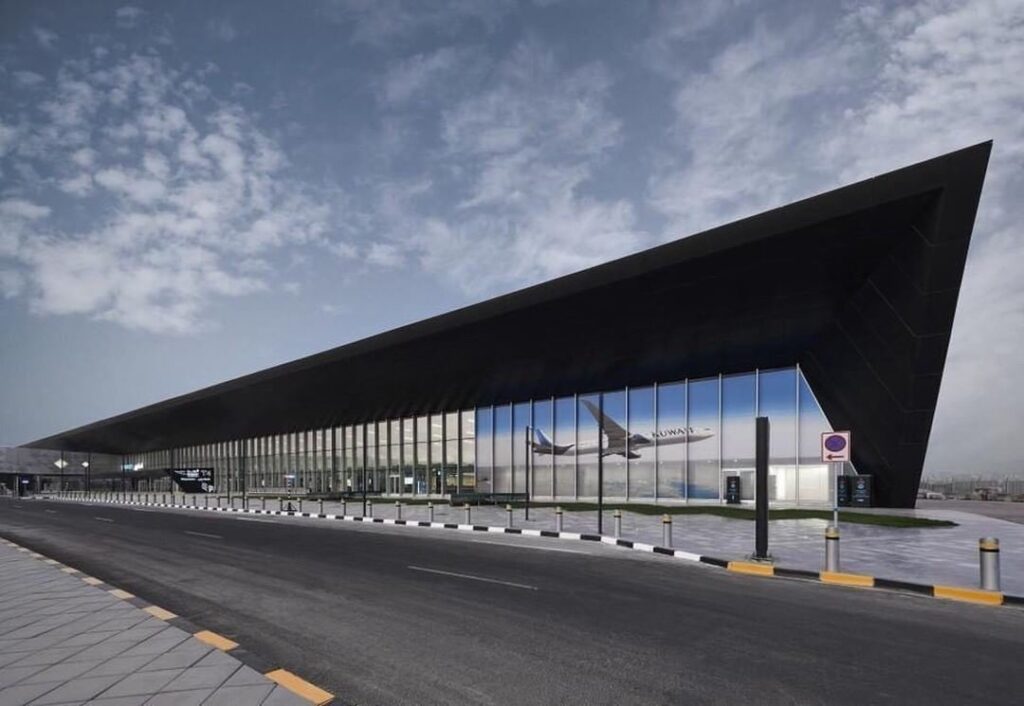
Kuwait shut its airspace to civilian traffic on February 28, 2026, after Iranian retaliatory strikes hit military and infrastructure sites across the Gulf. One of them was a drone attack that visibly damaged Kuwait International Airport. Local reports described debris at the airport and minor injuries among ground staff.
The Directorate General of Civil Aviation said the suspension covered all civilian flights until further notice. It cited safety, since air defense operations were still active over Kuwaiti territory. Iran, Iraq, Qatar, Bahrain and parts of the United Arab Emirates had already closed their own skies as defenses responded to waves of missiles and drones.
As of March 7 there was no confirmed date for reopening. Qatar and the UAE had started cautiously restoring limited traffic. Kuwait had not.
At the airport
Kuwait International was effectively closed to passengers. Only emergency, diplomatic and military movements were allowed, under strict control. Most check-in counters sat empty, and staff spent their time on rebooking, refunds and welfare for passengers who never got out before the shutdown.
Kuwait Airways suspended all scheduled flights and said service would resume only when regulators declared the airspace safe. It was rebooking passengers for later dates and, where possible, planned to route them through other hubs. Jazeera Airways, the country’s main low-cost carrier, stopped operating at the airport too. Foreign airlines pulled Kuwait from their schedules for the coming days, and some said flights were suspended at least through the end of that scheduling week. Travelers were told not to go to the airport without a confirmed new itinerary.
Cargo was hit as well. Logistics operators said Kuwait-bound shipments were being held, diverted to ports in neighboring states or moved to sea freight. Pharmaceuticals and perishables were under the most pressure.
Knock-on effects
Industry analysts estimated that several thousand flights had been cancelled or diverted since the escalation began. European and Asian carriers were flying long-haul services around closed zones, north over Turkey and the Caucasus or south over Egypt and the Red Sea. That added flight time and fuel cost, and it threw off aircraft rotations and crew schedules even on routes that never touch the Gulf. Migrant workers, business travelers and tourists who normally connect through the region faced longer journeys and sudden overnight stays.
Travel experts warned that even after Kuwait reopens, irregular operations could last days or weeks while airlines rebuild schedules and clear the backlog.
The United States, the United Kingdom and several European Union states updated their advisories to urge citizens to reconsider nonessential travel to parts of the Middle East, Kuwait included. Security experts said the main risk to travelers came from disrupted infrastructure and limited mobility, plus possible spillover of military activity, rather than direct targeting of civilians.
Airlines offered fee waivers for date changes, route changes and refunds on affected tickets. Call centers were jammed, so self-service tools worked better. Hotels near the airport and in central Kuwait City reported more demand from stranded passengers.




