
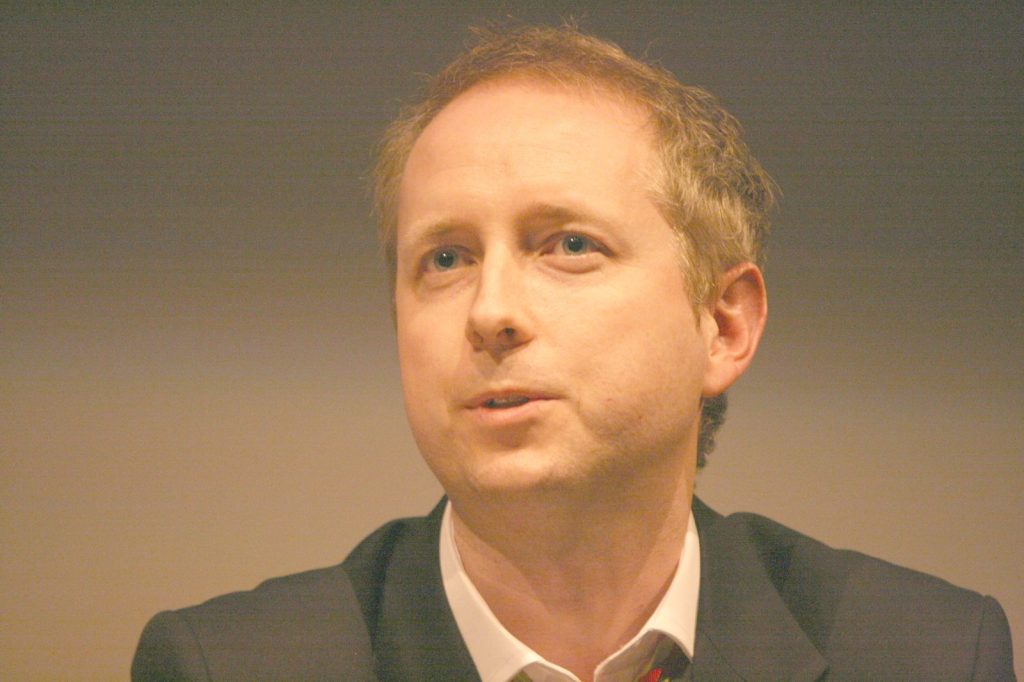
“India is hugely important in the energy transition. That’s why we are here.” Bård Vegar Solhjell, chief executive of Renewables Norway, said it to ANI during a visit to India. He is a former Norwegian minister of education and of environment.
Solhjell no longer sees India as merely a developing market. He called it a critical strategic partner and a powerhouse in clean technology manufacturing, and said its role carries immense commercial and strategic weight for Norwegian firms. “India is strategically important because you are a leader in the global energy transition and also now a manufacturer of products such as batteries and solar components,” he said.
Three sectors, one gap in storage
He named hydropower, offshore wind, and carbon capture and storage as the areas with the most room for cooperation.
On hydro, Norway brings a long record. “We have a hundred years of history of hydro. It’s 90 per cent of our electricity,” Solhjell said. India, he noted, is now doing a lot with pumped storage because wind and solar are variable and need more storage behind them. “I think it’s an area where we can have common ground.”
Offshore wind is further out. “It’s an early stage both for India and for Norway,” he said. Solar and onshore wind are cheaper today, but offshore wind could become an important alternative “if we can get the technology right and get costs down.”
On carbon capture, he pointed to two large Norwegian facilities, one handling waste and one at a cement plant. Having seen India’s industrial growth, he said he had learned how important the technology might be there too. “So that’s a third option.”
Modi’s visit and supply chains
Prime Minister Narendra Modi’s official visit to Norway on May 18-19 was big news across the Nordics, Solhjell said. It moved some Norwegian companies from “vague interest” to looking seriously at entering India, he added, and several are already operating there.
European countries also want India as a supplier. Solhjell said the war in Ukraine and instability in West Asia have made energy security and independence more urgent, and that this is speeding up renewable growth in both Europe and India. “You will be a manufacturer for other countries, and it will be important for global energy security,” he told his Indian audience.
He argued against the old model in which Western countries hand technology down. “I don’t think India is any less developed now in terms of technology than many European countries, rather the opposite, to be honest,” he said. He called instead for partnerships “where capital and competence go both ways.”
The stakes go beyond business, in his telling. “If you are able to reach your very ambitious goals, and energy becomes more dominated by renewables, it could be the most important thing for the global climate.”
The manufacturing numbers
Data from the International Renewable Energy Agency, cited by Business Standard, backs up part of the claim. India took 1 per cent of global solar PV manufacturing investment in 2023 and 20 per cent in 2025. It drew more than $3 billion in clean tech manufacturing investment in 2025, and its solar equipment capacity has grown from 5 GW to 125 GW over six years.
Problems remain. The Institute for Energy Economics and Financial Analysis says India holds 233 GW of solar module capacity as of June 2026, but its module factories run at only 35 to 40 per cent utilisation, short of the 50 to 65 per cent needed to operate sustainably. Battery manufacturing, analysts add, is still catching up.
Sources
- India gains ground in cleantech manufacturing as supply chains diversify
- India's clean energy growth offers major opportunities for European collaboration, says Renewables Norway CEO
- India's Solar Industry Emerges as Global Powerhouse | Staten Solar posted on the topic | LinkedIn




