
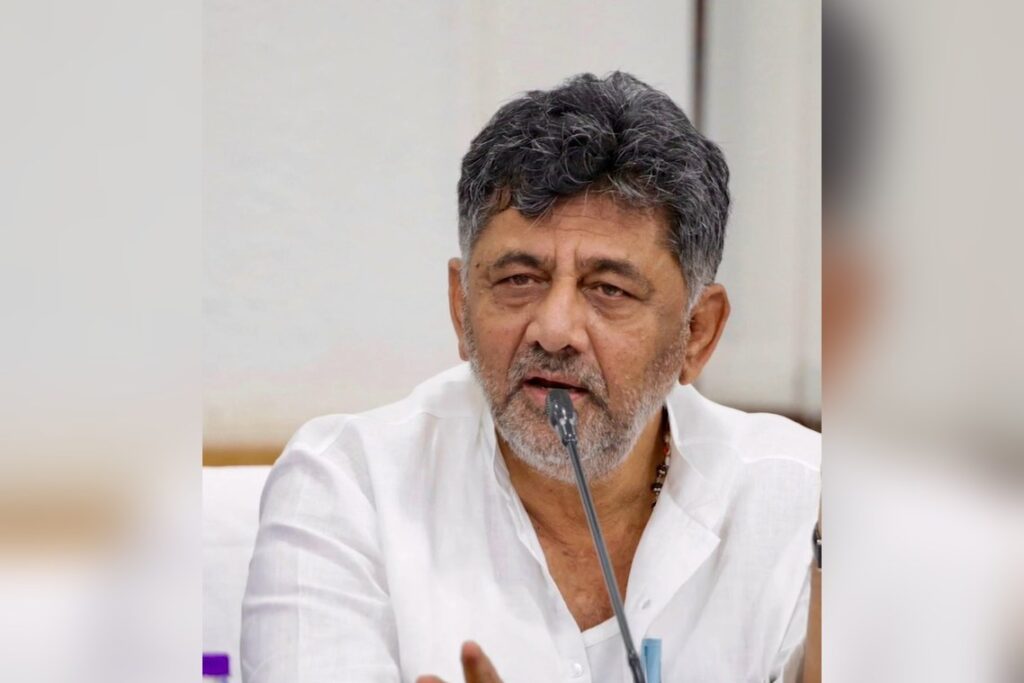
BENGALURU — The form itself is straightforward. Name, address, age, gender. A few lines for the details that turn a citizen into a voter.
Karnataka Chief Minister DK Shivakumar filled one out Tuesday at his Sadashivanagar residence, and in doing so, he set the rules for a 30-day drive that will determine who gets a say in the next election. The Special Intensive Revision of electoral rolls is not new.
What is new is the state’s push to make the process digital, and to require a mobile number for every entry. The Chief Minister’s own experience flagged the friction. “I found it a bit difficult to enter all the details,” he said after completing the form.
If the head of the state government stumbled over the paperwork, the policy question becomes clear: how many ordinary citizens will simply give up? The answer matters.
The drive runs from June 30 to July 29. In that window, every eligible citizen can verify their name, correct errors, or register for the first time. The Election Commission’s officials came to Shivakumar’s home in Sadashivanagar, handed him the enumeration form, and watched him fill it in.
That was the launch. But the policy behind the moment is about process — specifically, the role of the mobile phone as a gatekeeper. Shivakumar stressed this repeatedly.
“Your mobile number is important in this process,” he said. The old system relied on paper forms and manual verification.
The new system sends an OTP to the voter’s phone. That OTP unlocks the ability to download the pre-filled form, make corrections to name and address, and submit changes. If a voter has changed their number — a common occurrence in a mobile-first country — they must give the new number to the officials.
The OTP then goes to that number. It is a policy built on the assumption that every voter has a phone, that the phone number is current, and that the network works.
Those are not safe assumptions in rural Karnataka. The Chief Minister acknowledged the difficulty. He did not offer a workaround for voters without mobile phones, or for those in areas with patchy signal.
The form itself remains the same. The path to completing it has changed. The drive covers all 224 assembly constituencies in the state.
Shivakumar’s home district, Ramanagara, is one of them. He filled his form there, in his own home, as an example.
“Officials from the Ramanagara district, which is my home constituency, came to my house,” he said. “I have filled the form and signed it.” The policy implication is straightforward: the government wants a cleaner electoral roll. Names that are misspelled, addresses that are outdated, and entries for people who have moved or died — all of these are targets for correction.
The mobile number requirement is meant to speed up verification and reduce fraud. But it also creates a hurdle.
A voter who cannot receive an OTP cannot make a correction. A voter who does not have a phone cannot download the form. Shivakumar’s call to action was direct.
He urged every eligible citizen to verify their name and enrol if they had not done so. He asked them to participate actively. The policy, as laid out, treats the mobile number as a key.
If you have it, the door opens. If you do not, you are left outside until you find an official who can help.
The drive is now underway. The forms are being distributed. The OTPs are being sent.
By July 29, the state will know how many voters managed to get through the process — and how many fell through the cracks of a policy that assumed everyone carries a phone.




