
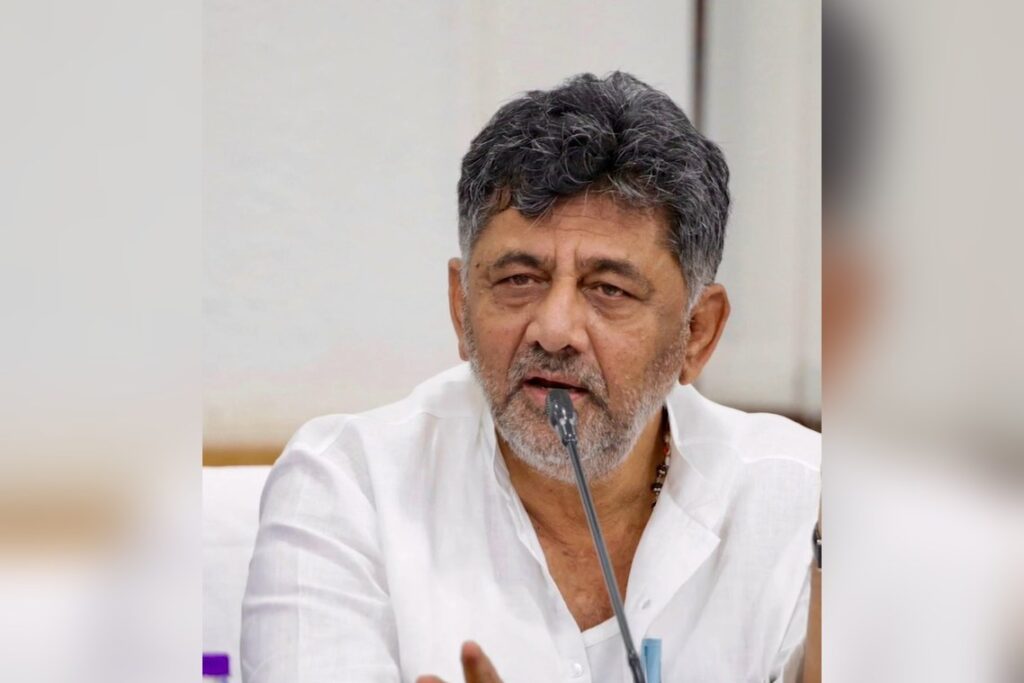
BENGALURU — The form arrived at the Chief Minister’s doorstep. That simple act — an Election Commission official handing a paper to DK Shivakumar at his Sadashivanagar residence — is the culmination of a process that began months before, in quiet planning rooms and data centers. Karnataka’s voter rolls are never static.
They swell, shrink, and shift with every birth, death, and relocation. The Special Intensive Revision drive that launched Tuesday is the third such effort since the 2023 assembly elections.
Each one is a response to a recurring problem: names that vanish, addresses that go stale, mobile numbers that belong to someone else now. The drive runs through July 29. That is 30 days.
In that window, Election Commission teams will fan out across every district, knocking on doors, checking lists, collecting forms. The Chief Minister’s own form — filled out in front of officials from Ramanagara district, his home constituency — was the first.
Shivakumar’s comment after signing was telling. He said he found it “a bit difficult to enter all the details.” A man who has been in public life for decades, who has voted in multiple elections, still stumbled over a form. That difficulty is the point.
The revision drive exists because thousands of other voters face the same confusion — and many never finish the form at all. The numbers tell the story. After the 2023 elections, the Election Commission discovered discrepancies.
Names of deceased persons remained on rolls. Duplicate entries existed.
Mobile numbers were missing for nearly 40 percent of registered voters in some constituencies. Without those numbers, the verification system — which relies on OTPs sent to phones — cannot work. Shivakumar stressed that mobile number issue directly.
“Use the mobile number that was given earlier to download the form,” he said. “If you don’t have that old number now, give the officials a new number.
They will send an OTP to that number. You can make corrections to your name and address.” That OTP system was introduced after the 2021 revision drive. Before that, corrections required a physical visit to the electoral registration officer’s office, with photocopies of identity documents.
Turnout was low. The new system was supposed to fix that. But it created its own bottleneck: people who changed phone numbers, or lost their old SIM cards, were locked out.
The current drive is designed to close that loophole. Officials carry paper forms as well as digital tablets.
They can update a mobile number on the spot, then send the OTP in real time. The Chief Minister’s own experience — filling a paper form, not a digital one — suggests the old methods are not dead yet. Behind the scenes, the Election Commission has been preparing for weeks.
Booth-level officers were trained in May. Voter lists were printed and checked against Aadhaar databases for duplicates.
The state has 58,000 polling stations. Each one has a designated officer responsible for door-to-door verification. That officer carries a list of every registered voter in the booth area, plus a list of eligible but unregistered residents — mainly young people who turned 18 since the last revision.
The drive’s success hinges on those officers. They are the ones who will climb stairs in apartment complexes, walk into village homes, and sit with elderly voters who cannot read the form. They are the ones who will explain why a missing middle initial can block a vote on election day.
Shivakumar’s launch — a politician doing what he asks others to do — was a deliberate signal. It was also a practical one.
If the Chief Minister could fill the form, so could anyone. If he found it hard, that was okay too. The officials were there to help.




