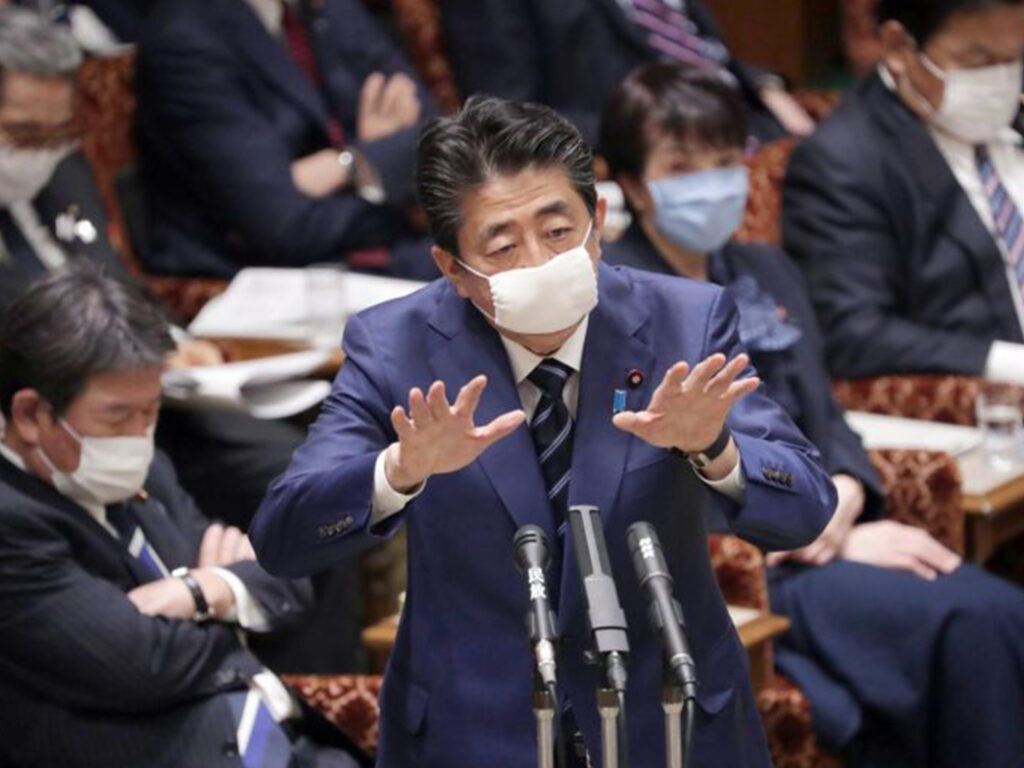
Prime Minister Shinzo Abe put a number on Japan’s pandemic fear on Monday: 108 trillion yen, or $989 billion. It is the largest stimulus package the country has ever announced, and it comes to about 20% of annual economic output in the world’s third biggest economy.
“The details of the measures and the numbers involved are being debated until the last minute,” ruling party policy chief Fumio Kishida said earlier that day, before Abe spoke.
Abe also said he would declare a state of emergency as soon as Tuesday for Tokyo, its three neighbouring prefectures, Osaka, Hyogo and Fukuoka. It was expected to last about a month. A week earlier, he had declined to do it.
Who gets what
The package includes 6 trillion yen in cash handouts for households and small businesses hit by the virus. Under a government document, lower-income households that lost pay will receive 300,000 yen, and families with children will get aid too. Businesses can defer 26 trillion yen of tax and social service costs, and companies hit by the virus can put off income and regional tax payments for a year. Some smaller firms will see property taxes cut as far as zero. Firms that keep workers on the payroll will get larger subsidies, and zero-interest loans are part of the mix.
The plan also covers medicine: it would secure enough Avigan anti-flu drugs for 2 million people this fiscal year.
The government document, obtained by Bloomberg, describes two phases. The first aims to stop job losses and bankruptcies. A second round, after the virus is contained, is meant to support a V-shaped recovery, with steps to lift consumer spending and tourism and subsidies for regional economies. Abe was due to give details of the package and an extra budget to pay for it on Tuesday.
An economy under strain
Japan had recorded more than 3,600 coronavirus cases and 85 deaths by Monday, according to Johns Hopkins University. Economists see a deep recession ahead, with export markets paralysed, the summer Olympics postponed and stronger stay-at-home requests possible in the capital.
For now, jobs are holding up. The jobless rate stayed at 2.4% in February, though the ratio of available positions has dropped to its lowest level in three years. Applications for emergency government loans for people who have lost work or face wage cuts have grown quickly.
Tom Learmouth, Japan economist at Capital Economics, said earlier data showed resilience in February. “There is no doubt that coronavirus disruption will deal a severe economic blow over coming months,” he said. Infections had accelerated in Tokyo and Osaka, and fears of a second wave were keeping residents home and shops shut.
Staying home is hard in Japan. Tokyo’s governor has urged the city’s 13.5 million residents to telework where possible until April 12, yet many still commute. About 80% of companies cannot let employees work remotely, according to 2019 government data.
The United States passed a $2 trillion stimulus bill last month, and Germany, France, Britain, Italy and Spain have also announced large spending plans.
Sources
- Japan launches $1 trillion coronavirus stimulus package as Prime Minister Abe announces state of emergency | Fortune
- The global economy just got a $1 trillion infusion from Japan | CNN Business