Ming Chung, 24, voted mid-morning at Fuxing Elementary School in Taipei, with his 22-year-old sister beside him. Both had picked Tsai Ing-wen for a second time. “I don’t want to become Hong Kong,” he said.
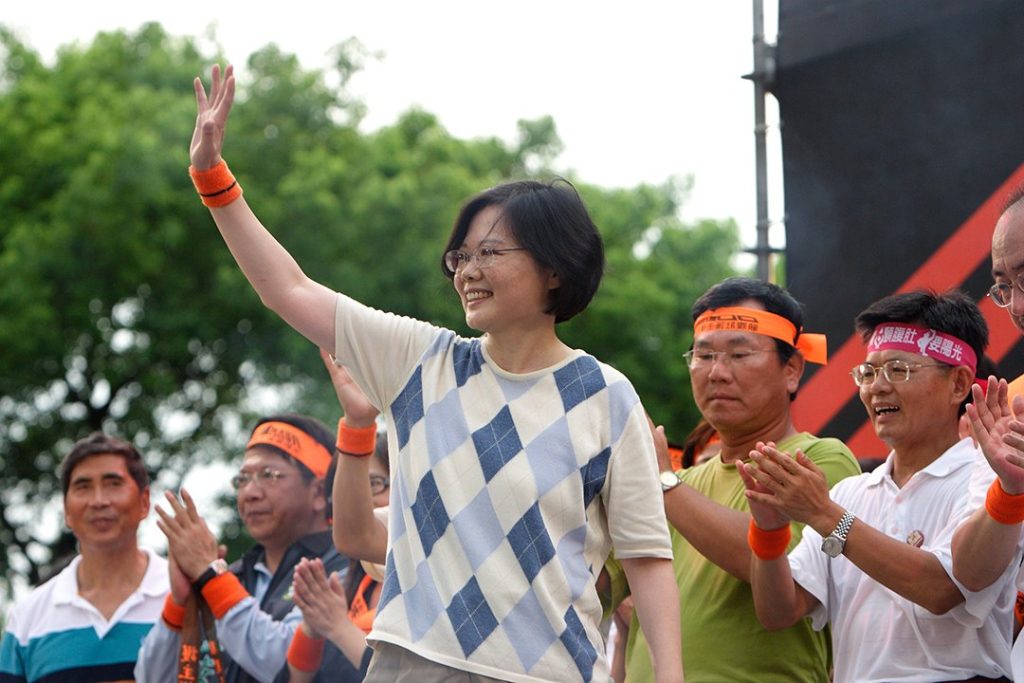
Enough Taiwanese agreed. Tsai won a second term as president on Saturday with 57.1 per cent of the vote, according to final results. The electoral commission put her total at 8.17 million. Han Kuo-yu of the Kuomintang (KMT), the populist mayor of Kaohsiung, took 5.52 million, or 38.6 per cent. James Soong of the conservative People First Party got 600,000, or 4.26 per cent. Han had conceded before Tsai declared victory.
“I would like to thank everyone who voted today regardless of how you voted,” Tsai said in her victory speech. She added that each presidential election was a chance “to show the world how much we value our democratic way of life.”
A comeback, with help from Hong Kong
A little over a year earlier, a second term looked unlikely. Her Democratic Progressive Party (DPP) did badly in the November 2018 mid-term elections, lost a number of key cities and districts, and Tsai stepped down as party chair. Opinion polls showed her popularity rising from mid-June, about when mass protests against Beijing began in Hong Kong. Many young Taiwanese concluded from Hong Kong that Beijing, which the KMT had courted, could not be trusted.
Young voters also had a domestic reason. Tsai pushed a same-sex marriage bill through parliament, and it took effect in May 2019. Anita Chen, a 30-year-old music teacher, said it was the main reason her generation turned out, and that Tsai backs young people in her own field, the arts. She said the economy might do better under Han, but not at the price of more “Chinese influence.”
Not everyone was settled. A mother in her 30s who gave only her English nickname, Groly, said she woke up nervous on Saturday, still undecided and worried about the future.
Who voted for Han
Han and the KMT drew older voters and people anxious about the economy. Wages have barely moved in about 20 years, and many Taiwanese want closer ties with China’s much larger economy. The campaign also brought misinformation on Facebook and LINE, according to the Taiwan FactCheck Center. The DPP-led parliament responded by pushing through an anti-infiltration law on December 31, a controversial step.
Voting in Taiwan happens near a voter’s official address, often a parents’ home. So some of the 18.8 million eligible voters traveled far. Chen’s parents drove her from Taipei to Taoyuan. Friends of hers flew in from Japan and Australia.
Tsai took office in 2016, after the 2014 Sunflower Movement, when students occupied parliament and government headquarters over a trade deal with China. She is Taiwan’s first female leader, and unlike some women who have led other Asian countries, she got there on her own record rather than as a relative of a male leader. Her first term saw Taiwan lose several of its last diplomatic allies, mostly small Pacific nations, to Chinese pressure. China claims sovereignty over Taiwan, though it has never ruled it.
Tsai is only the second DPP president. The first, Chen Shui-bian, served two terms and was later convicted of corruption.